 Uncorked Conversations
Introduction to Wine's Timeless Drama
Wine is more than a beverage; it's a saga of human resilience, innovation, and passion. From the ancient vineyards of Europe to the bold frontiers of the New World, legendary stories have shaped the industry. In this article, we compare iconic tales from Old World powerhouses like Bordeaux and Tuscany with New World trailblazers in Napa Valley and Australia's Barossa Valley. We'll delve into pivotal historical events, personal struggles, and triumphs, while linking them to emerging 2026 winemaking trends like climate-adaptive viticulture and tech-driven sustainability.
These narratives aren't just history—they're blueprints for the future. Lesser-known anecdotes reveal the drama behind the labels, captivating enthusiasts and novices alike.
Old World Legends: Bordeaux's Battles and Tuscany's Renaissance
The Old World, with its centuries-old traditions, is steeped in tales of endurance against phylloxera plagues, wars, and economic woes. Bordeaux, France's crown jewel, exemplifies this.
In the 19th century, the phylloxera epidemic devastated Bordeaux's vineyards, wiping out 40% of France's vines. Enter Pierre Galet, a lesser-known hero whose grafting techniques using American rootstock saved the region. Château Margaux's owner, Pierre d'Aspremont, faced bankruptcy but pivoted to quality over quantity, laying groundwork for modern classifications like the 1855 system. A hidden gem: During World War II, winemakers hid prized bottles in cellars to evade Nazi confiscation, smuggling them out under the cover of night—a tale whispered in Bordeaux's official archives.
Across the Alps in Tuscany, Italy, the Renaissance of Sassicaia mirrors personal triumph. Marquis Mario Incisa della Rocchetta, inspired by Bordeaux, planted Cabernet Sauvignon on Bolgheri's coastal hills in the 1940s against family wishes. His wife, a Contini Bonacossi, smuggled Bordeaux cuttings from France. Facing skepticism, their 1968 vintage stunned critics, birthing Super Tuscans. A quirky anecdote: Locals called the vines 'the mad marquis's experiment,' but it revolutionized Italian wine, challenging Chianti dominance.
These stories highlight Old World grit: adapting traditions to survive, much like 2026's focus on resilient hybrids amid climate change.
New World Icons: Napa's Judgment Day and Barossa's Family Sagas
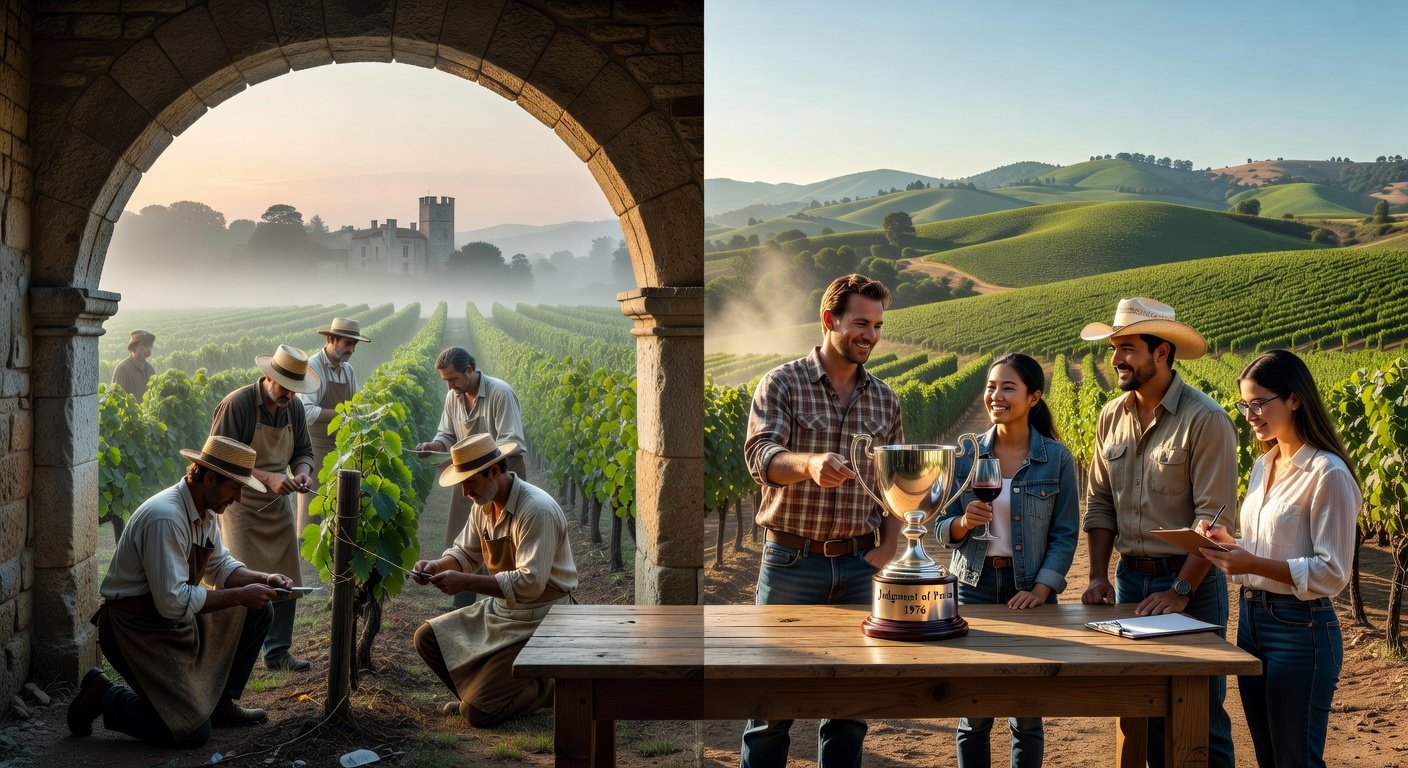
New World wines burst forth with audacity, unburdened by Old World rules. California's Napa Valley shone in the 1976 Judgment of Paris, where unknown Chateau Montelena Chardonnay beat French legends, orchestrated by British wine merchant Steven Spurrier. Behind the glory: Winemaker Mike Grgich, a Croatian immigrant fleeing communism, endured racist taunts and equipment shortages. His triumph? A blind tasting upset that globalized California wine.
Lesser-known: Napa's 19th-century roots trace to Hungarian Agoston Haraszthy, who smuggled 300 vine cuttings from Europe in the 1850s, despite quarantine risks—earning him 'father of California wine' status, though accused of exaggeration.
In Australia's Barossa Valley, family dynasties tell tales of immigrant perseverance. The Seppelt family, arriving in 1851, pioneered fortified wines amid gold rush booms. John Reynell, another pioneer, planted South Australia's first vineyard in 1838, battling droughts. A poignant story: During the Great Depression, Barossa vintners like Peter Scholz traded wine for food, sustaining communities. The Krondorf winery's tale involves Walter Schrapel, who after World War I, walked 1,000 miles with vine cuttings from Germany, founding a Shiraz legacy.
New World's ethos—experimentation and scale—foreshadows 2026 trends like AI-optimized fermentation.

Comparing Struggles, Triumphs, and Innovations
- Historical Pivots: Old World's phylloxera forced grafting; New World's Judgment of Paris demanded blind tastings equality.
- Personal Struggles: Immigrants like Grgich and Schrapel faced exile and poverty, paralleling Galet's scientific battles.
- Triumphs: Super Tuscans broke DOC rules; Napa proved terroir transcends hemispheres.
Lesser-known crossovers: Bordeaux's Thomas Jefferson smuggled Tuscan vines to Virginia, influencing New World pioneers. Barossa's early Rieslings drew from Rhine traditions, blending worlds.
From Legends to 2026 Trends: Bridging Eras
These tales inform tomorrow. Bordeaux's grafting inspires 2026's drought-resistant rootstocks, per research from the Napa Valley Vintners. Tuscany's coastal experiments echo precision agriculture in Barossa, using drones for canopy management.
Key 2026 trends:
- Sustainability: Regenerative farming, as in Napa's post-wildfire resilience (2017 fires tested legends anew).
- Tech Integration: AI predicts harvests, honoring Haraszthy's smuggling spirit.
- Climate Adaptation: Hybrids from Old World trials meet New World's varietal diversity.
- Low-Alcohol & Orange Wines: Barossa's fortified past evolves into sessionable styles.
Tuscany leads in biodynamics, while Barossa Valley pushes organic certification. Expect blockchain traceability, tracing bottles to ancestors' struggles.
Conclusion: Toasting Eternal Legends
Whether Bordeaux's cellars or Barossa's dusty tracks, these stories remind us: Wine thrives on defiance. As 2026 unfolds, raise a glass to the mad marquis, immigrant walkers, and plague-fighters. Their legacies ferment in every innovative bottle, proving wine's drama is far from over.
No comments yet. Be the first!