 Uncorked Conversations
Introduction to Thai Wine Pairings
Thai cuisine stands out for its vibrant balance of sweet, sour, salty, and intensely spicy elements, often centered around signature ingredients like lemongrass, creamy coconut milk, fresh herbs, and varying levels of chili heat. In 2026, sommeliers continue to refine pairings that move beyond traditional European matches, focusing instead on how acidity, subtle sweetness, and aromatic profiles can complement or contrast these bold flavors. This comprehensive guide addresses the search intent of food and wine enthusiasts looking for practical alternatives to more commonly paired cuisines like Italian or French. Readers will find detailed recommendations, tasting notes, and actionable advice to elevate home dining experiences with Thai dishes.
Understanding Key Thai Flavors and Wine Principles
Successful pairings begin with recognizing how Thai ingredients interact with wine components. Lemongrass and kaffir lime contribute bright citrus and herbal notes that align beautifully with high-acid whites. Coconut milk adds richness that requires wines with enough structure to cut through creaminess without overwhelming it. Chili heat demands careful management because excessive alcohol or tannins can amplify perceived spiciness. Sommeliers prioritize wines with vibrant acidity, moderate alcohol levels, and often a touch of residual sugar to create harmony. Aromatic varieties such as Riesling, Gewürztraminer, and Sauvignon Blanc frequently outperform oak-heavy options, while lighter reds and sparkling wines offer versatility across grilled and salad-style dishes.
Why Thai Cuisine Challenges Traditional Pairings
Many classic wine rules developed around milder European flavors fail when applied directly to Thai food. Heavy tannins from Cabernet Sauvignon can turn chili into an unpleasant burn, and overly oaked Chardonnays often clash with delicate coconut and herb profiles. Instead, focus on refreshment and contrast. Wines that cleanse the palate between bites prevent flavor fatigue and allow each Thai element to shine. This approach opens doors to unexpected successes with sparkling wines, off-dry whites, and fruit-forward light reds that might seem unconventional at first glance.
10 Expert Sommelier Pairings for Thai Dishes
Below are ten carefully selected pairings, each explained with tasting notes, balance reasoning, and practical serving suggestions.
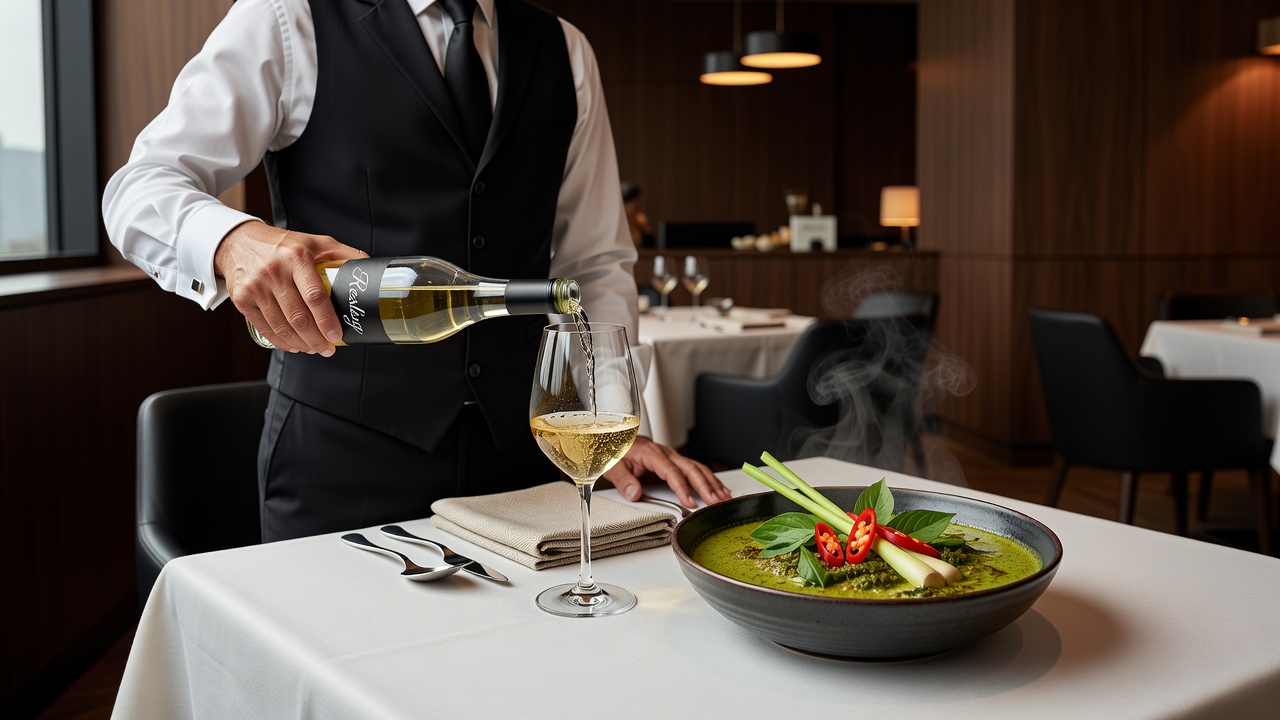
- Green Curry with Riesling: The wine’s lime zest, petrol, and stone-fruit notes mirror lemongrass while its slight residual sugar softens chili intensity. Opt for Kabinett or Spätlese styles with lively acidity that refreshes after each creamy spoonful.
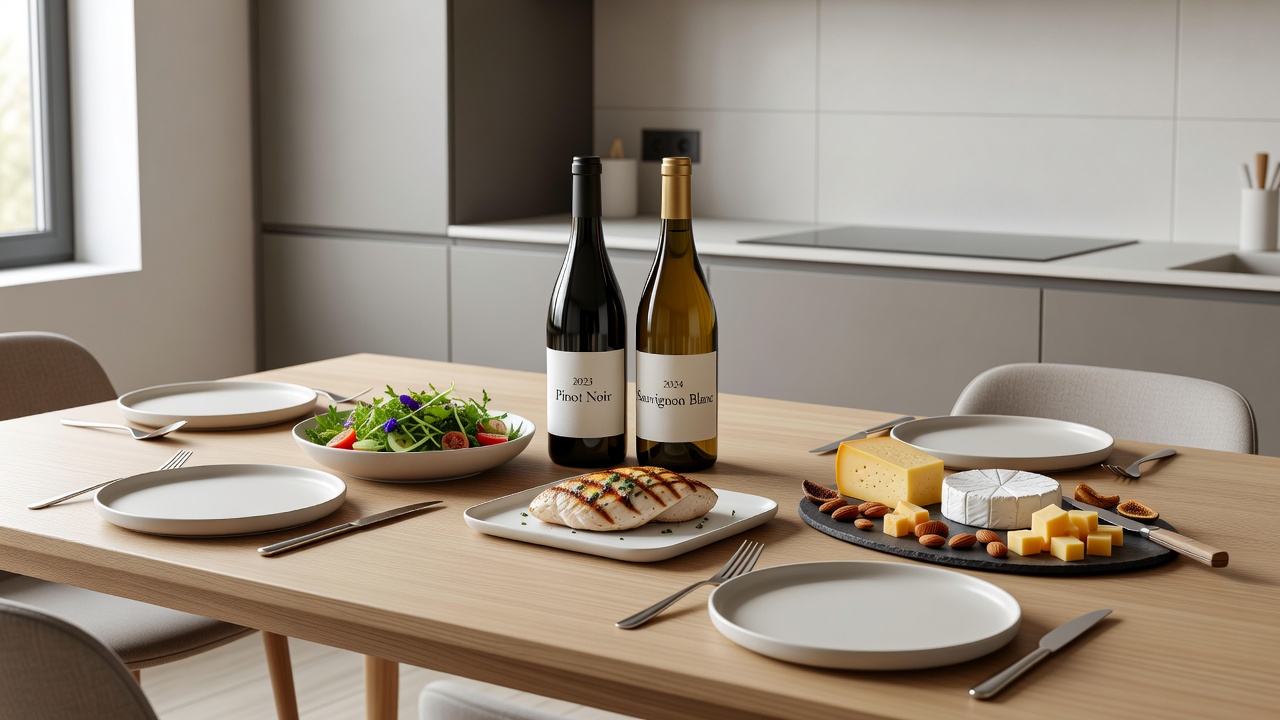
- Grilled Satay with Pinot Noir: Earthy mushroom and red-berry undertones complement the peanut sauce and grilled meat. Light tannins and bright acidity prevent the wine from dominating tender chicken or pork textures.
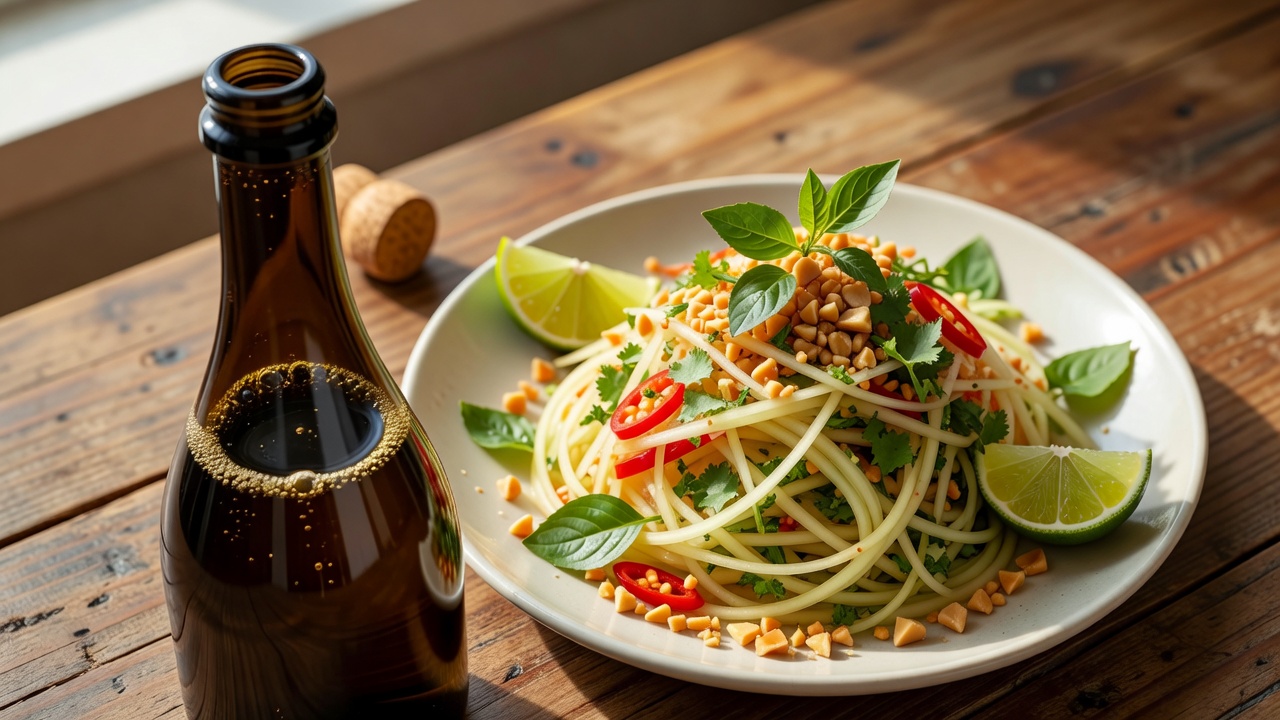
- Papaya Salad with Sparkling Wine: Bubbles scrub the palate clean between bites of lime, fish sauce, and crushed peanuts. Extra-dry or brut styles maintain dryness while their effervescence counters the dish’s sharp acidity.
- Tom Yum Soup with Sauvignon Blanc: Herbal and grapefruit notes echo the soup’s lemongrass and kaffir lime leaves. High natural acidity cuts through any added shrimp or mushroom richness.
- Pad Thai with Gewürztraminer: Lychee and rose-petal aromatics harmonize with tamarind and palm sugar. A hint of sweetness balances extra chili flakes without muting the dish’s savory depth.
- Massaman Curry with Syrah: Peppery spice and dark fruit in the wine reflect cinnamon, cardamom, and star anise. Medium body stands up to beef or lamb while avoiding heavy oak influence.
- Grilled Fish with Albariño: Saline minerality and citrus zest highlight fresh seafood flavors. Crisp acidity slices through any coconut-based glaze or chili-lime marinade.
- Red Curry with Gamay: Juicy strawberry and cherry flavors soften coconut richness while low tannins keep focus on aromatic chili and basil notes. Serve slightly chilled for maximum refreshment.
- Mango Sticky Rice with Moscato: Floral and peach characteristics mirror ripe mango sweetness. Light fizz adds celebratory texture that contrasts the dish’s sticky consistency.
- Chicken Laab with Rosé: Strawberry, herb, and citrus peel notes echo mint, cilantro, and toasted rice powder. Dry styles prevent residual sugar from competing with the salad’s savory lime dressing.
Acidity Balance and Heat Management Tips
Acidity serves as the primary tool for managing chili burn. Wines carrying 8–12 g/L total acidity provide noticeable refreshment that resets the palate. Alcohol above roughly 13.5 percent tends to heighten spice perception, so lower-alcohol options are generally preferable. Test pairings by sipping wine before a bite, then again afterward, noting whether the wine feels more or less balanced. When coconut richness dominates, prioritize wines with firm structure; when herbs lead, lean toward aromatic varieties that amplify those same notes.
Regional Thai Variations and Additional Pairing Ideas
Northern Thai dishes often feature milder heat and more herbs, making them ideal for delicate Pinot Gris or dry rosé. Southern curries tend to be richer and spicier, suiting off-dry Riesling or sparkling Shiraz. Street-food style grilled items pair well with crisp whites or light reds served chilled. Experimenting with regional differences allows home cooks to build a more nuanced pairing repertoire that respects Thailand’s diverse culinary landscape.
Step-by-Step Method for Custom Thai Wine Pairings at Home
- Identify the dominant flavor component—coconut creaminess, chili heat, or fresh herbs—and note the overall intensity level.
- Select a wine style based on required sweetness and acidity: off-dry whites for spicy dishes, sparkling for salads, and light reds for grilled proteins.
- Match body and intensity so neither the food nor the wine overpowers the other; lighter dishes call for lighter wines.
- Perform small-scale tests with modest pours, adjusting sweetness or chill level according to personal heat tolerance.
- Record successful combinations, including vintage and producer details, to refine future pairings with confidence.
Quick FAQ: Avoiding Common Mismatches
How do I prevent wine from tasting bitter with spicy dishes? Choose off-dry whites instead of bone-dry options that accentuate heat and create a bitter aftertaste.
What wines should I avoid with coconut-heavy curries? Skip heavily oaked reds or tannic varieties that clash with creamy textures and leave a metallic sensation.
Can I pair Thai food with beer instead of wine? Yes; crisp lagers or wheat beers function similarly to sparkling wines by cleansing the palate between spicy bites.
Is it okay to serve chilled reds with grilled Thai dishes? Absolutely—many light reds such as Gamay or Pinot Noir benefit from 15–20 minutes in the refrigerator, enhancing their refreshing qualities.
Conclusion
Mastering sommelier-level pairings for Thai cuisine unlocks vibrant flavor combinations that enhance both the food and the wine. Use the ten examples and step-by-step method above as a foundation, then refine based on personal taste and regional preferences. For ongoing inspiration on global pairings and emerging trends, consult resources from Decanter and Wine Enthusiast.
No comments yet. Be the first!