 Uncorked Conversations
Introduction to Wine Pairings with Bold Middle Eastern Spices
Middle Eastern cuisine shines through its vibrant spices and herbs, including za'atar, sumac, and harissa. These elements create layers of heat, acidity, and earthiness that demand thoughtful wine pairings. In 2026, sommeliers continue to refine approaches that balance these flavors with varietals like Riesling, Syrah, and Grenache. This comprehensive guide explores proven strategies, specific dish pairings with step-by-step reasoning, tasting notes, practical serving advice, and seasonal ideas for home cooks seeking memorable meals.
The search for perfect harmony between bold spices and wine often begins with understanding how each element interacts on the palate. Heat from chilies requires cooling sweetness or acidity, while earthy herbs call for wines with complementary savory depth. Acidity in sumac brightens rich dishes, making it essential to select bottles that either mirror or contrast these qualities effectively.
Key Spices and Their Flavor Profiles
Za'atar combines thyme, sesame seeds, and sumac for herbal, nutty, and tangy notes that evoke Mediterranean hillsides. It appears in everything from flatbreads to roasted vegetables, adding a distinctive aromatic lift. Sumac delivers bright lemony acidity that cuts through richness in meats and salads, acting as a natural tenderizer and flavor enhancer. Harissa brings smoky heat from chilies, garlic, and spices, varying in intensity from mild to fiery depending on the blend. These ingredients transform everyday proteins and vegetables into complex experiences, requiring wines that enhance rather than overpower the meal. For instance, the sesame in za'atar pairs beautifully with wines showing subtle nutty undertones, while harissa's smokiness finds balance in peppery reds.
Sommelier Strategies for Balancing Heat, Acidity, and Earthiness
Expert sommeliers focus on three pillars when approaching spiced Middle Eastern dishes: acidity to match spice heat, residual sweetness to tame chili burn, and tannins or earthiness to echo savory herbs. Off-dry Riesling offers bright acidity and subtle sweetness that counters harissa's fire without overwhelming delicate flavors. Syrah provides peppery notes and firm structure to stand up to za'atar's earthiness, especially in grilled preparations. Grenache brings juicy red fruit and soft tannins that harmonize with sumac's tang, creating a seamless progression from bite to sip. Always consider dish temperature, preparation method, and portion size when choosing. For deeper insights into global wine styles and pairing principles, explore resources from Decanter. Another useful reference is Wine Magazine, which regularly features expert guidance on spice-forward cuisines.
Pairing Recommendations for Signature Dishes
Shawarma
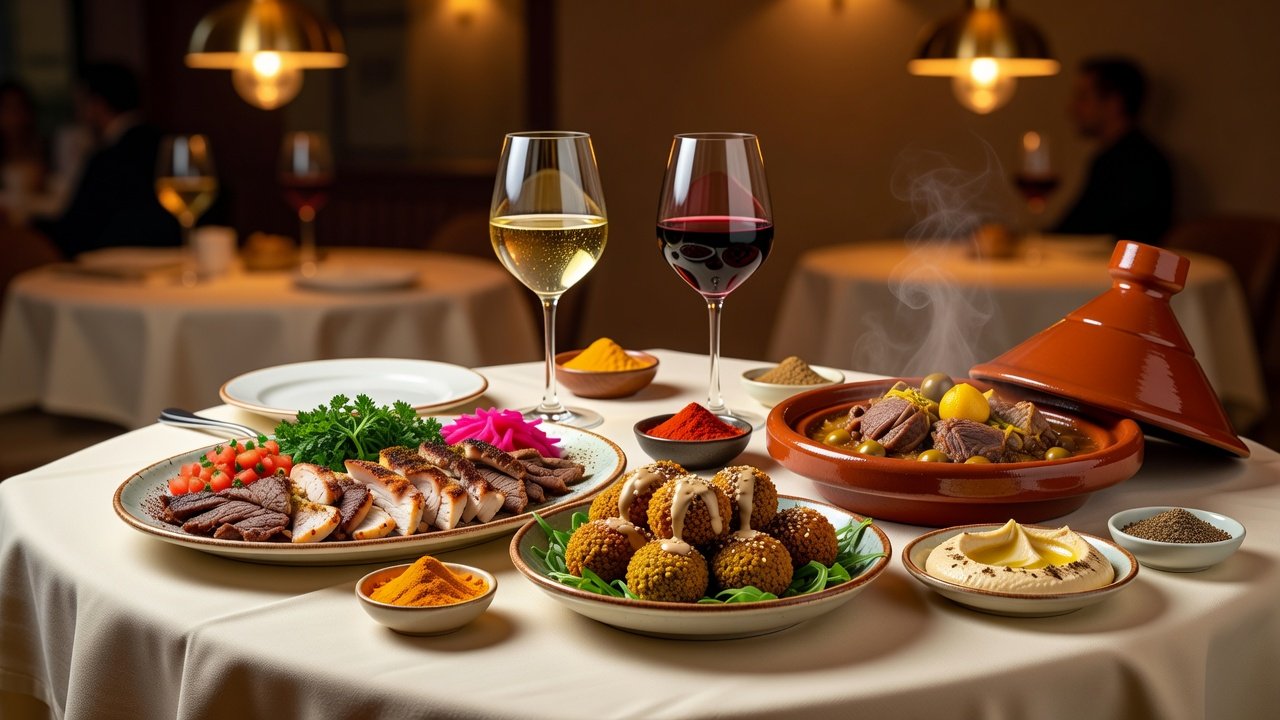
Classic chicken or lamb shawarma features cumin, coriander, and garlic alongside za'atar. Step-by-step reasoning starts with the meat's richness and caramelized edges, then factors in the spice blend's warmth and the yogurt-based accompaniments. Pair with Syrah for its dark fruit and spice notes that echo the seasoning while providing enough body to match the protein. Tasting notes include black pepper, plum, violet, and herbal undertones that refresh the palate between bites. Alternative: A dry Riesling refreshes the palate with citrus zest and mineral edges, particularly effective for lighter chicken versions. Consider serving temperature around 10 degrees Celsius to maximize vibrancy.
Falafel Variations
Traditional chickpea falafel or beet-infused versions highlight sumac's acidity and herbal elements, often wrapped in pita with tahini and pickles. Reasoning begins with the crispy exterior and creamy interior, then addresses the bright topping that cuts through frying oil. Grenache excels here with strawberry, raspberry, and garrigue flavors that balance the fried texture and enhance the lemony sumac. Serve slightly chilled for optimal contrast, allowing the wine's fruit to stand out against the warm spices. Variations with added herbs may benefit from a touch more acidity in the chosen bottle.
Tagines
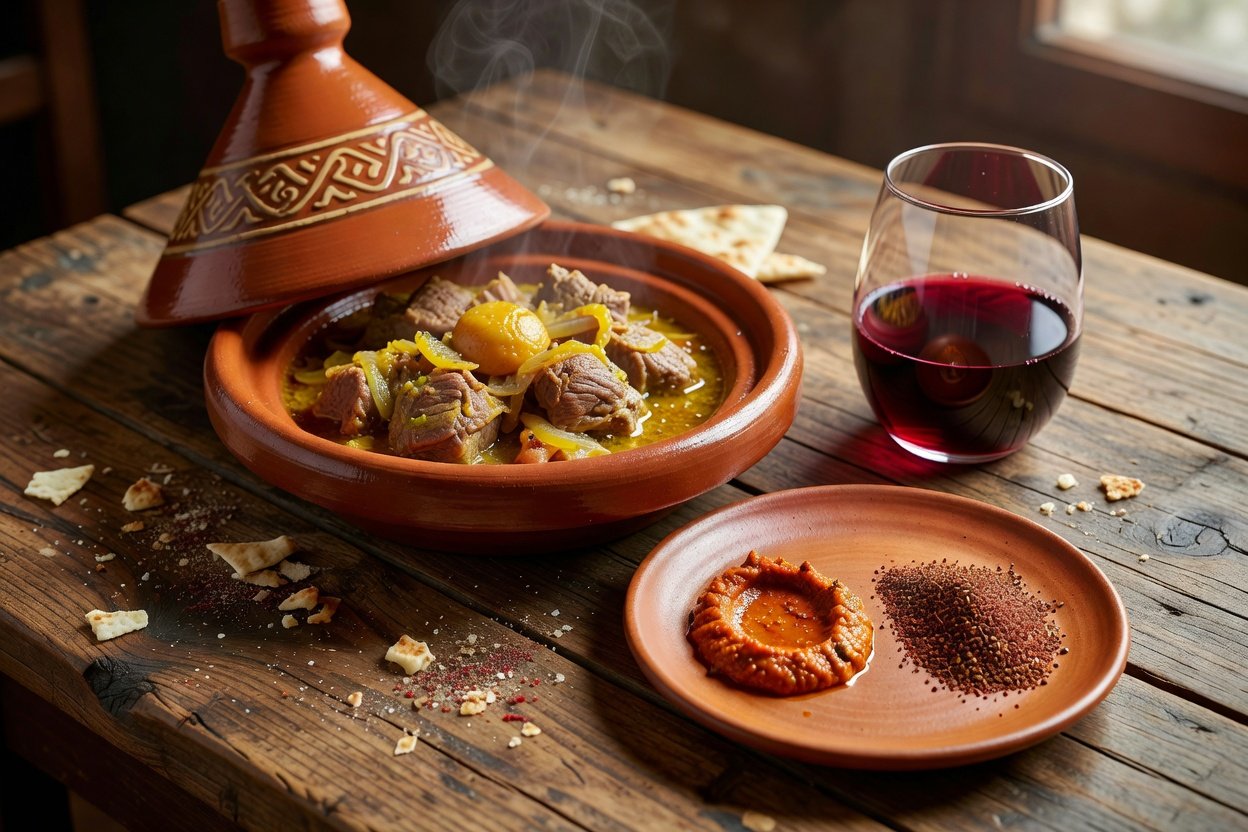
Moroccan-style tagines with preserved lemon and harissa deliver layered heat and sweetness from slow-cooked vegetables, meats, and dried fruits. Reasoning involves recognizing the dish's braised depth and the harissa's gradual build of warmth. Syrah or Grenache both work well; choose Syrah for lamb versions needing structure and Grenache for lighter chicken or vegetable tagines. Riesling cuts through oiliness in plant-based preparations, providing a clean finish. Experiment with spice levels by tasting the sauce first to calibrate the wine's sweetness or tannin.
Tasting Notes and Affordable Bottle Recommendations
Look for Riesling with stone fruit, lime, and floral aromas that provide lift against spice. Syrah often shows violet, olive, black pepper, and subtle smoke, while Grenache offers raspberry, strawberry, and Mediterranean herb notes. Focus on bottles from regions like Alsace for Riesling, the Rhône Valley for Syrah, and Spain or southern France for Grenache that deliver quality and approachability. These selections emphasize value and wide availability, allowing home cooks to build a versatile pairing collection without complexity. Pairing success improves when bottles are opened 30 minutes ahead to let aromas develop fully.
Red vs White Options Comparison
| Wine Type | Best For | Key Benefits | Potential Drawbacks |
|---|---|---|---|
| Riesling (White) | Harissa-heavy or acidic dishes | High acidity refreshes palate; subtle sweetness tames heat; versatile with vegetarian options | Can feel too light with rich, fatty meats if not off-dry |
| Syrah (Red) | Za'atar-spiced grilled items | Spice and structure match earthiness; stands up to bold proteins | High tannins may clash if the wine is overly oaked or young |
| Grenache (Red) | Sumac-accented falafel or tagines | Juicy fruit and soft texture complement brightness; food-friendly | Lower acidity requires careful matching with very tart elements |
Practical Steps for Home Pairing Success
- Assess the dominant spice: heat calls for off-dry whites, while earthiness suits structured reds with peppery character.
- Match intensity levels so bold dishes receive equally bold wines rather than delicate ones that get lost.
- Consider serving temperature carefully—whites around 8-10°C and reds at 16-18°C—to highlight aromas and textures.
- Test small pours first with a spoonful of the dish to refine choices before committing to full glasses.
- Account for sides and sauces, as they can shift the overall flavor balance significantly.
2026 Seasonal Twists for Home Cooks
Incorporate fresh herbs from spring gardens or preserved spices for winter meals to keep pairings dynamic. Experiment with chilled Grenache rosé for lighter tagines during warmer months or aged Riesling for complex shawarma platters in cooler seasons. These updates keep pairings exciting year-round and adapt to ingredient availability. Home cooks can also explore local market finds that mirror traditional spice profiles for creative twists on classic combinations.
FAQs on Common Pairing Mistakes
What is the biggest mistake when pairing with harissa? Choosing overly tannic reds that amplify heat instead of cooling it, leading to an unbalanced experience.
Can I pair sweet wines with sumac dishes? Yes, but keep them off-dry to avoid clashing with the spice's natural acidity and bright citrus notes.
How do I adjust for dietary variations? Vegetarian tagines often favor aromatic whites like Riesling, while meat-heavy versions support fuller reds such as Syrah.
Should wines be chilled for spicy foods? Slightly lower serving temperatures help refresh the palate and reduce perceived heat from chilies.
For additional wine education and pairing resources, visit Wine.com.
Conclusion
Mastering sommelier-level pairings for spiced Middle Eastern dishes elevates every meal from ordinary to exceptional. By focusing on Riesling, Syrah, and Grenache alongside key spices like za'atar, sumac, and harissa, home cooks can create memorable, balanced experiences. Apply these strategies with confidence to enjoy flavorful results in 2026 and beyond.
No comments yet. Be the first!