 Uncorked Conversations
Introduction to Sommelier Wine Pairings for Greek Island Cuisine
Greek island cuisine in 2026 continues to captivate food and wine enthusiasts with its emphasis on fresh seafood, vibrant herbs, and olive oil-rich preparations. Sommelier pairings focus on acidity-driven white wines such as Assyrtiko and Moschofilero to cut through briny flavors and balance the richness of dishes like grilled octopus and Cretan lamb. These pairings highlight Mediterranean varietals that are gaining global attention for their versatility with island-specific ingredients. The unique terroir of the Greek islands, including Santorini's volcanic soils and Crete's mountainous landscapes, produces wines with bright acidity that complement the salty, herbaceous notes of local fare. This comprehensive guide dives deep into practical matching strategies, real-world examples, and comparisons to mainland styles, helping both home cooks and professionals create memorable dining experiences.
Key Characteristics of Greek Island Cuisine
Island dishes often feature grilled seafood meze, octopus with lemon and oregano, and slow-cooked lamb infused with wild herbs like thyme and rosemary. Olive oil plays a starring role, adding a silky texture that demands wines with enough structure to refresh the palate. Freshness is paramount, with ingredients sourced daily from the Aegean Sea. Specific islands bring distinct twists: Santorini emphasizes sun-dried tomatoes and capers in its meze, while Crete showcases slow-roasted meats with mountain herbs. Mykonos and Paros lean toward lighter seafood preparations that highlight the sea's natural salinity. These elements create a cuisine that thrives on contrast between rich oils and sharp acids, making high-acidity wines essential partners rather than afterthoughts.
Why Assyrtiko and Moschofilero Excel in Pairings
Assyrtiko from Santorini offers mineral-driven acidity and citrus notes that tame the brininess of seafood while standing up to olive oil. Moschofilero from the Peloponnese but widely used in island settings brings floral aromatics and crispness to balance herb-forward meats. These varietals align perfectly with 2026 trends favoring light, food-friendly Mediterranean whites over heavier reds. Their natural high acidity levels, often between 6-8 grams per liter, provide the perfect counterpoint to fatty preparations without overwhelming delicate fish flavors. Winemakers in 2026 are experimenting with skin-contact versions that add subtle texture, further enhancing pairings with richer island lamb dishes.
Step-by-Step Sommelier Matching Guide
- Assess the dish's dominant flavors: identify whether briny, herbal, or rich in olive oil elements predominate to select the right wine intensity.
- Choose high-acidity whites to cut fat and cleanse the palate between bites, ensuring each sip resets the mouth for the next flavor.
- Match intensity levels carefully: lighter wines suit delicate meze while fuller-bodied Assyrtiko handles grilled or herb-crusted items without fading.
- Consider serving temperature around 8-10°C to preserve aromatic compounds and prevent the wine from tasting flat against salty foods.
- Test with a small bite and sip to refine the pairing, adjusting for personal taste or specific vintage characteristics.
- Account for regional variations by noting how volcanic soils in certain islands amplify minerality that echoes seafood dishes.
5 Example Plates with Wine Suggestions
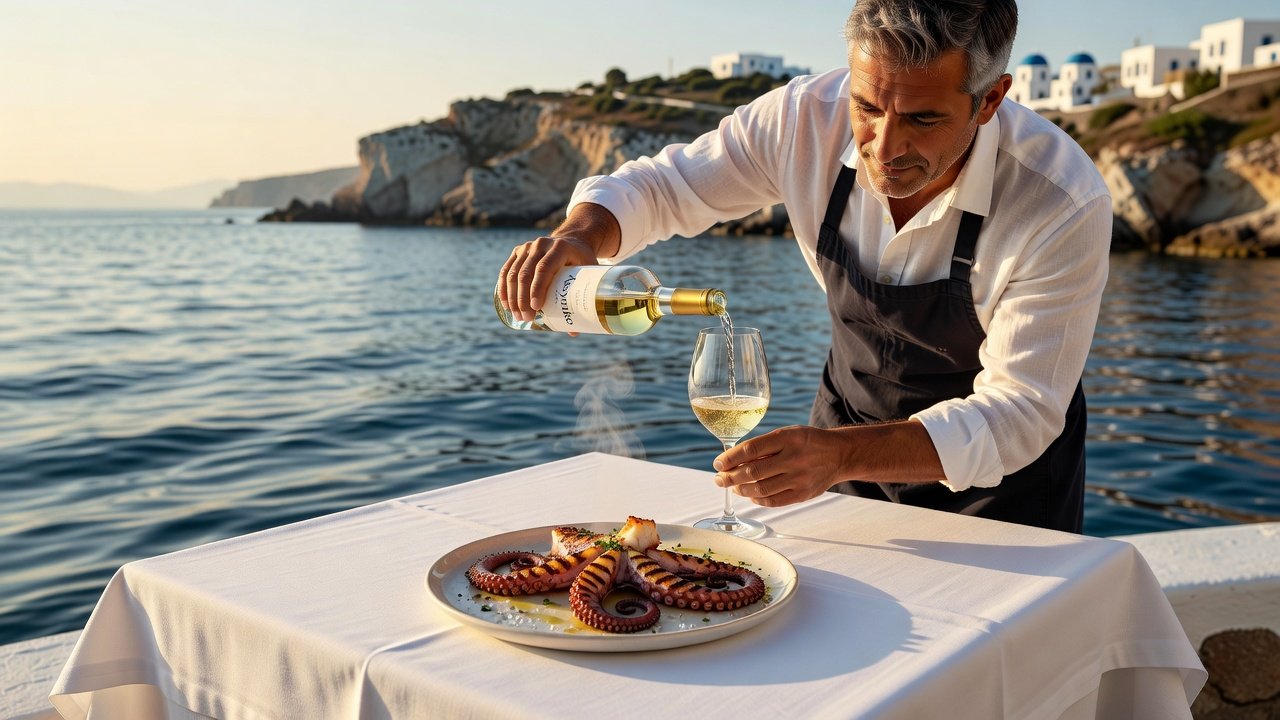
1. Grilled Octopus with Lemon-Oregano: Pair with Santorini Assyrtiko for its volcanic minerality that echoes the sea and cuts through char. The wine's lemon zest notes amplify the citrus marinade while its structure handles the tender yet chewy texture.
2. Fresh Seafood Meze Platter: Moschofilero's rose-like notes complement shrimp, calamari, and mussels by providing floral lift against the collective brininess of mixed small plates.
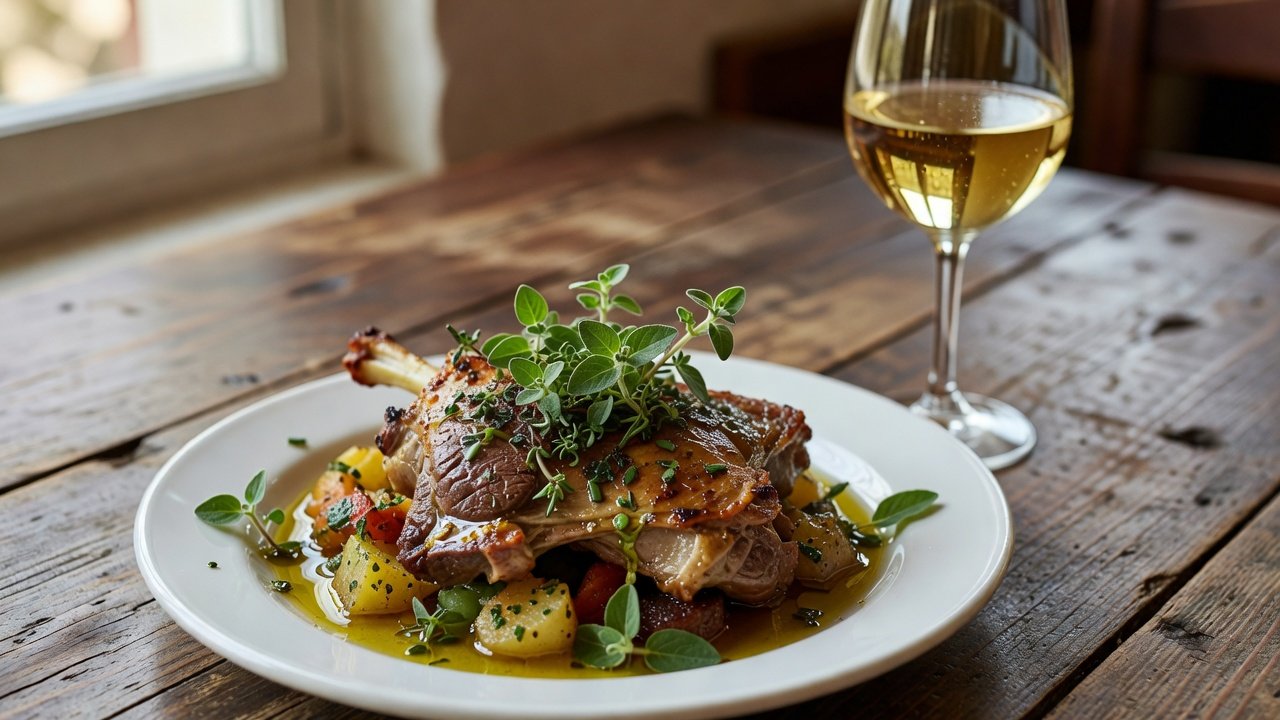
3. Cretan Lamb with Wild Herbs: Assyrtiko's acidity handles the rosemary and olive oil richness, with the wine's body standing up to slow-cooked meat without dominating herbal nuances.
4. Octopus Salad with Capers: Crisp Moschofilero balances the tangy capers and vinegar elements, creating a refreshing contrast that keeps the palate engaged through multiple bites.
5. Herb-Crusted Sea Bass: Assyrtiko enhances the fish's natural sweetness while its acidity slices through any accompanying olive oil drizzle or herb crust.
Mainland vs Island Wine Styles Compared
Mainland Greek wines often feature bolder reds like Xinomavro from Naoussa, suited to heavier stews and roasted meats common in northern regions. Island styles prioritize crisp whites that reflect the lighter, sea-influenced cuisine. The volcanic influence on Santorini produces uniquely saline Assyrtiko absent in mainland counterparts, giving island wines a distinctive edge for seafood. Mainland Moschofilero tends toward riper fruit profiles, while island expressions emphasize minerality due to proximity to the sea. These differences guide sommeliers when adapting pairings across Greece's diverse landscapes.
Learn more about Greek regional cuisines.
2026 Trends in Mediterranean Varietals
In 2026, Mediterranean varietals are seeing renewed interest for their climate resilience and food-pairing prowess. Greek islands lead with sustainable viticulture practices that appeal to eco-conscious diners. Assyrtiko and Moschofilero are increasingly featured in natural and low-intervention styles, adding complexity to traditional pairings while maintaining the bright acidity needed for island fare.
Practical Tips for Sourcing Greek Wines in 2026
Seek importers specializing in Greek estates or visit specialty retailers with rotating selections of island vintages. Look for recent releases from producers on Santorini and Crete to ensure freshness and optimal acidity levels. Online platforms and wine clubs increasingly feature these varietals as demand grows, making it easier to access small-production bottles. When traveling, prioritize direct winery visits on the islands for authentic selections and education on terroir-driven differences.
Explore current Greek wine recommendations.
Common Mistakes to Avoid in Pairings
One frequent error is choosing overly oaked wines that mask delicate seafood flavors. Another is ignoring temperature, which can dull acidity. Overlooking herb intensity in lamb dishes often leads to mismatched fruit-forward wines instead of crisp, herbal-friendly options like Moschofilero.
FAQ on Handling High-Acid Seafood Pairings
How do I prevent acidity from clashing with seafood?
Match the wine's acidity level to the dish's intensity and serve at the right temperature to create harmony rather than competition.
Can red wines work with island seafood?
Light reds like lighter Xinomavro can pair with richer lamb dishes but whites dominate for pure seafood due to their refreshing qualities.
What if the wine feels too sharp?
Pair with olive oil-dressed dishes to soften the perception of acidity and create a smoother overall experience.
Are there non-Greek alternatives that work similarly?
High-acid whites from other Mediterranean regions like southern Italy or coastal Spain can substitute in a pinch but lack the unique volcanic minerality of island Assyrtiko.
Conclusion
Mastering sommelier pairings for Greek island cuisine unlocks a world of vibrant flavors. By focusing on Assyrtiko and Moschofilero, enthusiasts can elevate every meal with balanced, refreshing combinations that capture the essence of the Aegean in 2026 and beyond.
No comments yet. Be the first!