 Uncorked Conversations
Introduction to Wine Pairings for Hearty Soups and Stews
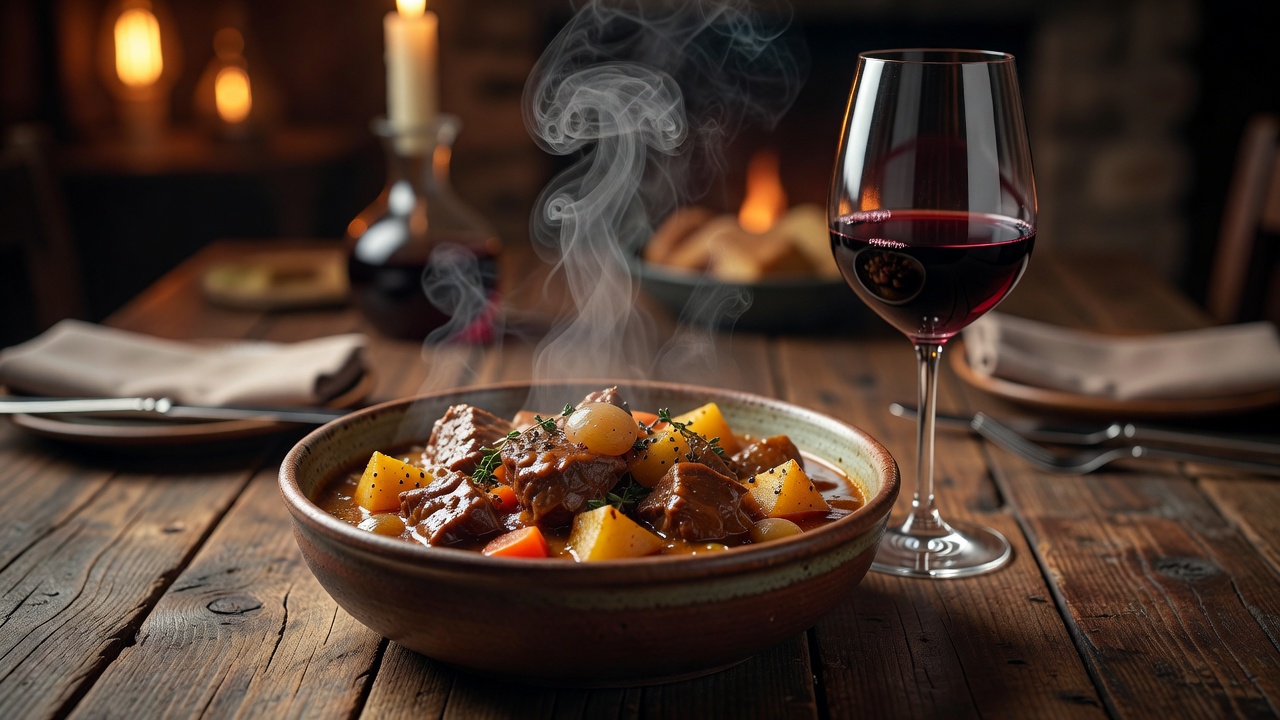
Hearty soups and stews deliver deep, layered flavors that challenge and reward thoughtful wine selections. In 2026, professional sommeliers focus on matching wine acidity, tannins, and body weight directly to the dish foundation, whether it is a clear broth, velvety cream base, bright tomato sauce, or assertive spice blend. This expanded guide delivers concrete recommendations, detailed reasoning, and repeatable techniques that help home cooks create balanced meals without relying on specific regional cuisines already covered elsewhere.
Successful pairings elevate both the food and the wine, turning a simple bowl into a memorable dining experience. By understanding how each wine element interacts with soup and stew components, cooks gain confidence to experiment while avoiding common clashes such as overwhelming tannins or muted acidity.
Understanding Key Wine Elements: Acidity, Tannins, and Body
Acidity in wine acts as a palate cleanser, cutting through richness and refreshing the mouth after creamy or fatty bites. Tannins provide structure and grip that counterbalance proteins and fats in meat-based stews. Body refers to the wine’s weight and texture, ranging from light and crisp to full and velvety. Matching these elements prevents the wine from tasting flat or the food from feeling heavy.
For example, a high-acid white can brighten a dairy-heavy soup, while moderate tannins in a red slice through braised meats. Body weight should roughly mirror the dish density: lighter wines suit clear broths, and fuller wines support thick, slow-cooked stews. Sommeliers recommend tasting the finished dish first, then selecting wine that either contrasts or echoes its dominant traits.
Red Wine Versus White Wine Recommendations
Red wines generally suit meat-forward stews because their tannins soften fats and cleanse the palate between bites. Medium-bodied reds such as Merlot or Cabernet Franc pair effectively with beef, lamb, or game dishes, offering enough structure without overpowering delicate vegetables. White wines shine alongside creamy soups or lighter broths, where their vibrant acidity prevents the meal from feeling overly rich. Unoaked or lightly oaked Chardonnay and crisp Sauvignon Blanc complement vegetable or poultry stews by adding brightness and subtle herbal notes.
The decision hinges on the primary ingredient and cooking method. Tomato-forward stews benefit from reds with lively acidity that echo the sauce tang, while creamy preparations call for whites that refresh rather than compete with dairy. When spices dominate, off-dry whites with a touch of residual sugar tame heat without clashing. Always consider alcohol level; higher-alcohol wines can amplify perceived spice, so moderate options are safer for bold dishes.
Regional Wine Styles That Complement Soups and Stews
European regions produce versatile styles that handle varied soup and stew profiles. French Rhône Valley reds deliver peppery spice and firm structure ideal for herb-infused broths. Italian wines from Piedmont offer earthy tannins that stand up to slow-cooked root vegetables and beans. New World selections from California provide ripe fruit and balanced acidity that soften spiced lentil or chickpea preparations.
Additional options include Spanish Rioja for its gentle oak and red-fruit character that suits tomato-based vegetable stews, and Austrian Grüner Veltliner for its peppery edge that refreshes creamy mushroom soups. Explore further regional guidance at Decanter. These styles adapt across many dishes when body and acidity are prioritized over origin specifics.
Temperature Tips for Optimal Enjoyment
Serving temperature dramatically affects how wine interacts with food. Reds perform best slightly cooler than room temperature, around 60–65°F, which highlights acidity and fruit while keeping tannins in check. Whites benefit from chilling to 50–55°F, preserving freshness against creamy textures and preventing the wine from tasting flabby. Over-chilling whites dulls aroma and flavor, while overly warm reds taste heavy and alcoholic.
Use an inexpensive wine thermometer for accuracy. Remove whites from the refrigerator 10–15 minutes before serving to reach ideal range. For reds, a short chill in the fridge for 20 minutes achieves the target if the bottle starts at room temperature. Proper temperature ensures the wine’s acidity and tannins work as intended against broths, creams, tomatoes, and spices.
Step-by-Step Pairing Examples with Specific Dishes and Bottles
Begin with a classic beef and barley stew. Select a medium-bodied Syrah whose pepper and dark-fruit notes mirror the meat and herbs. Open the bottle 30 minutes ahead so tannins soften, then serve the stew hot alongside the wine at 62°F. The combination creates a seamless progression from savory broth to lingering spice.
Next, consider a creamy mushroom and leek soup. Choose an unoaked Chardonnay whose bright acidity cuts through dairy richness while its subtle earthiness echoes the fungi. Chill the wine to 52°F and ladle the soup steaming hot. Small sips between spoonfuls demonstrate how the wine refreshes the palate without overwhelming delicate flavors.
For a tomato and white-bean vegetable stew, reach for a Sangiovese. Its natural acidity matches the tomatoes, and light tannins cleanse between bites of beans and herbs. Taste the stew during cooking, then adjust seasoning if needed before pouring the wine at 60°F. The pairing highlights both the dish brightness and the wine’s cherry notes.
Spiced chickpea and spinach soup benefits from an off-dry Riesling. Residual sugar tempers heat while lively acidity refreshes after each bite. Serve the soup at a gentle simmer and the wine chilled to 50°F. This contrast prevents spice from dominating and keeps the meal balanced.
Additional trials include pairing a lentil and sausage stew with a light Cabernet Franc, whose herbal edge complements lentils and softens sausage richness. Each example follows the same process: identify dominant flavor, match body and acidity, confirm temperature, and taste progressively.
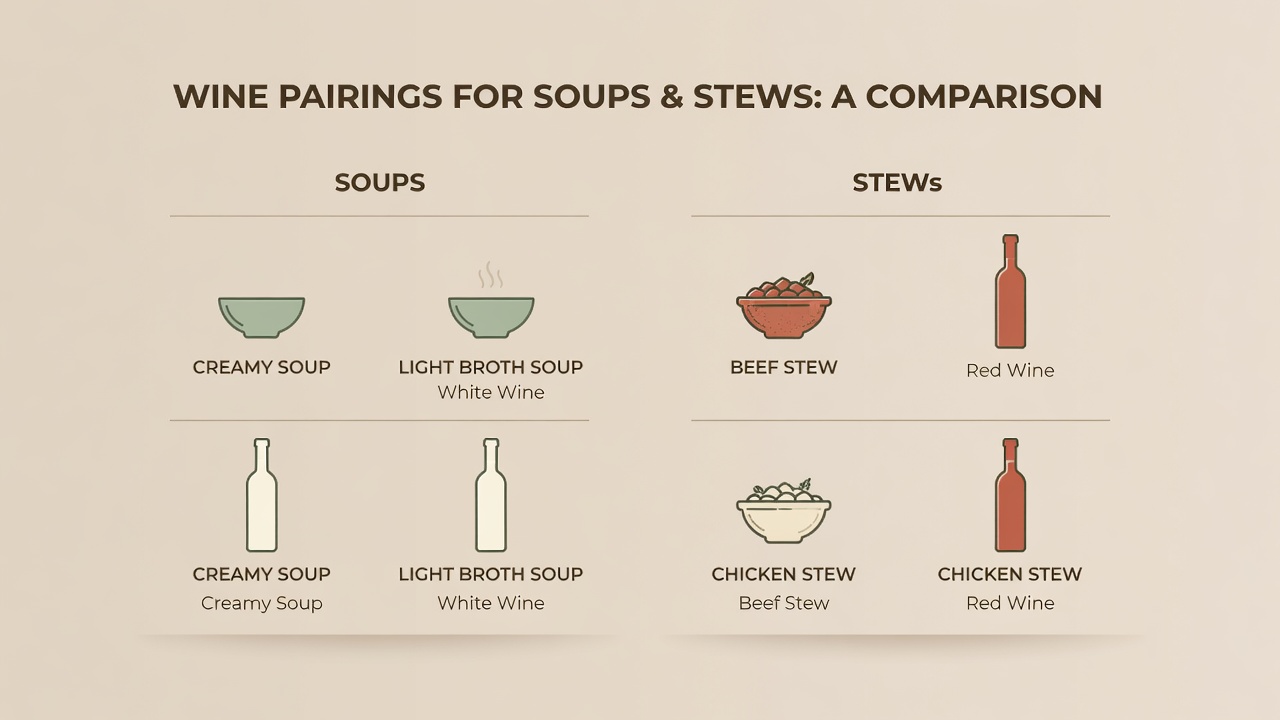
Comparison Chart of Classic Matches
| Dish Type | Wine Style | Key Reason |
|---|---|---|
| Beef and Barley Stew | Medium-bodied Red (Syrah) | Tannins cut fat, spice notes complement herbs |
| Creamy Mushroom Soup | Unoaked White (Chardonnay) | Acidity refreshes, earthiness matches ingredients |
| Tomato and Bean Stew | Light Red (Sangiovese) | Bright acidity echoes tomatoes, tannins cleanse |
| Spiced Chickpea Soup | Off-dry White (Riesling) | Residual sugar balances heat, acidity refreshes |
| Lentil and Sausage Stew | Light Red (Cabernet Franc) | Herbal notes mirror lentils, moderate tannins suit sausage |
Beginner Checklist for Successful Pairings
- Identify the dominant flavor profile: broth clarity, cream richness, tomato brightness, or spice intensity.
- Match body weight—light wines for broth-based soups, fuller wines for dense stews.
- Assess acidity level to cut richness or mirror brightness in the dish.
- Taste the finished dish before selecting the bottle to confirm exact needs.
- Serve at the correct temperature using a thermometer for precision.
- Choose appropriate glassware: larger bowls for reds to allow aeration, narrower for whites to concentrate aroma.
- Keep simple notes on successful combinations including dish ingredients and wine details for future reference.
- Start with versatile bottles that can handle multiple preparations before investing in many varieties.
Common Mistakes to Avoid
Many home cooks select wines that are too heavy or too light for the dish, resulting in imbalance. Another frequent error is ignoring serving temperature, which masks acidity and tannins. Overlooking residual sugar in whites can leave spicy dishes tasting harsher than intended. Finally, using cooking wine that is not enjoyable to drink often leads to disappointing results at the table.
FAQ: Common Pairing Mistakes for Home Cooks
What if the wine tastes too tannic with the stew? Choose a younger vintage or decant the bottle for 30 minutes to soften edges while preserving structure.
Can sweet wines pair with savory stews? Yes, especially when the dish contains spice or natural sweetness; the contrast creates an appealing dynamic.
How should very spicy soups be handled? Opt for wines with slight residual sugar and moderate alcohol to tame heat rather than amplify it.
Is it acceptable to use the same wine for cooking and drinking? Yes, provided it is a quality bottle you enjoy drinking on its own.
What glassware works best for these pairings? Use standard red wine glasses for fuller-bodied options and white wine glasses for lighter, acidic selections.
Additional fundamentals appear at Jancis Robinson. Experimentation paired with careful tasting remains the most effective teacher for refining personal preferences over time.
Conclusion
Mastering wine pairings for hearty soups and stews requires attention to acidity, tannins, body, and temperature. By applying the step-by-step examples, checklist, and chart above, home cooks can confidently select bottles that enhance every meal. Continued practice builds intuition and turns ordinary dinners into balanced, memorable experiences.
No comments yet. Be the first!