 Uncorked Conversations

Master Sommelier Wine Pairings for Egg Dishes 2026
Egg-based dishes offer incredible versatility yet pose unique pairing challenges due to their rich textures and delicate flavors. In this comprehensive guide, sommeliers share advanced techniques for matching wines with omelets, quiches, frittatas, and eggs benedict that go far beyond basic recommendations. These strategies emphasize balancing wine acidity against egg creaminess while navigating tannins and spice levels for harmonious results. Eggs serve as a blank canvas that absorbs surrounding ingredients, making precise wine selection essential for elevating the entire meal experience in 2026 dining trends.
Understanding Egg Textures and Wine Balance
Eggs create a creamy, protein-rich base that interacts directly with wine components. High-acidity wines cut through richness without overwhelming subtle flavors, while tannins can clash by binding to proteins and creating a metallic taste. Sommeliers recommend starting with wines that have bright acidity around 5-7 grams per liter to mirror the dish's mouthfeel. The protein structure in eggs amplifies both positive and negative wine attributes, so understanding mouthfeel is critical. Creamy preparations like scrambled eggs demand wines with enough lift to prevent heaviness, whereas firmer textures in baked frittatas allow for slightly fuller-bodied selections.
Consider preparation method first. Creamy scrambled eggs or hollandaise-laden benedicts pair best with sparkling wines that refresh the palate. Spicy frittatas with chorizo or peppers call for off-dry whites that tame heat through residual sugar. Temperature also plays a role, as chilled wines can mute delicate egg flavors if served too cold, while room-temperature reds may feel flat against warm dishes.
Acidity, Tannins, and Egg Interactions in Depth
Acidity acts as the primary bridge between wine and eggs by cleansing the palate and highlighting freshness. Tannins, however, require careful management because they react with egg proteins to produce astringency. Low-tannin reds or whites with moderate oak influence often succeed where bold reds fail. Sommeliers test pairings by taking small bites of the dish followed by a sip, noting how the finish evolves over several seconds. This iterative approach reveals whether a wine enhances or masks the eggs' natural sweetness.
Selecting Varietals for Creamy Versus Spicy Preparations
Chardonnay remains a top choice for creamy egg dishes. Unoaked versions deliver citrus notes that complement hollandaise in eggs benedict, while lightly oaked styles enhance quiche Lorraine's bacon and cheese notes. Pinot Noir offers a red option with soft tannins and red fruit that works surprisingly well with mushroom omelets. Sparkling wines like Champagne or Cava provide universal versatility. Their bubbles cleanse the palate between bites, making them ideal for brunch spreads featuring multiple egg styles. For spicy preparations, consider aromatic varieties such as Gewürztraminer or Riesling with a touch of residual sugar to counterbalance heat without clashing against egg proteins.
Wine pairings evolve with seasonal ingredients, and 2026 trends favor versatile bottles that handle both simple and elaborate egg preparations. Everyday options now include more skin-contact whites that add texture complexity to frittatas loaded with herbs and vegetables.
Step-by-Step Pairing Decision Tree
- Identify the dominant egg texture: creamy, fluffy, or firm, as this determines the required wine body and acidity level.
- Note any add-ins like cheese, vegetables, or spices, which introduce secondary flavor profiles that must align with wine fruit or oak notes.
- Assess sauce intensity, such as hollandaise or salsa, because rich sauces demand higher-acidity wines while light vegetable sides allow more flexibility.
- Choose acidity level first, then body weight, ensuring the wine's structure supports rather than overpowers the eggs.
- Test for tannin tolerance with a small sip alongside the dish to avoid metallic aftertastes common with high-tannin reds.
- Factor in serving temperature and glassware, as proper stemware enhances aroma delivery to complement egg subtleties.
- Consider the full meal context, including sides and beverages, to create a cohesive table experience.
- Adjust based on personal preference while staying within the core balance principles for repeatable success.
Red Versus White Comparisons
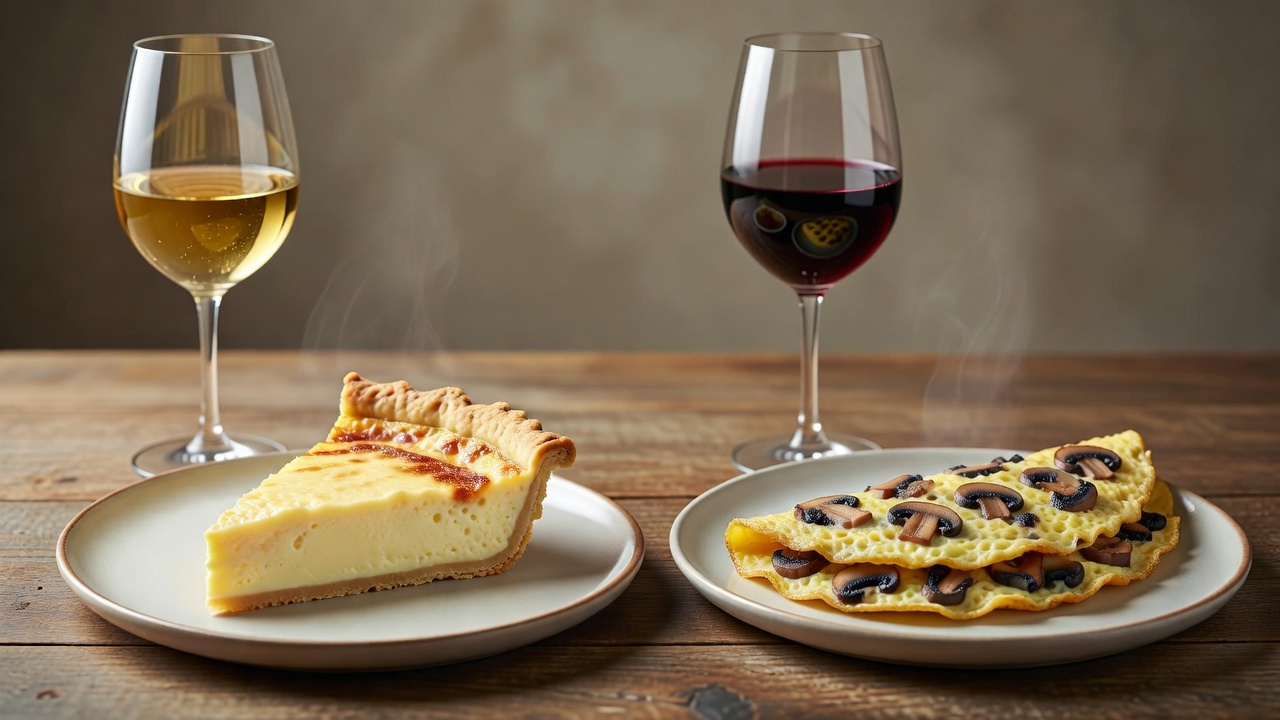
Side-by-side tastings reveal clear winners. A crisp Sauvignon Blanc cuts through a vegetable frittata's herbs better than a full-bodied red. However, light Pinot Noir excels with smoked salmon benedict, where its earthiness echoes the fish without overpowering eggs. White wines generally win for most egg dishes, but exceptions exist. Earthy reds like Gamay bring out mushroom flavors in omelets when tannins stay low. In practical tests, a side-by-side pour of Chardonnay and Pinot Noir with the same quiche often shows the white providing brighter contrast while the red adds savory depth.
Specific Pairings for Popular Egg Dishes
For classic omelets filled with herbs and cheese, an unoaked Chardonnay or dry sparkling wine maintains brightness. Quiches with pastry crust benefit from mineral-driven whites like Chablis that echo the buttery dough. Frittatas incorporating bold vegetables or meats pair well with off-dry Riesling or light reds. Eggs benedict with hollandaise shine alongside Brut Champagne or Cava, whose bubbles cut the sauce's richness effectively. Each example demonstrates how the decision tree adapts to real kitchen scenarios.
2026 Trends and Versatile Everyday Pairings
Current sommelier recommendations highlight natural wines with minimal intervention for cleaner pairings that let egg flavors shine. Current sommelier recommendations emphasize low-intervention bottles that support sustainable brunch menus without overpowering delicate preparations. Versatile choices include sparkling rosé for its adaptability across sweet and savory egg variations.
Common Mistakes to Avoid
Overpowering flavors often stem from high-tannin reds or overly oaky whites. Always avoid heavy Cabernets with eggs. Another frequent error is ignoring sauce components, which can turn a balanced wine into an unbalanced pairing. Serving wine at incorrect temperatures also diminishes its ability to refresh the palate between bites of rich egg dishes.
FAQ
What wine works with all egg dishes? Sparkling wine offers the safest versatile choice across preparations.
Can I pair red wine with eggs? Yes, but select low-tannin options like Pinot Noir or Beaujolais.
How do I handle cheese-heavy quiches? Match with similarly rich whites like Chardonnay to stand up to bold flavors.
Which wines suit spicy egg dishes best? Off-dry whites tame heat while preserving egg texture balance.
Is acidity more important than body in egg pairings? Acidity takes precedence because it cuts richness without adding weight.
What if my dish includes multiple add-ins? Prioritize the strongest flavor element when selecting the wine varietal.
Explore more pairing fundamentals from industry resources for deeper learning.
Conclusion
Mastering sommelier techniques for egg dishes transforms everyday meals into refined experiences. Focus on acidity balance, varietal selection, and preparation style to create memorable pairings that suit 2026 dining trends. Experiment with the decision tree and comparisons provided to refine your personal approach and enjoy consistent success at the table.
No comments yet. Be the first!