 Uncorked Conversations

Introduction to Sommelier Wine Pairings for Ethiopian Cuisine
Ethiopian cuisine stands out for its bold spices, communal dining style, and the iconic injera flatbread that serves as both plate and utensil. In 2026, home cooks and enthusiasts are turning to expert sommelier techniques to elevate these meals beyond basic red or white choices. This guide delivers practical, in-depth strategies for matching wines with signature dishes like doro wat and lentil tibs while respecting heat levels and flavor layers.
Ethiopian flavors center on berbere spice blends, tangy fermented elements, and rich stews. Successful pairings hinge on acidity to cut through fats, moderate tannins to handle spice, and aromatic whites or light reds that complement rather than compete. Whether preparing a traditional feast or a modern weeknight version, the right wine transforms the experience.
Understanding Key Ethiopian Flavors and Wine Principles
Berbere delivers heat from chilies alongside warm notes of cardamom, fenugreek, and ginger. Injera adds a sour, spongy texture from teff fermentation. Stews range from fiery meat preparations to milder vegetable versions. Sommeliers prioritize wines with bright acidity (such as those from cool-climate regions) and avoid overly oaky or high-alcohol bottles that amplify heat.
Key principles include matching spice intensity with residual sugar or fruit-forward profiles, using tannins to cleanse the palate, and selecting versatile bottles that work across multiple shared dishes. Decanter experts often highlight how Ethiopian meals reward wines with vibrant minerality.
Pairing Wines with Injera
Injera's tangy, slightly sour character calls for wines that echo or contrast this acidity. Sparkling options like Crémant d'Alsace or dry Prosecco refresh the palate between bites. Unoaked Chardonnay from Burgundy provides citrus notes that mirror fermentation tang without overwhelming the bread's subtle nuttiness.
Avoid heavy reds here; instead, opt for light-bodied Pinot Noir with red fruit acidity. These choices keep the focus on the meal's foundation while preparing the palate for bolder stews.
Red Wine Recommendations for Doro Wat
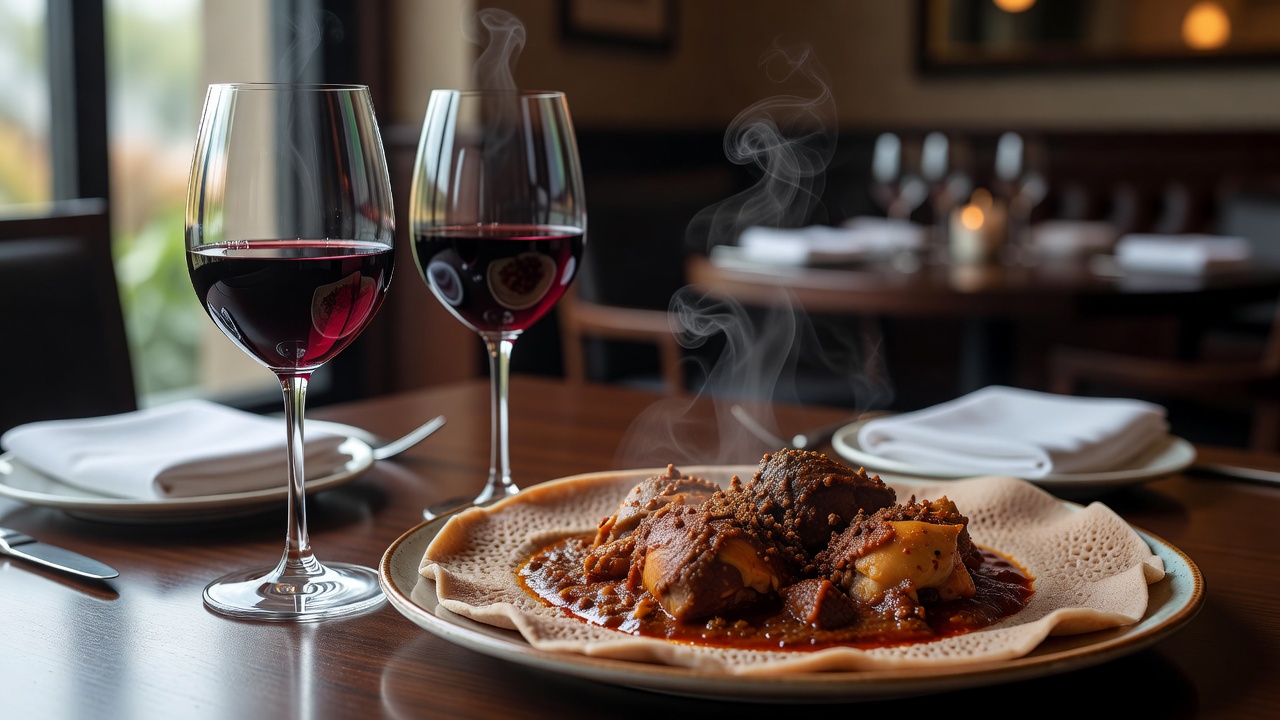
Doro wat, Ethiopia's national dish of chicken braised in berbere and spiced butter, presents layered heat and richness. Medium-bodied reds with soft tannins excel. Try a 2025 vintage Gamay from Beaujolais, whose juicy cherry notes and bright acidity balance chili heat. Italian Barbera offers similar red-fruit vibrancy with enough structure for the stew's depth.
For bolder palates, a restrained Syrah from the Northern Rhône provides peppery aromatics that echo berbere spices. Serve slightly chilled at 58–62°F to tame alcohol and enhance fruit.
White Wine Options for Varying Heat Levels
White wines shine with milder or vegetarian Ethiopian dishes. Grüner Veltliner from Austria cuts through lentil textures with white pepper and green apple notes. For higher heat, off-dry Riesling from the Mosel offers slight sweetness to temper spice while its acidity refreshes.
Chenin Blanc from South Africa (a nod to Ethiopia's own wine-growing ambitions) delivers honeyed texture that pairs beautifully with vegetable tibs. Always taste the wine against a small spoonful of stew first to calibrate sweetness and acidity.
Vegetarian Pairings: Lentil and Vegetable Tibs
Vegetarian tibs highlight lentils, mushrooms, or mixed vegetables in berbere. These earthy, sometimes smoky preparations benefit from earthy yet fresh wines. Loire Valley Cabernet Franc offers herbal notes that complement greens and lentils. Alternatively, an orange wine from Friuli, with skin-contact texture, stands up to the dish's intensity.
- Start with a chilled glass of Grüner Veltliner for lentil tibs.
- Progress to a light red like Gamay when mushrooms dominate.
- End with a crisp sparkling wine to cleanse after multiple shared plates.
Traditional vs Modern Ethiopian Meals: Pairing Comparisons
Traditional meals feature long-simmered stews served on large injera platters with multiple shared sides. Modern versions often include quicker preparations or fusion elements like grilled items. Traditional settings reward versatile, food-friendly bottles such as versatile Pinot Noir that work across the entire spread. Modern plates allow more experimental pairings, including natural wines with subtle funk that mirror injera's fermentation.
Both approaches benefit from step-by-step tasting: sip the wine, take a bite of stew, note how acidity or tannins interact, then adjust the next pour.
Step-by-Step Sommelier Pairing Guide for Home Cooks
- Assess spice level by tasting the berbere blend alone.
- Choose base acidity first, then layer fruit or tannin.
- Pour small tasting portions and test against each dish component.
- Adjust temperature—cooler for whites, cellar temperature for reds.
- Keep backup options ready, such as a versatile sparkling wine.
Real sommelier example: A New York-based certified sommelier recently paired a 2025 Austrian Grüner Veltliner with a vegetarian sampler, noting how the wine's peppery finish echoed the spices while its acidity refreshed after injera.
FAQ: Common Mistakes with Wine and Ethiopian Food Pairings
What wines should I avoid? High-alcohol Zinfandel or heavily oaked Cabernet can intensify heat and mask delicate spice layers.
Can I use the same wine for meat and vegetarian dishes? Yes—choose medium-bodied options like Barbera or Grüner Veltliner that adapt across the table.
How important is temperature? Critical. Serve whites at 48–52°F and reds at 58–62°F to optimize balance, especially in 2026 home settings with variable room temperatures.
Are there budget-friendly choices? Many excellent value bottles from Eastern Europe and South America deliver the needed acidity and fruit without premium pricing.
Conclusion
Mastering sommelier wine pairings for Ethiopian cuisine in 2026 opens a world of flavor harmony. By focusing on acidity, tannin management, and spice balance, home cooks can create memorable meals whether serving classic doro wat or vibrant vegetarian tibs. Experiment with the recommendations above, trust your palate, and enjoy the communal spirit of Ethiopian dining enhanced by thoughtful wine choices.


No comments yet. Be the first!