 Uncorked Conversations
Introduction: Mastering SEO for Wine Podcasts in 2026
Launching a wine podcast requires more than great conversations with vintners and sommeliers. Visibility in search results determines whether listeners discover your episodes on topics like wine interviews and vino talks. Uncorked Conversations has built a loyal audience by strategically applying SEO principles tailored to the wine niche. This guide explores actionable 2026 SEO strategies that mirror their success, helping new hosts rank for terms such as wine podcast while expanding reach organically. Search intent plays a critical role because listeners often seek specific guidance on regions, tasting notes, or production methods when they type queries into Google or podcast directories.
Effective SEO starts with understanding searcher intent. Listeners searching for wine interviews often seek in-depth discussions on grape varieties or winemaking techniques. By aligning content with these queries, podcasters can attract targeted traffic without relying solely on social media shares. In 2026 the landscape includes increased emphasis on voice search and AI summaries, making thorough optimization even more essential for sustained growth.
Keyword Research: Step-by-Step Examples for Wine Podcasts
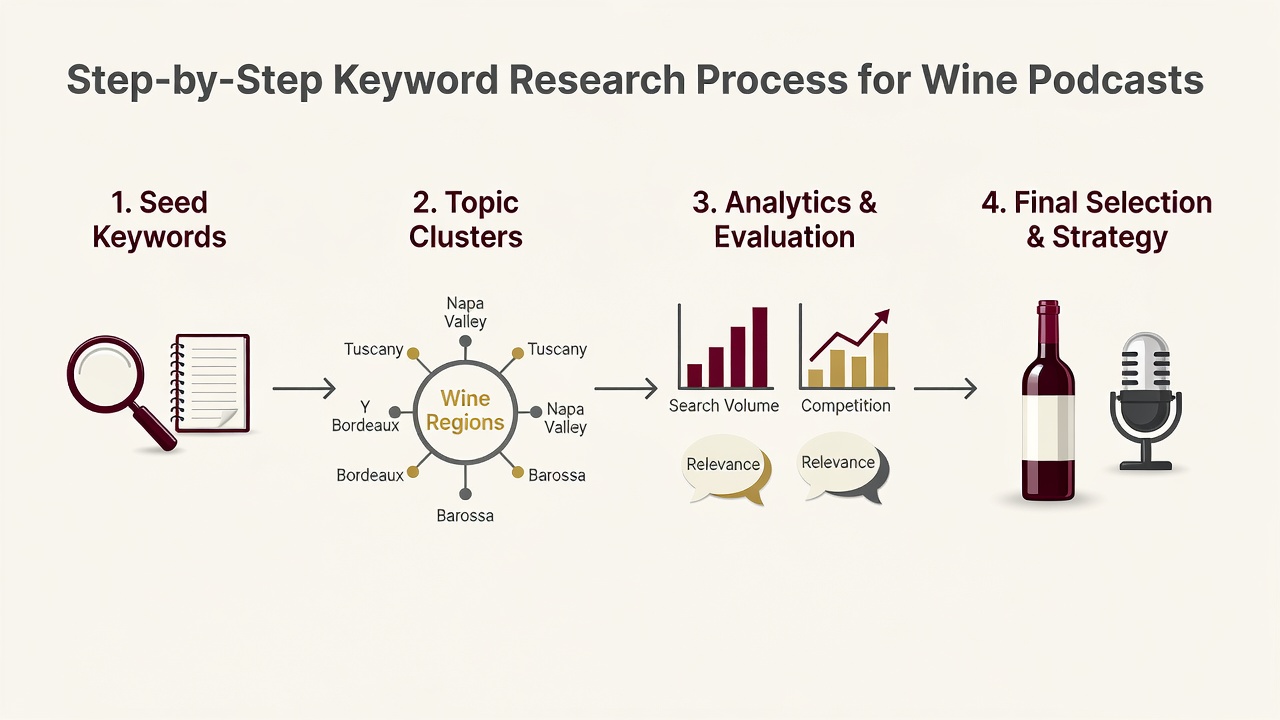
Begin keyword research by identifying core terms relevant to your niche. Use free tools like Google Keyword Planner or AnswerThePublic to uncover variations of "wine podcast." For instance, search volume data as of mid-2026 shows strong interest in "vino talks" alongside long-tail phrases such as "best wine interviews 2026" or "wine regions podcast episodes."
- Start with seed keywords: wine podcast, wine interviews, vino talks.
- Expand to related terms: natural wine discussions, sommelier stories, vineyard tours audio, sustainable winemaking episodes.
- Analyze competition: Review top-ranking episodes on platforms like Apple Podcasts and note how titles incorporate location-specific keywords like "Napa Valley wine podcast."
- Validate intent: Ensure keywords match user needs, such as educational content versus entertainment-focused vino talks.
- Track seasonal trends: Wine harvest season often boosts searches for regional episodes, so plan content calendars accordingly.
Incorporate these keywords naturally into episode titles, descriptions, and show notes. Avoid stuffing; instead, weave them into compelling narratives that highlight guest expertise. Additional research might reveal opportunities around emerging topics like low-alcohol wines or climate impact on vineyards, allowing your wine podcast to stay ahead of trends.
Optimizing Episode Titles and Descriptions
Titles should balance SEO with listener appeal. A strong example: "Wine Interviews: Exploring Tuscan Vino Talks with Expert Sommelier Elena Rossi." This format includes primary keywords early while promising value. Descriptions benefit from 150-200 words that expand on the episode theme, repeating secondary keywords like wine podcast and wine regions without repetition overload. Add structured elements such as bullet-point timestamps, full guest bios, and direct links to show notes or related resources.
Include calls to action that encourage subscriptions and reviews. Link back to related episodes to build internal connections, a tactic used effectively by Uncorked Conversations. Test variations by monitoring click-through rates in analytics dashboards to refine future titles for better performance.
Building Topic Clusters Around Wine Regions
Topic clusters organize content thematically. Create pillar content on broad subjects like "Wine Regions Spotlight" and link to cluster episodes covering specific areas such as Bordeaux or Mendoza. This structure signals expertise to search engines and encourages longer site visits. For example, a pillar page on global wine regions could link to episodes featuring wine interviews from Italy and Chile. Over time, this builds authority for queries involving vino talks tied to geography.
Expand clusters further by adding supporting articles on tasting techniques or food pairings that reference the main episodes. Internal linking between clusters strengthens topical relevance and helps search engines understand the depth of your coverage. Hosts who maintain consistent cluster updates see improved rankings for both head terms and long-tail variations.
Leveraging Analytics for 2026 Trends
Analytics platforms reveal what works. Monitor Google Search Console for impressions on keywords like wine podcast and adjust content accordingly. In 2026, trends point toward voice search optimization and AI-generated summaries, so optimize transcripts for spoken queries. Track listener retention metrics on your hosting platform to identify which vino talks retain audiences longest. Use this data to refine future episode structures and promotional efforts.
Combine podcast-specific analytics with web traffic data to measure how SEO efforts translate into downloads and engagement. Regular monthly reviews help identify underperforming content that can be refreshed with updated keywords or additional links to newer episodes.
Paid vs Organic Growth: A Clear Comparison
Organic growth relies on consistent SEO application, delivering sustainable results without ongoing spend. Paid methods, such as podcast advertising or social boosts, offer quicker spikes but require budget allocation. Organic strategies compound over time as backlinks from wine sites accumulate, while paid campaigns demand continuous investment to maintain visibility. Many hosts combine both: use paid to test new keywords, then double down on organic content that performs. Uncorked Conversations emphasizes organic first for authentic audience building. Learn more about effective search practices at Google Search Central.
Additional Tactics: Transcripts, Backlinks, and Promotion
Full episode transcripts improve accessibility and provide extra text for search engines to index, reinforcing keywords like wine interviews throughout the page. Reach out to wine publications and regional tourism boards for guest appearances that naturally earn backlinks. Promote episodes through targeted email newsletters and wine community forums to drive initial traffic that signals relevance to algorithms. These layered tactics complement core optimization and accelerate growth for new shows.
Practical Checklist for Wine Podcast SEO
- Research and map 10-15 target keywords per quarter.
- Optimize every title and description before publishing.
- Create at least one cluster article monthly around wine regions.
- Submit updated sitemaps to Google Search Console.
- Review analytics monthly and pivot based on 2026 search trends.
- Transcribe episodes for accessibility and keyword reinforcement.
- Build relationships for guest appearances that earn natural backlinks.
- Audit internal links quarterly to strengthen topic clusters.
- Test voice-search friendly phrasing in at least two episodes per season.
FAQ: Common Pitfalls for New Hosts
How often should I publish episodes?
Consistency matters more than frequency. Aim for bi-weekly releases to maintain momentum while allowing time for thorough SEO optimization of each wine podcast episode.
Is keyword stuffing still a risk?
Yes. Modern algorithms penalize unnatural repetition. Focus on helpful, conversational content that naturally includes terms like vino talks.
What if my analytics show low traffic?
Revisit title optimization and topic clusters. Many new hosts overlook long-tail keywords that convert better than broad terms.
Should I focus only on English keywords?
While English dominates many searches, consider regional language variations if your wine interviews feature international guests to capture bilingual audiences.
Conclusion
Implementing these 2026 SEO strategies positions your wine podcast for growth similar to Uncorked Conversations. By mastering keyword integration, topic clustering, and data-driven decisions, hosts can achieve lasting visibility in a competitive space. Start with one optimized episode this week and build from there. Additional resources on web standards are available at World Wide Web Consortium.

No comments yet. Be the first!