 Uncorked Conversations
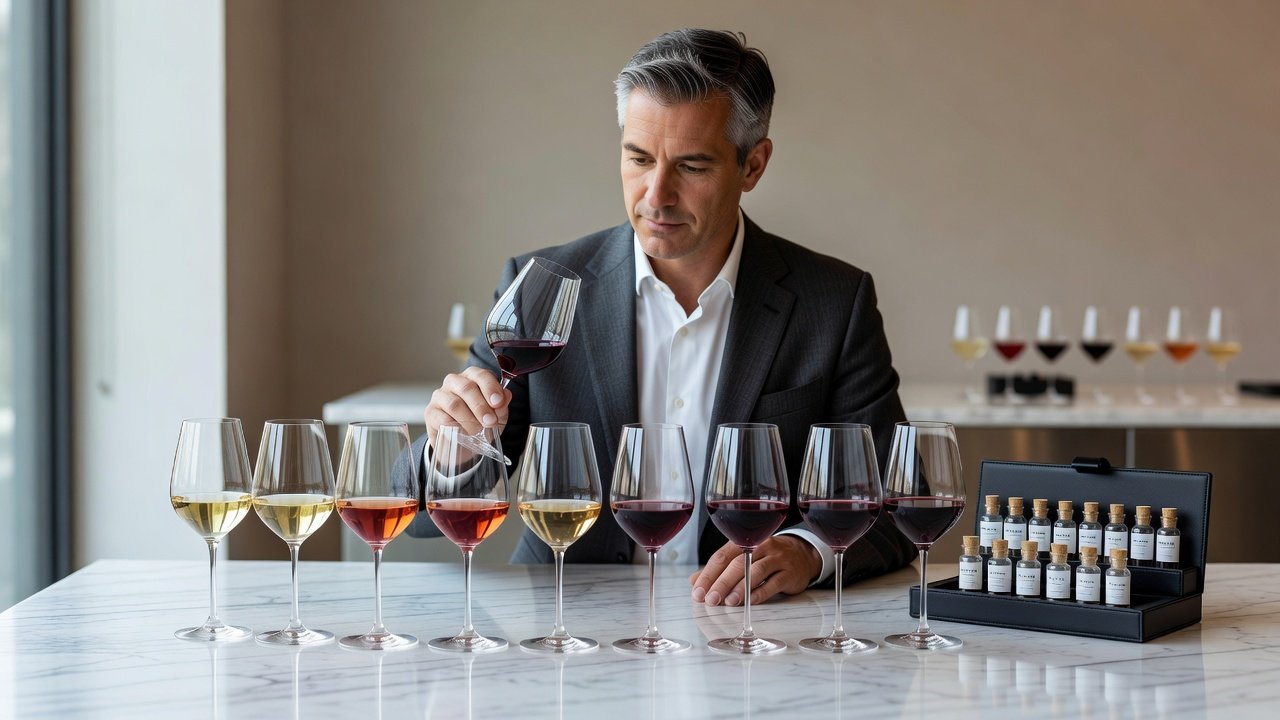
Introduction to Advanced Palate Training in 2026
Wine enthusiasts and professionals alike seek precision in tasting notes. The 2026 palate drills build on proven sensory exercises by emphasizing aroma recall, texture mapping, and blind calibration. These routines help develop consistent, accurate descriptors that elevate both personal enjoyment and professional reviews. In today’s evolving wine landscape, where new vintages and emerging regions appear constantly, refined sensory skills allow tasters to capture nuanced details that generic descriptors miss. Regular practice transforms vague impressions into specific observations such as distinguishing between blackcurrant and blackberry or identifying subtle mineral undertones in a Chablis versus a Sancerre.
Readers will find step-by-step routines, common pitfalls to avoid, and templates for tracking progress. Comparisons between solo and group drills, along with food-pairing tie-ins, provide practical applications. Expert tips on integrating scores with refined sensory data round out the guide, ensuring the drills translate into measurable improvements over a 30-day period.
Daily Aroma Recall Drills
Start each session by selecting five common wine aromas such as blackcurrant, vanilla, wet stone, citrus zest, and rose petal. Smell each from a neutral vessel for 30 seconds, then close your eyes and recall the scent without the source present. Repeat daily, rotating new aromas weekly to prevent habituation. For example, week one might focus on red fruit profiles while week two shifts to herbal and spice notes commonly found in Rhône blends.
Progress by combining two aromas and identifying both simultaneously. This builds layered recognition essential for complex wines. Track accuracy in a simple journal noting hits and misses. An advanced variation involves recalling aromas after a 10-minute distraction, simulating real tasting environments where conversation or other stimuli interfere with focus.
Texture Mapping Exercises
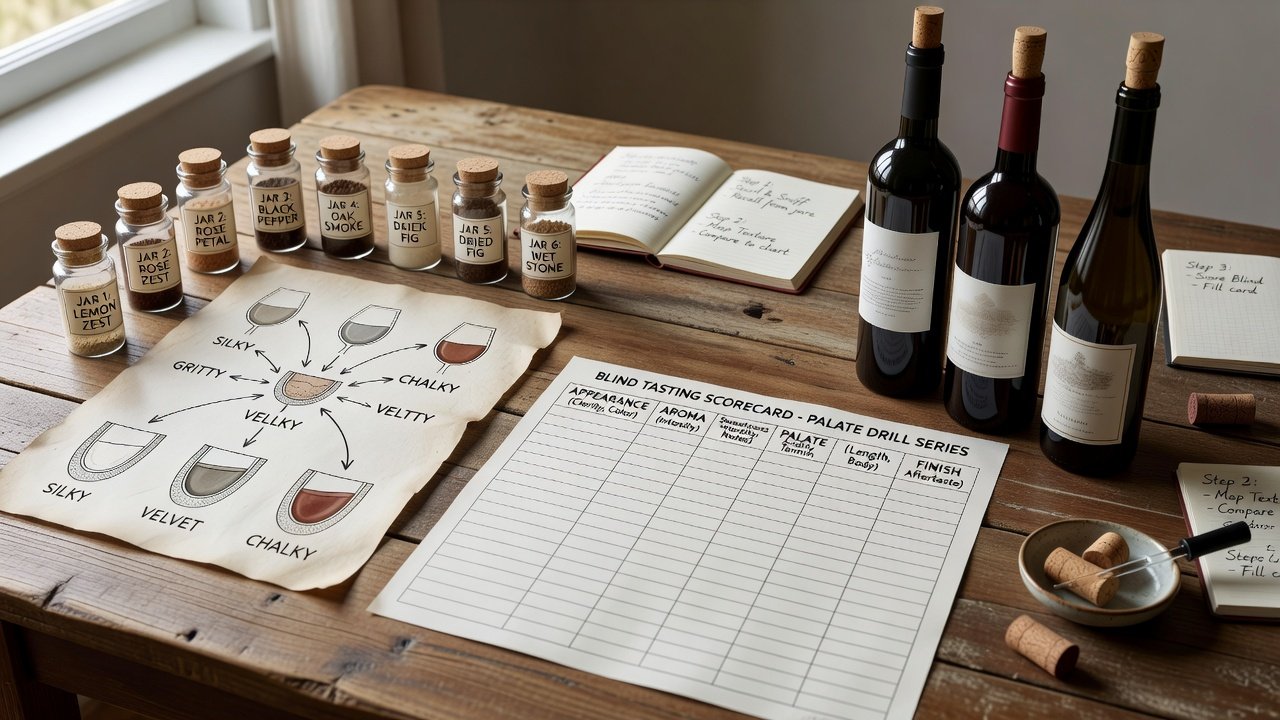
Texture mapping focuses on mouthfeel. Pour samples of wines with varying tannin levels and swirl each to note viscosity, astringency, and finish length. Map sensations on a scale from silky to grippy, paying attention to how alcohol warmth interacts with acidity. Practice with similar varietals from different regions to sharpen distinctions, such as comparing a light-bodied Pinot Noir from Burgundy against a fuller-bodied version from California.
Advanced drills include blind identification of oak influence versus fruit-driven texture. Record how new oak barrels add creamy vanilla notes alongside drying tannins, then contrast this with unoaked examples. Over time, these exercises help tasters articulate differences like “velvety mid-palate” versus “chalky finish” with greater confidence.
Blind Calibration Routines
Blind tasting remains the gold standard for calibration. Set up flights of three to five wines and guess variety, vintage, and region before revealing labels. Use a standardized scorecard to record initial impressions of color, nose intensity, palate structure, and overall balance. Review discrepancies immediately after uncovering the wines, noting whether misidentifications stemmed from aroma confusion or texture oversight.
This feedback loop accelerates improvement in note precision over repeated sessions. For instance, a taster might consistently underestimate acidity in cool-climate whites until targeted blind drills highlight the gap. Incorporate regional benchmarks, such as expecting higher minerality in Loire Valley Sauvignon Blanc compared to New Zealand counterparts.
Common Pitfalls and How to Avoid Them
- Over-reliance on memory without physical references leads to vague notes. Always keep aroma kits nearby for verification after each recall attempt.
- Rushing through samples reduces accuracy. Allocate at least two minutes per wine and reset the palate with water between flights.
- Ignoring temperature effects skews texture perception. Serve all samples at consistent 55–60°F to ensure fair comparisons.
- Focusing only on dominant aromas while missing subtleties. Train by isolating minor notes through successive dilutions of the sample.
- Neglecting to update personal lexicons as new descriptors emerge in the industry. Review recent tasting publications monthly to incorporate fresh terminology.
Solo Versus Group Drills
Solo drills offer flexibility and focused concentration. They suit beginners building foundational skills through repetition without external pressure. A solo practitioner can repeat a single flight five times in one evening to isolate variables like glass shape or serving temperature. Group sessions introduce diverse perspectives and debate, which refines calibration faster through discussion of differing descriptors for the same wine. For example, one participant might note “forest floor” while another identifies “dried leaves,” broadening collective vocabulary.
Combine both approaches: dedicate four days weekly to solo work and one evening to group tasting for balanced development. Groups also simulate professional settings such as masterclasses or competitions where verbal articulation matters.
Food-Pairing Tie-Ins
Integrate drills with meals by noting how specific foods alter perceived acidity or sweetness. Pair a high-acid white with creamy cheese, then record changes in tasting notes as the fat softens tartness. Another example involves matching tannic reds with grilled meats to observe how protein reduces astringency perception. Experiment with spice levels: a slightly sweet Riesling alongside Thai curry can demonstrate how residual sugar counters heat.
These real-world applications reinforce sensory mapping. Explore pairings through resources like Decanter for expert guidance on matching techniques that complement drill work.
Expert Tips on Integrating Scores with Sensory Data
Combine numeric scores with detailed descriptors for richer evaluations. After assigning a score, revisit the wine and add three precise aroma or texture terms. This method, endorsed by institutions such as Wine Folly, creates more actionable tasting records. Another tip involves cross-referencing scores with aroma recall accuracy percentages from the same session to identify correlations between overall quality perception and sensory precision.
Review past scores monthly to identify patterns in your sensory strengths and weaknesses. Consider logging environmental factors like time of day or fatigue level, as these influence both scores and note detail. Over 30 days, this integrated approach yields comprehensive progress data that purely numeric systems overlook.
Progress Tracking Templates
Use a weekly template with columns for date, wine, key aromas recalled correctly, texture notes, blind accuracy percentage, and notes on adjustments needed. For example, a sample entry might read: “March 5, 2026 – 2024 Sancerre – 4/5 aromas correct (missed flint), medium acidity, 82% blind accuracy – focus on mineral descriptors next week.” Review trends every 30 days to adjust focus areas, such as dedicating extra time to texture if scores plateau.
Quick-Start 30-Day Checklist
- Day 1–7: Master five core aromas daily with journal tracking.
- Day 8–14: Add texture mapping to each session and begin simple food pairings.
- Day 15–21: Introduce blind flights twice weekly and log score integrations.
- Day 22–30: Combine drills with one group session, refine templates, and complete final accuracy review.
FAQ on Building Consistency
How long until results appear?
Most practitioners notice improved precision within 14–21 days of consistent daily practice, with noticeable gains in aroma recall speed by the end of week three.
Can these drills help professionals?
Yes, sommeliers and critics use similar methods to maintain edge in competitions and reviews, often adapting them for certification exams.
What if I miss days?
Resume immediately without restarting the cycle; consistency compounds over time rather than perfection in scheduling.
Are tools like aroma kits necessary?
While helpful for beginners, everyday kitchen items such as herbs, fruits, and spices can substitute effectively once basic recognition is established.
How do I maintain gains after 30 days?
Transition to maintenance mode with two to three focused sessions per week, incorporating new vintages and regions to keep skills sharp.
No comments yet. Be the first!