 Uncorked Conversations
Introduction to Moroccan Wine Pairings
Moroccan cuisine is a vibrant tapestry of spices, sweetness, and savory elements that demands thoughtful wine pairings. In 2026, sommeliers are refining techniques to match the bold flavors of tagines, couscous, harira soup, and pastilla with wines that cut through richness while enhancing aromatic profiles. High-acid whites like Riesling and bold reds such as Syrah remain staples for balancing heat and fruit notes. This approach not only respects traditional Moroccan ingredients but also incorporates modern hosting preferences for lighter, more versatile bottles that suit outdoor gatherings and dietary variations.
Understanding the interplay of cumin, saffron, cinnamon, and preserved lemons is essential. These elements create opportunities for flavor contrast, where acidity refreshes the palate and tannins tame sweetness. Sommeliers often start by tasting the dish first to identify dominant notes before selecting a wine that either mirrors or contrasts those elements effectively.
The Core Flavors of Moroccan Cuisine
Moroccan dishes often combine sweet and savory notes, such as dried fruits in tagines or honey-glazed meats. Spices range from mild to fiery harissa, while acidity from lemon or yogurt provides brightness. Common flavor layers include earthy lentils in harira, flaky pastry in pastilla, and the nutty texture of couscous grains. Sommeliers emphasize matching wine body to dish intensity: lighter wines for delicate seafood, fuller ones for lamb. Additional considerations include the role of preserved ingredients like olives or dates, which can introduce briny or caramelized notes that influence pairing choices.
Key Pairing Principles for 2026
Balance is achieved by selecting wines with sufficient acidity to counter spice and sweetness. Off-dry Rieslings excel with sweet-savory combinations, while Syrah's peppery notes complement cumin-heavy preparations. Always consider alcohol levels to avoid overwhelming delicate flavors. In 2026, trends favor wines with lower alcohol content and sustainable certifications, allowing for longer, more comfortable dining experiences. Practical steps include preparing small tasting portions of the dish alongside candidate wines to test compatibility before committing to a full bottle.
Pairing with Tagines
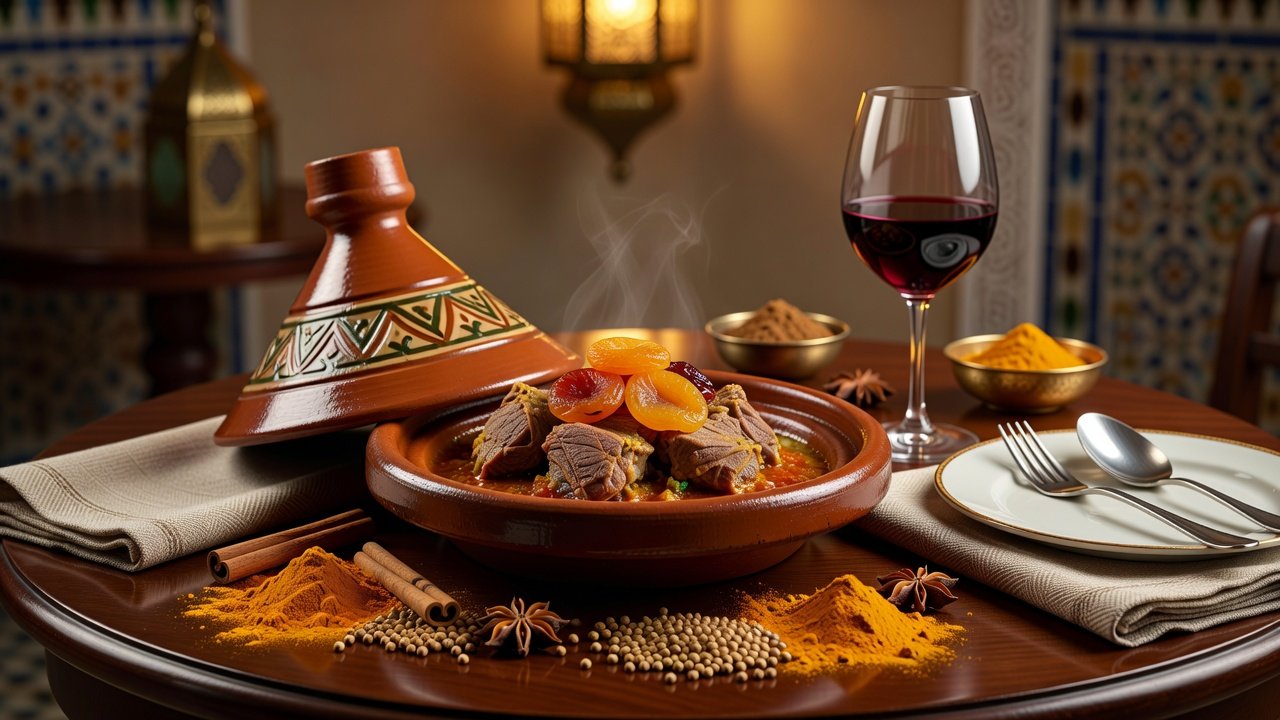
Lamb tagines with apricots pair beautifully with Syrah from the Rhône Valley, whose dark fruit and spice notes echo the dish's profile. For seafood tagines featuring shrimp or white fish, a crisp Riesling provides citrus acidity that cuts through richness. Vegetarian tagines with chickpeas and vegetables benefit from Grenache, offering soft tannins and herbal undertones. Additional examples include chicken tagines with olives and lemons, which shine with a high-acid Sauvignon Blanc to highlight the briny elements. When preparing pairings at home, consider marinating the protein overnight to intensify flavors, then test wines that either amplify the fruit components or provide a cooling counterpoint to the spices.
Example contrast: The sweetness of apricots in a lamb tagine is offset by Riesling's residual sugar, creating harmony rather than clash. This method extends to variations like beef tagines with prunes, where a medium-bodied Merlot can soften the tannins while echoing the dried fruit notes.
Pairing Couscous and Harira Soup
Classic couscous with seven vegetables shines alongside a high-acid Chenin Blanc, which mirrors the dish's earthy vegetables. Harira soup, often served during Ramadan, pairs well with a light Pinot Noir to handle its tomato and lentil base without overpowering herbs. Expand this by noting that couscous can be customized with raisins or almonds, calling for wines like Viognier that bring floral aromatics to the table. For harira, adding fresh cilantro or ginger invites a touch of sparkling wine to cleanse the palate between spoonfuls, especially in group settings common in 2026 hosting.
Pastilla and Seafood Options
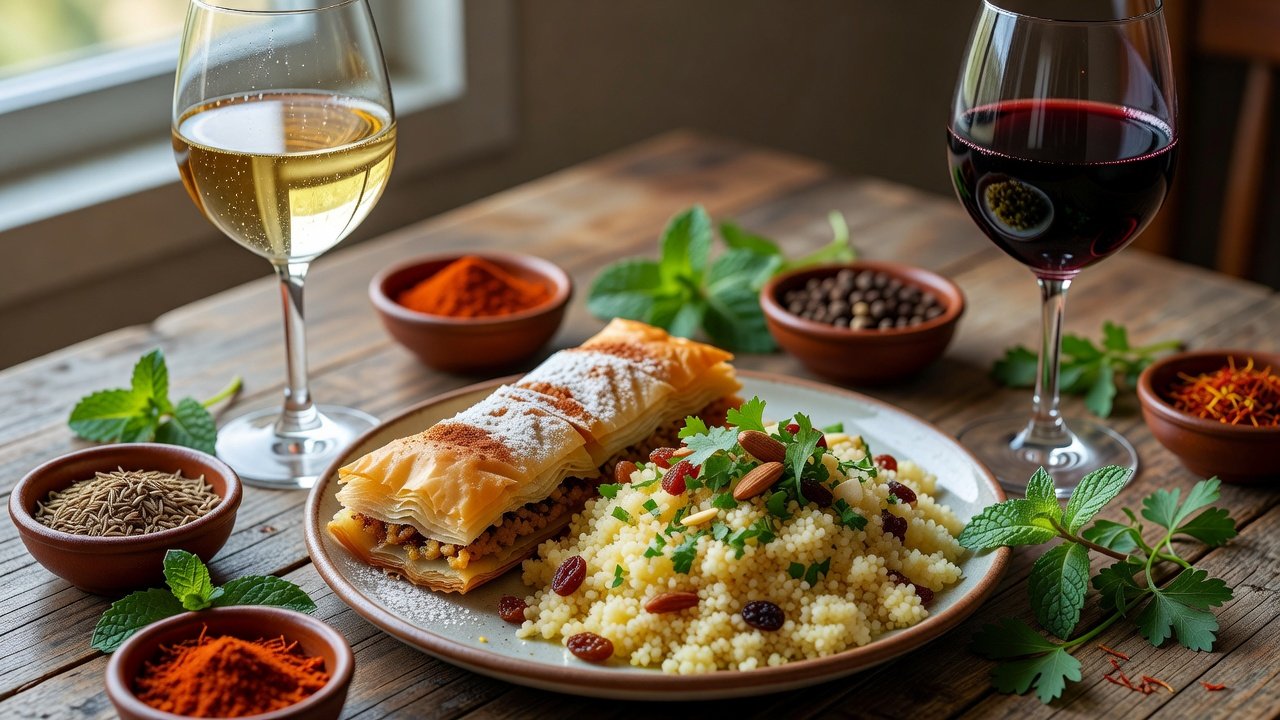
Pastilla, the sweet-savory pigeon or chicken pie dusted with cinnamon, calls for an aromatic Gewürztraminer to match its floral and nutty elements. Seafood options like grilled sardines or calamari benefit from Albariño, delivering saline minerality and bright acidity. Further details include pairing seafood pastilla variations with Vermentino for its herbal lift, or exploring how almond fillings in traditional pastilla respond well to a touch of botrytis-affected whites that enhance the pastry's sweetness without clashing.
Vegetarian Pairings and Flavor Contrasts
Vegetarian Moroccan dishes such as zaalouk or carrot salads pair effectively with Sauvignon Blanc for its grassy notes that echo fresh herbs. For deeper contrasts, try a rosé with strawberry undertones against spiced eggplant. Additional practical advice covers lentil-based salads or roasted vegetable platters, where a crisp Grüner Veltliner cuts through olive oil dressings while highlighting cumin. Sommeliers recommend experimenting with small pours to identify whether the wine should contrast the heat or mirror the earthiness present in root vegetables.
Practical Serving Tips and Glassware
Serve whites chilled to 8-10°C and reds at 16-18°C for optimal expression. Use large-bowled glasses for reds to allow aeration, and narrower ones for whites to concentrate aromas. Decant bold Syrahs 30 minutes before serving to soften tannins. In 2026, many hosts opt for stemless glasses for casual settings or universal glasses that accommodate multiple wine styles. Always have water and palate cleansers like plain bread available, and consider temperature adjustments for outdoor events where ambient heat can alter wine perception quickly.
Common Pairing Mistakes to Avoid
- Choosing overly tannic wines that amplify spice heat instead of balancing it with acidity
- Ignoring sweetness levels in dishes like pastilla, which can make dry wines taste bitter
- Overlooking temperature control during outdoor 2026 gatherings, leading to muted flavors
- Pairing high-alcohol wines with fiery harissa without testing small samples first
- Neglecting to account for dish temperature, as hot foods can exaggerate wine tannins
FAQ: Adapting Pairings for Dietary Needs and 2026 Trends
How do I adapt for vegan diets? Focus on plant-based tagines and use vegan-friendly wines certified by organizations like the Vegan Wine Movement. Many producers now label bottles clearly, making selection straightforward at retail.
What are emerging 2026 hosting trends? Low-alcohol options and sustainable wines from organic Moroccan producers are rising, alongside interactive pairing stations at dinner parties where guests can sample multiple combinations.
Can I substitute wines for non-drinkers? High-quality verjus or acid-forward non-alcoholic alternatives maintain balance while preserving the intended flavor contrast.
How should pairings change for gluten-free needs? Most Moroccan dishes are naturally gluten-free when couscous is swapped for quinoa, allowing the same wine recommendations to apply without adjustment.
Are there specific storage tips for these wines? Keep bottles in cool, dark places and open them 15-20 minutes before serving to let subtle aromas develop fully.
Conclusion
Mastering sommelier pairings for Moroccan cuisine in 2026 elevates every meal. By prioritizing acidity and thoughtful contrasts, hosts can create memorable experiences that honor both tradition and innovation. Explore further guidance from Decanter, Wine Enthusiast, and Institute of Masters of Wine for expanded recommendations and regional insights.
No comments yet. Be the first!