 Uncorked Conversations
Introduction: Why Temperature Stability Matters for Wine
Temperature fluctuations pose one of the greatest threats to wine quality, even for home collectors who assume basic storage is sufficient. Minor swings as small as 5–10°F can accelerate chemical reactions inside the bottle, leading to premature aging, muted flavors, and off-aromas over months or years. This guide goes beyond basic hacks to deliver advanced, sommelier-level advice tailored for inconsistent home environments in 2026. Home enthusiasts often invest in quality bottles only to see their potential diminished by overlooked environmental factors.
Wine is a living product whose chemistry depends on stable conditions. Heat speeds oxidation while cold can cause precipitation of tartrates or cork contraction that allows oxygen ingress. Understanding these processes helps enthusiasts preserve investment-grade bottles and everyday favorites alike. The impact extends beyond taste to the wine's structural integrity, color retention, and overall market value when reselling aged vintages.
How Temperature Swings Alter Wine Chemistry and Flavor
Repeated expansion and contraction from temperature changes stresses corks and capsules. Over time this creates micro-oxidation pathways that dull fruit notes and introduce sherry-like or nutty characteristics prematurely. Red wines may lose vibrant tannins, while whites develop flat, soapy textures. Studies from leading wine publications confirm that consistent exposure to swings above 59°F (15°C) shortens optimal drinking windows by years.
Long-term cellaring amplifies these effects. A bottle stored with daily 8°F variations experiences accelerated ester hydrolysis, stripping complexity. Home enthusiasts often overlook seasonal HVAC cycles or sunlight through windows as hidden culprits. For instance, a Cabernet Sauvignon left in a garage might develop cooked fruit notes after just two summers of 20°F swings, turning what should be a 15-year cellar candidate into a drink-now wine. Similarly, delicate Pinot Noirs can lose their signature earthiness and become one-dimensional when exposed to repeated cold snaps followed by warming periods.
Chemical reactions such as Maillard browning and phenolic polymerization accelerate unevenly during fluctuations. This unevenness leads to imbalanced acidity and unpredictable sediment formation. Sommeliers recommend tracking cumulative degree-hours above or below ideal ranges as a more accurate damage metric than simple daily averages.
Ideal Stable Temperature Ranges by Wine Type
Most wines thrive between 53–57°F (12–14°C). Specific guidelines include:
- Red wines: 55–59°F (13–15°C) to maintain structure without over-extraction
- White and rosé wines: 49–54°F (9–12°C) to preserve acidity and aromatics
- Sparkling wines: 50–55°F (10–13°C) to protect carbonation and prevent cork ejection risks
- Fortified wines: 59–64°F (15–18°C) as they tolerate slightly warmer conditions
Consistency trumps the exact number within these bands. A stable 60°F environment outperforms a fluctuating 55°F range. Vintage Ports and Sherries benefit from the upper end of their tolerance because their higher alcohol content provides natural protection against minor heat spikes, whereas young Rieslings demand stricter cold stability to retain volatile aromatics like petrol and citrus zest.
Affordable Monitoring Tools for Home Use
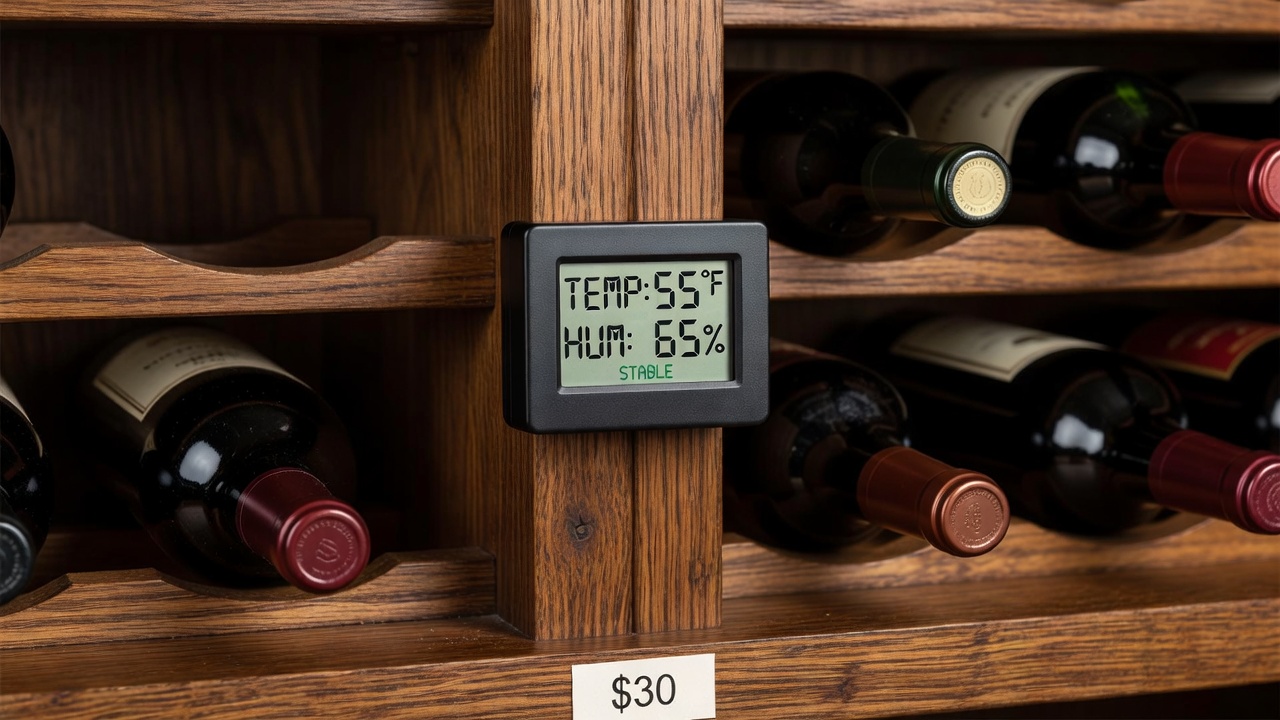
Start with digital hygrometers that track both temperature and humidity. Models with data logging allow review of daily swings via smartphone apps. Place sensors at multiple heights in your storage area because warm air rises. Pair devices with alerts set for deviations beyond 2°F.
Additional options include infrared thermometers for spot checks and simple dial gauges for passive setups. Avoid relying solely on built-in refrigerator thermostats, which often cycle widely. For example, a basic Bluetooth-enabled sensor costing under $30 can log 30 days of data and send push notifications when thresholds are crossed. Cross-reference readings with a secondary analog device to catch calibration drift. Many enthusiasts also integrate these monitors with home automation systems for remote oversight during travel.
Step-by-Step Setup for Inconsistent Home Environments
1. Assess your space: Measure temperatures at different times over a week using a logging device.
2. Choose location: Interior closets or under-stair areas away from exterior walls and appliances.
3. Insulate: Add weatherstripping to doors and use reflective barriers on windows.
4. Install monitoring: Position sensors at bottle level and connect to alerts.
5. Stabilize actively or passively: Introduce cooling only after passive measures prove insufficient.
6. Test and adjust: Review logs weekly for the first month and recalibrate.
7. Document baselines: Photograph bottle labels and note initial conditions for future comparisons.
8. Schedule seasonal reviews: Re-evaluate every three months to account for changing weather patterns.
Real-World Household Pitfalls and Corrective Actions
Common issue: Storing wine above the refrigerator where compressor heat causes nightly spikes. Correction: Relocate to a shaded hallway cabinet and add a small fan for air circulation.
Another frequent problem: South-facing rooms with afternoon sun exposure creating 15°F daily swings. Solution: Install blackout curtains and move bottles to an interior wall rack with added insulation panels.
Kitchen counters near ovens or dishwashers represent another trap. Moving collections to a basement corner or dedicated wine fridge in a cooler room eliminates most fluctuations. A collector in a 1920s apartment discovered 12°F swings from radiator heat; installing a thermal barrier and relocating the rack reduced variations to under 3°F within a week.
Attic storage during summer months often exceeds 85°F. Corrective action involves moving bottles to ground-floor interior spaces and using phase-change packs as temporary thermal buffers during heatwaves.
Passive Versus Active Cooling Methods Compared
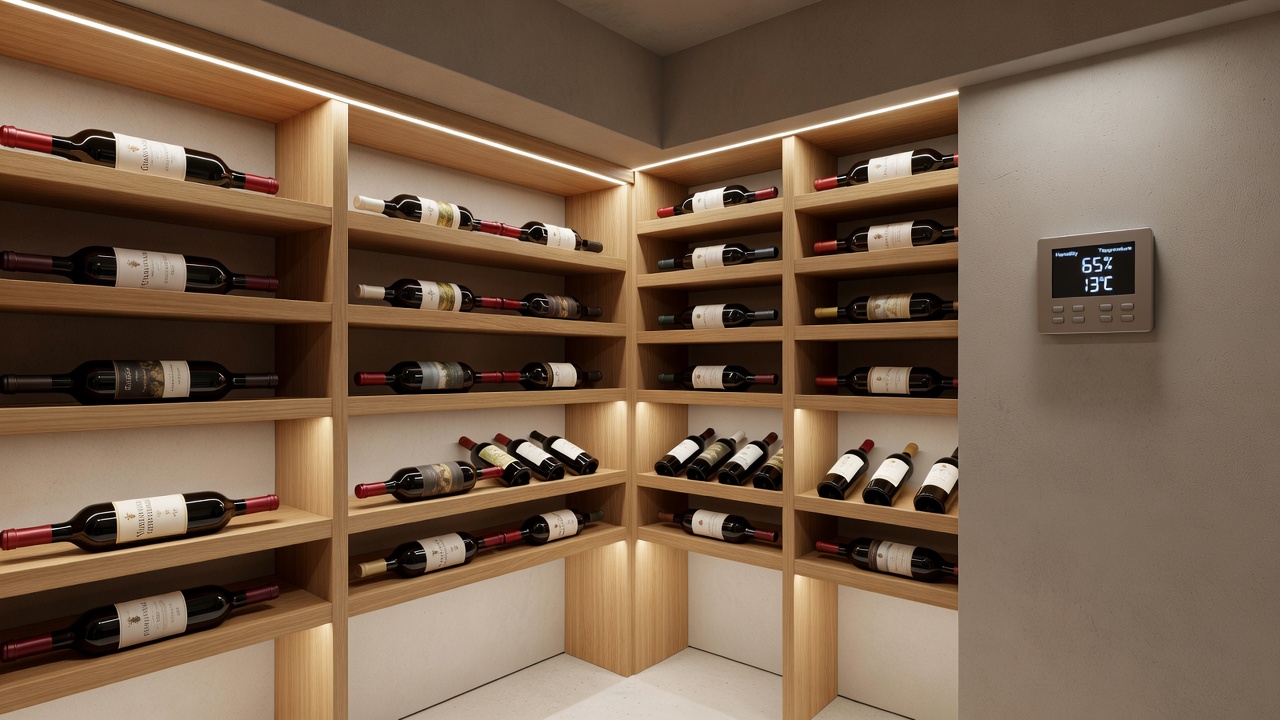
Passive methods rely on insulation, thermal mass (such as stone or water barrels), and strategic placement. They cost little upfront and require no electricity but struggle in extreme climates or poorly insulated homes. Examples include converting an unused closet with added foam board and maintaining a consistent microclimate through strategic placement near north-facing walls.
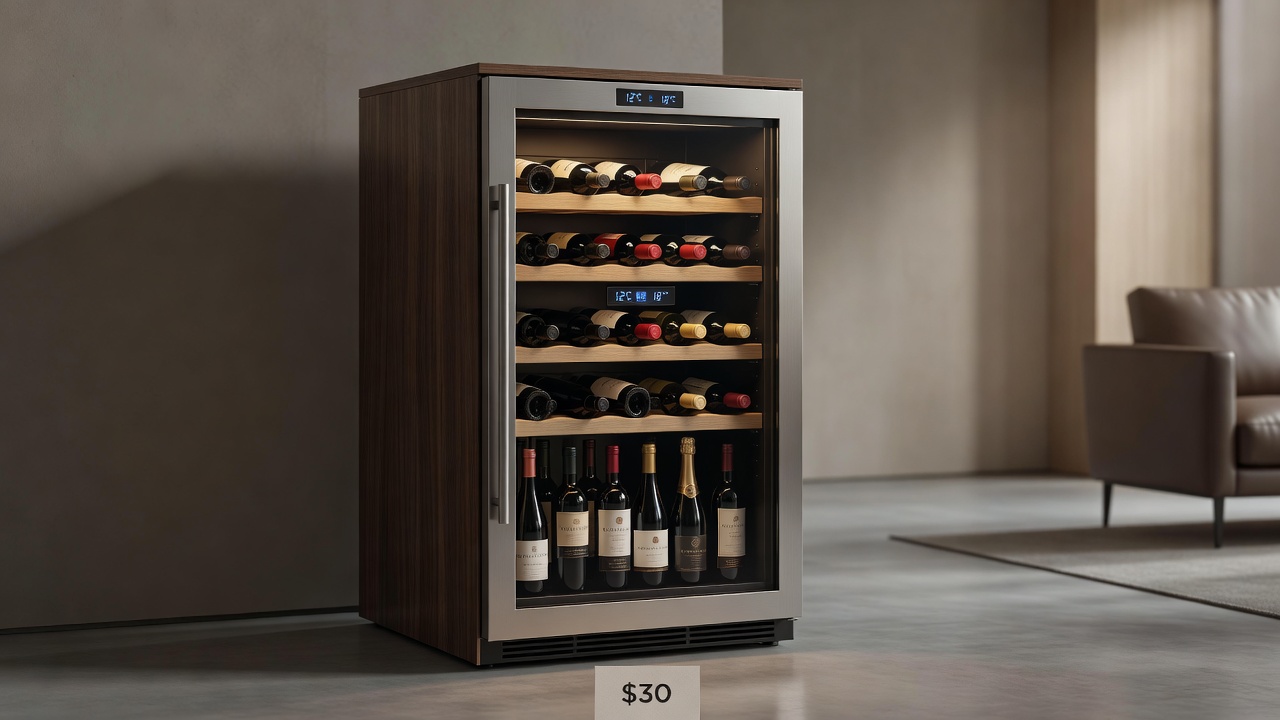
Active systems use thermoelectric or compressor wine fridges for precise control. They handle larger collections effectively yet consume energy and may introduce vibration if not vibration-dampened. For most enthusiasts, a hybrid approach—strong passive insulation plus a small active unit for peak summer months—delivers the best balance of stability and cost. Passive setups excel in naturally cool basements, while active cooling becomes essential in apartments without below-grade space. Vibration from active units can be mitigated by placing units on rubber mats and ensuring compressor models sit on solid flooring rather than shelves.
Long-Term Cellaring Concerns and Seasonal Adjustments
Over multiple years, even subtle cumulative temperature stress compounds. Collectors should rotate bottles quarterly to equalize exposure and inspect corks for seepage during spring and fall transitions. Seasonal HVAC changes often create the largest swings, requiring temporary adjustments like extra insulation layers in winter or increased ventilation in summer. Long-term success depends on maintaining detailed logs that reveal patterns invisible in short-term checks.
Conclusion
Mastering temperature control transforms casual storage into professional-level cellaring. By implementing monitoring, addressing household pitfalls, and choosing appropriate cooling strategies, home enthusiasts can safeguard flavors and aromas for years. Consistent conditions remain the single most important factor in long-term wine enjoyment.
FAQ
How do seasonal changes affect wine storage? Winter heating and summer cooling create the largest swings. Monitor closely during transitions and adjust insulation or active cooling accordingly.
Is long-term cellaring possible without a dedicated cellar? Yes, with diligent monitoring and hybrid cooling solutions many collectors successfully age wines for a decade or more in adapted home spaces.
What humidity levels complement stable temperatures? Aim for 50–70% relative humidity alongside temperature control to prevent cork drying or mold growth.
Can I use a standard refrigerator for short-term storage? Only for brief periods; the temperature cycling and low humidity make it unsuitable for anything beyond a few weeks.
No comments yet. Be the first!