 Uncorked Conversations
Introduction: Sommelier Principles Meet Urban Living
Wine enthusiasts in cities often lack traditional cellars, yet preserving flavor and serving readiness remains essential. Sommeliers emphasize consistent conditions to protect delicate compounds like tannins and aromas. This guide delivers actionable hacks tailored for apartments, focusing on affordable solutions that align with professional standards for 2026 living. Urban environments introduce variables such as shared walls, limited square footage, and seasonal indoor climate shifts that can quickly compromise a collection. By understanding how temperature stability prevents oxidation and how proper humidity avoids cork shrinkage, apartment dwellers can achieve results comparable to dedicated cellars. The following sections break down each element with concrete examples drawn from real city experiences.
Understanding Core Sommelier Storage Principles
Sommeliers prioritize four pillars: temperature consistency, humidity balance, darkness, and minimal disturbance. Temperature fluctuations cause expansion and contraction that stress corks and invite oxygen. Ideal ranges hover near 55 degrees Fahrenheit, but the key is avoiding swings greater than two degrees daily. Humidity around 60 percent keeps corks supple without encouraging mold. Light exposure, especially UV, breaks down flavor molecules over time, while vibrations from traffic or appliances stir sediments and accelerate aging unevenly. In apartments these factors interact constantly, requiring creative barriers rather than expensive infrastructure. Applying these principles starts with observation: track conditions for a week using basic tools before implementing changes.
Temperature Control Hacks for Small Spaces
Identify microclimates within your unit by measuring different rooms at various times. A north-facing closet often stays coolest. Supplement with passive methods such as reflective window films to block heat gain and strategic placement of frozen water bottles wrapped in towels for short-term cooling during heat waves. For year-round stability, consider insulating storage areas with affordable foam panels cut to fit shelves. Avoid placing bottles near exterior walls that conduct outdoor temperatures or near electronics that emit warmth. Multiple residents report success layering storage behind bookshelves that act as thermal buffers. Revisit readings monthly because heating systems activate in fall and alter interior dynamics dramatically.
Humidity Management Techniques
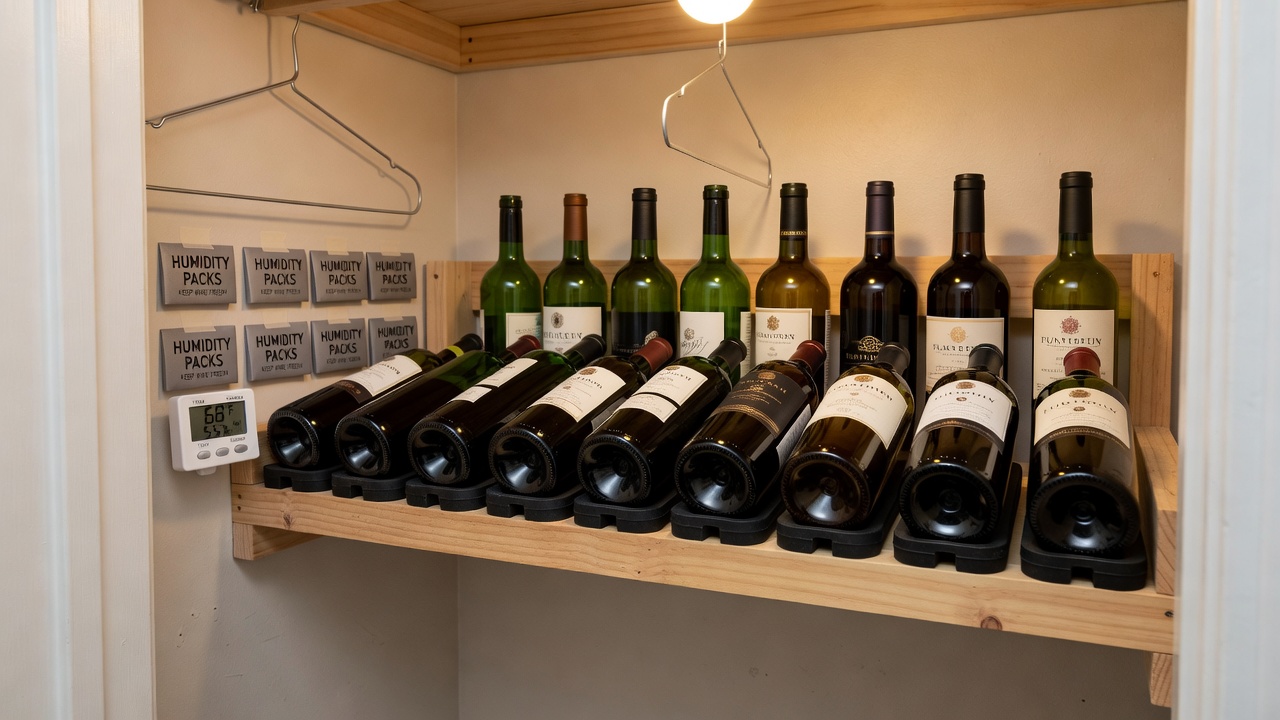
Low humidity dries corks leading to leakage, while excess fosters mold on labels. Maintain balance with natural solutions including a shallow dish of damp sea salt or commercial reusable desiccant packs placed in corners. In very dry climates introduce a small bowl of water refreshed weekly. Monitor with a hygrometer and adjust based on readings rather than guesswork. One effective apartment hack involves storing bottles inside a large plastic bin lined with cedar planks that naturally regulate moisture. This contained environment prevents rapid swings when doors open and close frequently. Test humidity levels at bottle height because air stratification can create drier zones higher up.
Shielding Wine from Light and Vibration
Ultraviolet light degrades wine rapidly, while vibrations disturb sediments. Choose opaque storage like wooden crates or fabric covers. For vibration protection, add rubber mats under racks to absorb footsteps or appliance noise. Position units away from washing machines, speakers, or busy hallways. In studios, vertical wall-mounted options free floor space while keeping bottles horizontal to keep corks moist. Additional measures include heavy curtains over storage zones and felt pads on rack feet. Residents in older buildings with creaky floors often elevate entire units on platforms filled with sand for extra damping.
Comparing Storage Solutions in Depth
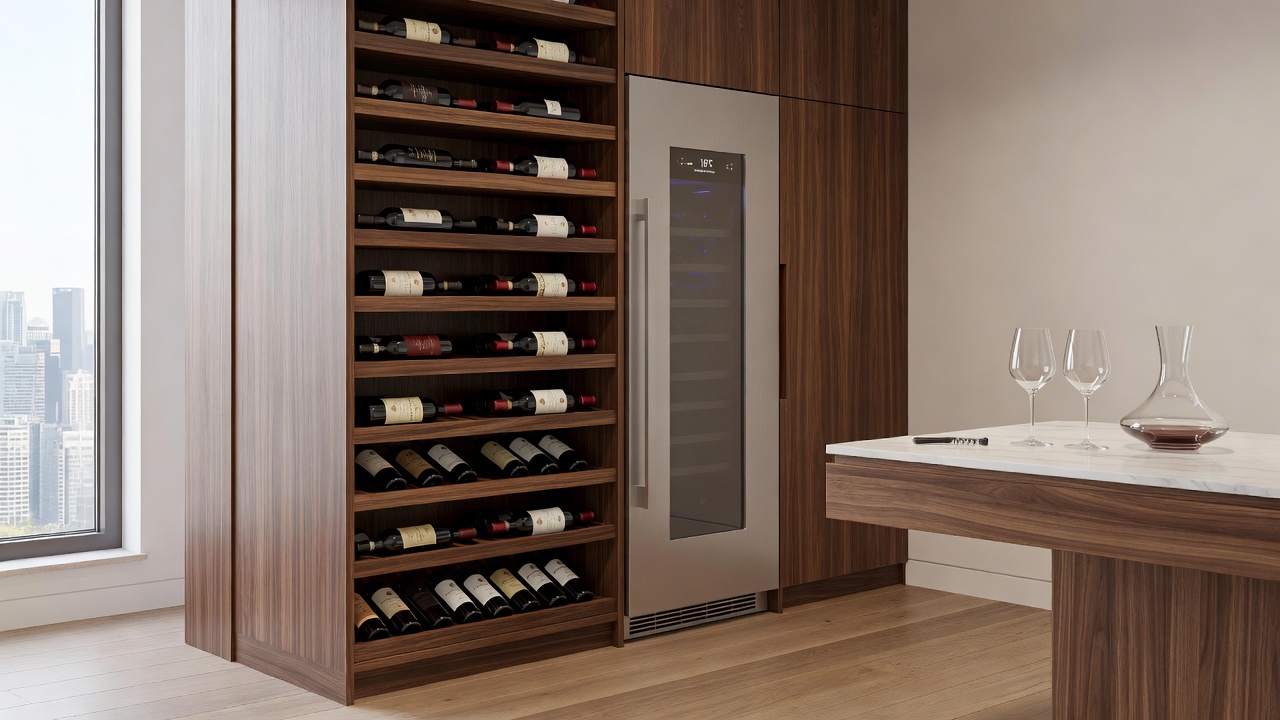
Traditional compact racks offer simplicity and low cost. Wooden or metal freestanding units hold 12 to 36 bottles efficiently in corners. They require no power and blend with decor. Smart appliances such as countertop wine fridges provide precise climate control with dual zones for reds and whites. These suit collectors needing consistency but consume energy and take dedicated outlet space. Key differences include maintenance: racks need occasional dusting, while fridges require filter changes. Space efficiency favors racks in micro-apartments under 400 square feet. Durability often leans toward solid wood racks for long-term use. When deciding, evaluate your collection size first. Small collections under 20 bottles thrive on racks, whereas growing inventories benefit from zoned cooling. Hybrid setups combining a basic rack inside an insulated cabinet deliver middle-ground performance at lower ongoing cost.
- Choose racks if budget and space are tight and you prefer zero energy use.
- Opt for smart units when frequent temperature swings occur in your building.
- Hybrid approach: Use a rack inside a temperature-stable cabinet for best of both worlds.
- Factor in noise levels because compressor units can disturb sleep in open-plan layouts.
Detailed Setup Guides and Apartment Case Studies
Case study one: A 450-square-foot studio in Chicago used a 24-bottle wooden rack placed in a hallway closet. Adding blackout curtains and a hygrometer achieved stable conditions within two weeks. The owner expanded by adding a second tier after confirming no vibration issues from neighboring units. Case study two: A couple in a high-rise Seattle apartment installed a slim smart fridge beside the kitchen. They paired it with anti-vibration pads and tracked readings via an app, preserving a collection of 50 bottles through seasonal changes. Their process began with clearing a 24-inch wide space, leveling the floor, and testing the unit empty for three days before loading bottles. A third example comes from a New York walk-up where the resident converted an unused coat closet using wall-mounted slats and cedar lining. This vertical arrangement maximized 15 square feet and included a small fan on a timer for air circulation. Each case demonstrates starting small, verifying conditions, then scaling.
Maintenance and Troubleshooting
Schedule quarterly inspections to rotate bottles gently and check for leaks or label damage. Clean racks with mild soap and dry thoroughly to prevent warping. If mold appears, reduce humidity immediately and wipe surfaces with diluted vinegar. For persistent temperature issues, relocate the entire setup rather than fighting building systems. Keep a simple log noting date, temperature, humidity, and any adjustments made. This record reveals patterns such as spikes during holiday gatherings when more people open doors frequently.
Short FAQ on Common Apartment Wine Issues
How do I handle summer heat without AC? Use evaporative cooling with damp cloths and keep bottles in the lowest, darkest spot available while monitoring closely.
What about winter dryness? Introduce a small humidifier nearby or use moisture-retaining packs refreshed every ten days.
Can I store wine in the kitchen? Only if away from ovens and direct sun; otherwise relocate to a bedroom closet for better stability.
How often should I check conditions? Weekly during seasonal transitions and monthly otherwise to catch problems early.
Conclusion
Applying these sommelier tips transforms any apartment into a functional wine haven. Focus on consistency, monitor regularly, and scale solutions to your space. Proper storage enhances every pour and preserves investment value over time. Explore further through resources from the Guild of Sommeliers, the Wine Institute, and Wine Folly for ongoing education.


No comments yet. Be the first!