 Uncorked Conversations
Introduction to Sensory Analysis for Natural Wines
Natural wines, produced with minimal intervention, organic grapes, native yeasts and little to no additives, present distinctive sensory profiles that reward structured evaluation. In 2026 enthusiasts are refining their palates to appreciate unpredictable aromas, evolving textures and the living character of these bottles. This guide delivers practical techniques to build expertise, from custom aroma tools to side-by-side comparisons with conventional wines. The approach goes beyond casual sipping by incorporating repeatable methods that help identify subtle differences arising from spontaneous fermentation and low-sulfur winemaking.
Understanding the Unique Sensory Profile of Low-Intervention Wines
Unlike conventional wines stabilized by filtration and sulfur, natural wines often display wild fermentation signatures such as barnyard, wet stone or subtle reduction. These traits arise from native yeast activity and extended skin contact. Recognizing them requires training the nose and palate to separate expression from flaw. Resources from Decanter highlight how vintage conditions in 2025 shaped the microbial diversity seen in current releases. In practice, natural wines can shift dramatically in the glass over thirty minutes, revealing layers of dried herbs, fermented fruit skins and mineral depth that conventional examples rarely match. Beginners often notice an initial cloudiness or slight spritz that signals active microbiology rather than instability.
Building a Custom Aroma Wheel for Native Yeast Ferments
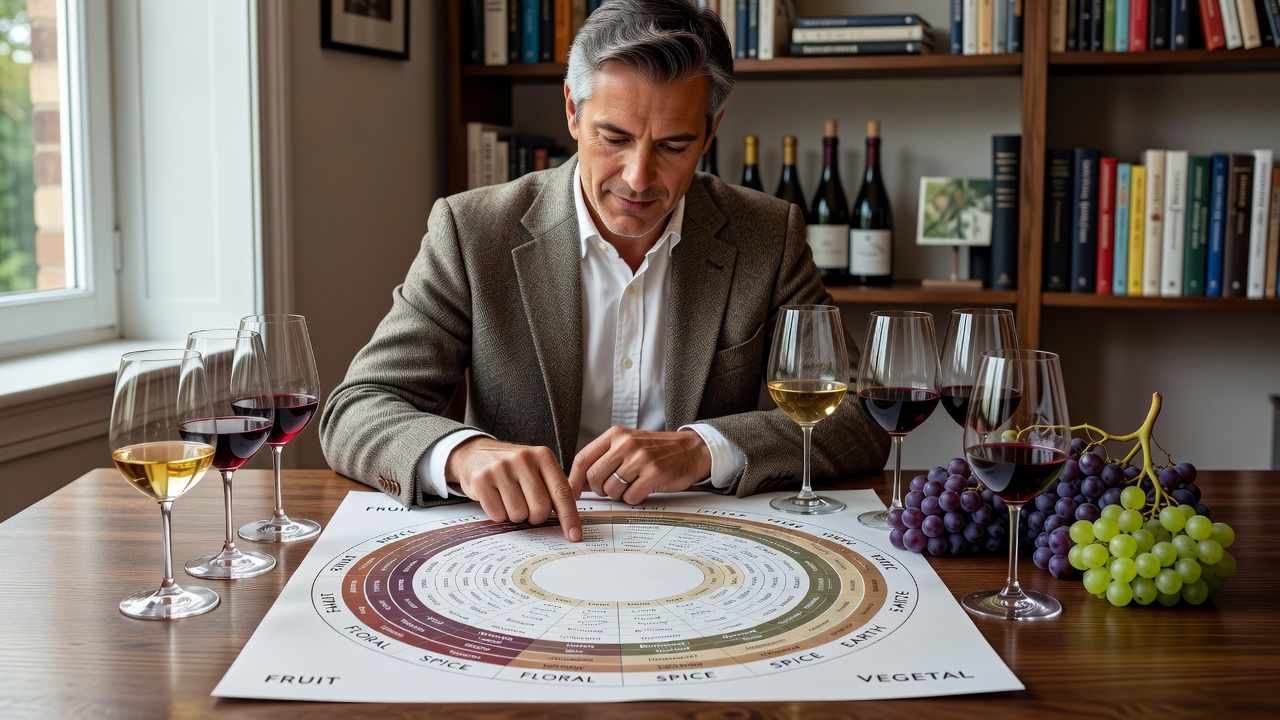
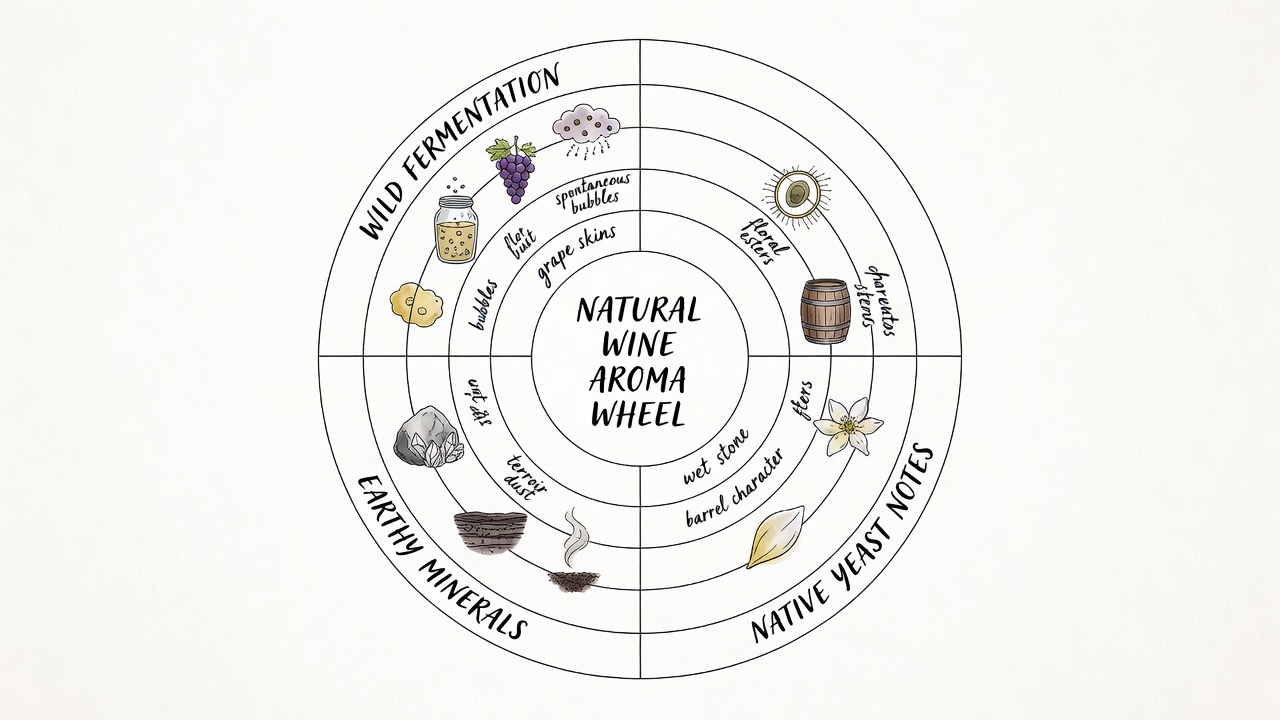
Standard aroma wheels overlook the breadth of natural wine notes. Create your own by dividing a circle into primary categories: fruit, earth, flora, spice, fermentation and texture descriptors. Populate each with specific terms such as “horse saddle,” “rain on pavement,” “honeycomb,” “sour cherry skin,” “wet wool,” “crushed ants,” “wild strawberry leaf,” “petrichor,” “lemon rind,” “mushroom broth,” “dried apricot,” “black olive,” “fennel pollen,” “leather glove,” “smoked tea,” “green almond,” “seaweed,” “balsamic vinegar reduction,” “roasted chestnut” and “freshly turned soil.” Update the wheel seasonally after tasting sessions. Print multiple copies and annotate them during group tastings to refine language. This personalized reference accelerates identification during blind flights and becomes a living document that evolves with your experience across multiple vintages.
Distinguishing Desirable Wild Notes from Faults
Desirable wild notes include faint Brettanomyces that adds leather complexity or mild volatile acidity that lifts fruit. Faults appear when those same compounds dominate, producing vinegar sharpness or barnyard intensity that masks fruit. Train by smelling known fault standards alongside clean samples. A simple checklist helps: does the note evolve in the glass, or does it flatten? Does it pair with balanced acidity and tannin structure? For example, a touch of reduction in a 2026 Loire red can smell like struck match initially yet integrate into savory depth after aeration, whereas true hydrogen sulfide fault remains acrid and unchanging. Practice with controlled dilutions of ethyl acetate or 4-ethylphenol to calibrate your threshold levels.
Step-by-Step Tasting Protocol with Side-by-Side Comparisons
- Prepare two glasses: one natural wine and one conventional counterpart from the same grape and region. Choose similar alcohol levels and vintage years for fair comparison.
- Observe color and viscosity without swirling first. Note any haze or sediment that often appears in unfiltered natural bottles.
- Perform three sniffs at different distances to capture volatile layers, starting from ten centimeters away and moving closer.
- Take a small sip, aerate, and note first impressions, mid-palate texture and finish length. Pay special attention to how tannins feel grippy or silky compared with conventional versions.
- Repeat after five minutes to track evolution. Many natural wines open up significantly during this window.
- Score each attribute on a 1-10 scale to quantify differences in aroma intensity, acidity, body and complexity.
- Record environmental factors such as room temperature and glass type to ensure consistency across sessions.
This protocol reveals how minimal sulfur and filtration affect mouthfeel and aroma persistence. Over repeated trials you will notice natural wines often display broader flavor arcs and more textural variation.
Practical Exercises Using 2026 Vintage Recommendations
Focus on bottles from cool-climate regions where vintage variation is pronounced. Compare a 2026 Loire Chenin Blanc made with native yeasts against a conventionally fermented version from the same appellation. Repeat with a Piedmontese Nebbiolo and a skin-contact orange wine from Friuli. Try a 2026 Jura white alongside its conventional counterpart to explore oxidative notes versus protected fermentation styles. Keep tasting notes in a dedicated journal to track palate development over multiple sessions. Include details such as time of day, food pairings tried and how the wine changed after opening. These exercises build muscle memory for recognizing signature traits like extended lees contact or whole-cluster fermentation effects.
Expert Tips for Consistent Palate Development
- Taste in a quiet, well-lit space free of strong odors such as coffee or perfume.
- Use ISO-standard glasses to standardize aroma concentration and avoid distortion from wide-bowled alternatives.
- Rest the palate with plain crackers and water between flights. Avoid strong cheeses or spices that linger.
- Revisit the same bottle over three days to observe oxidation patterns unique to low-sulfur wines.
- Join small tasting groups for blind feedback that reduces individual bias and introduces new descriptors.
- Experiment with different serving temperatures, starting at cellar temperature and allowing gradual warming.
- Cross-reference your notes with published reviews from established critics to calibrate language accuracy.
Common Pitfalls to Avoid
Many beginners dismiss reduction as a flaw instead of a temporary characteristic that often resolves with decanting. Others over-chill natural whites, muting their volatile aromatics. Avoid rushing judgments; allow wines to open fully before final assessment. Another frequent mistake is comparing natural wines only to mass-market examples rather than high-quality conventional wines that share similar grape origins. This skews perception and undervalues the intentional stylistic choices behind minimal intervention.
Frequently Asked Questions
How subjective is natural wine tasting?
Tasting remains personal, yet structured protocols and repeated exposure create reliable benchmarks across tasters. Subjectivity decreases as you build a shared vocabulary with other enthusiasts.
Do I need special equipment?
A basic aroma kit and consistent glassware suffice; advanced tools such as pH meters are optional for deeper analysis. A simple notebook or digital app for logging impressions proves more valuable than expensive gadgets.
Can conventional wine lovers transition easily?
Yes, the side-by-side method accelerates adaptation by highlighting clear sensory contrasts. Start with familiar grapes to ease the shift in expectations.
What role does vintage play in 2026 natural wines?
The 2026 vintage brought variable weather that increased microbial diversity, leading to more pronounced wild notes in many regions. Tracking vintage charts from authoritative sources helps anticipate these expressions.
How do I handle highly variable bottles?
Accept that bottle variation is higher in natural wines. Open several examples of the same cuvée when possible and average your impressions across them.
Conclusion
Mastering sensory analysis empowers enthusiasts to fully appreciate the vitality and unpredictability of natural wines. By building custom tools, practicing deliberate protocols and learning from each vintage, you develop a discerning palate that celebrates minimal-intervention winemaking. Continue exploring with curiosity and record every discovery to refine your skills further in the years ahead.
No comments yet. Be the first!