 Uncorked Conversations
Introduction to Wine Fermentation
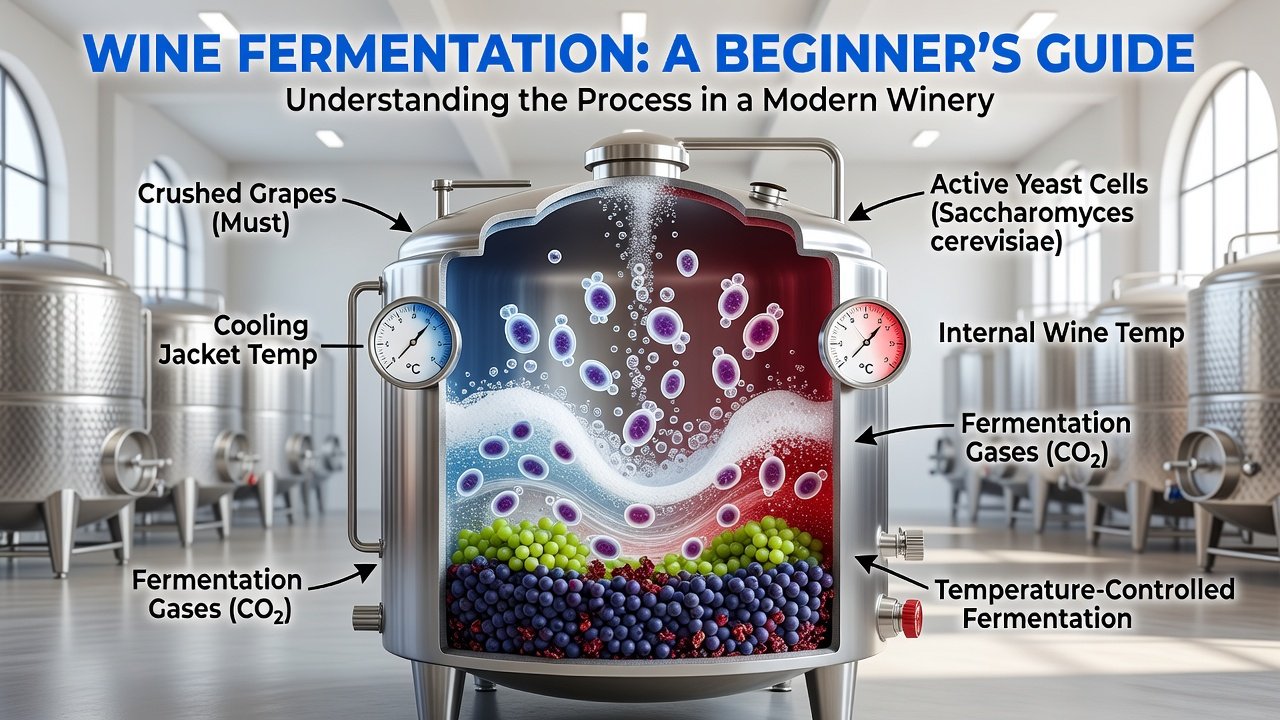
Wine fermentation is the essential biochemical process that converts grape juice into wine, serving as the foundation for every bottle enthusiasts enjoy. For those new to wine 101 concepts, grasping fermentation reveals why wines vary so dramatically in flavor, body, and structure. This comprehensive beginner guide explores the science in depth, providing practical examples, regional comparisons, and actionable insights without venturing into advanced aroma profiling or full production overviews.
At its core, fermentation involves yeast consuming grape sugars and producing ethanol along with carbon dioxide as byproducts. This natural reaction has been harnessed for thousands of years, yet modern winemakers fine-tune every variable for consistent results. Beginners often start by asking how a single vineyard can yield both bold reds and crisp whites; the answer lies largely in fermentation decisions made after harvest.
The Role of Yeast in Fermentation
Yeast acts as the catalyst that drives the entire transformation. The dominant species, Saccharomyces cerevisiae, is favored in commercial winemaking because it tolerates rising alcohol levels and efficiently metabolizes sugars. Winemakers may inoculate with cultured strains selected for specific traits, such as those that boost glycerol production for smoother texture or enhance thiols for citrus zest in whites.
Alternatively, spontaneous fermentation relies on indigenous yeasts present on grape skins and in the winery environment. This approach, common in natural winemaking, can yield unique complexity but requires vigilant monitoring to prevent dominance by less desirable microbes. Nutrient management is crucial; deficiencies in nitrogen or vitamins can stress yeast, leading to sluggish activity or production of unwanted compounds like hydrogen sulfide.
Real-world example: In Oregon's Willamette Valley, many Pinot Noir producers use native yeasts to highlight terroir, while large-scale operations in Australia often choose robust commercial strains for reliability across varying vintages.
Primary Fermentation vs Malolactic Fermentation
Primary alcoholic fermentation begins once yeast is introduced or activated, converting roughly 90 percent of available sugars into alcohol within days to weeks. Winemakers track progress via hydrometer readings, aiming for dryness where residual sugar drops below 4 grams per liter. This stage generates heat and foam, necessitating temperature-controlled stainless steel tanks or open-top fermenters.
Malolactic fermentation, often called MLF, is a bacterial process that follows or overlaps with primary fermentation in many styles. Lactic acid bacteria, typically Oenococcus oeni, decarboxylate malic acid into lactic acid, reducing sharpness and adding buttery diacetyl notes. Reds almost always undergo MLF for mouthfeel balance, whereas whites split: some like Chablis avoid it to preserve vibrant acidity, while others embrace it for richness.
Consider a side-by-side comparison from France. A red Burgundy from Pinot Noir completes both fermentations, yielding velvety texture, whereas an unoaked Loire white from Chenin Blanc may block MLF to retain zesty apple acidity. Timing MLF can occur simultaneously with primary or after, depending on desired outcomes and cellar logistics.
How Temperature Affects Fermentation Outcomes
Temperature control separates successful fermentations from flawed ones. Red wines benefit from warmer ranges of 75–85°F to facilitate anthocyanin extraction from skins, promoting deep color and tannin integration. Whites demand cooler 50–60°F environments to safeguard volatile aroma compounds that would otherwise evaporate.
Excessive heat above 90°F risks killing yeast colonies or stripping delicate esters, resulting in flat, one-dimensional wines. Conversely, temperatures below 50°F slow metabolism dramatically, potentially causing stuck fermentations where unconverted sugars remain. Advanced wineries deploy glycol-jacketed tanks and real-time sensors for precision, especially in warm climates like California's Central Valley where ambient heat poses constant challenges.
Practical tip: Home enthusiasts can use water baths or chest freezers with temperature controllers to mimic professional setups, monitoring daily to stay within target ranges.
Comparing Red and White Wine Fermentation
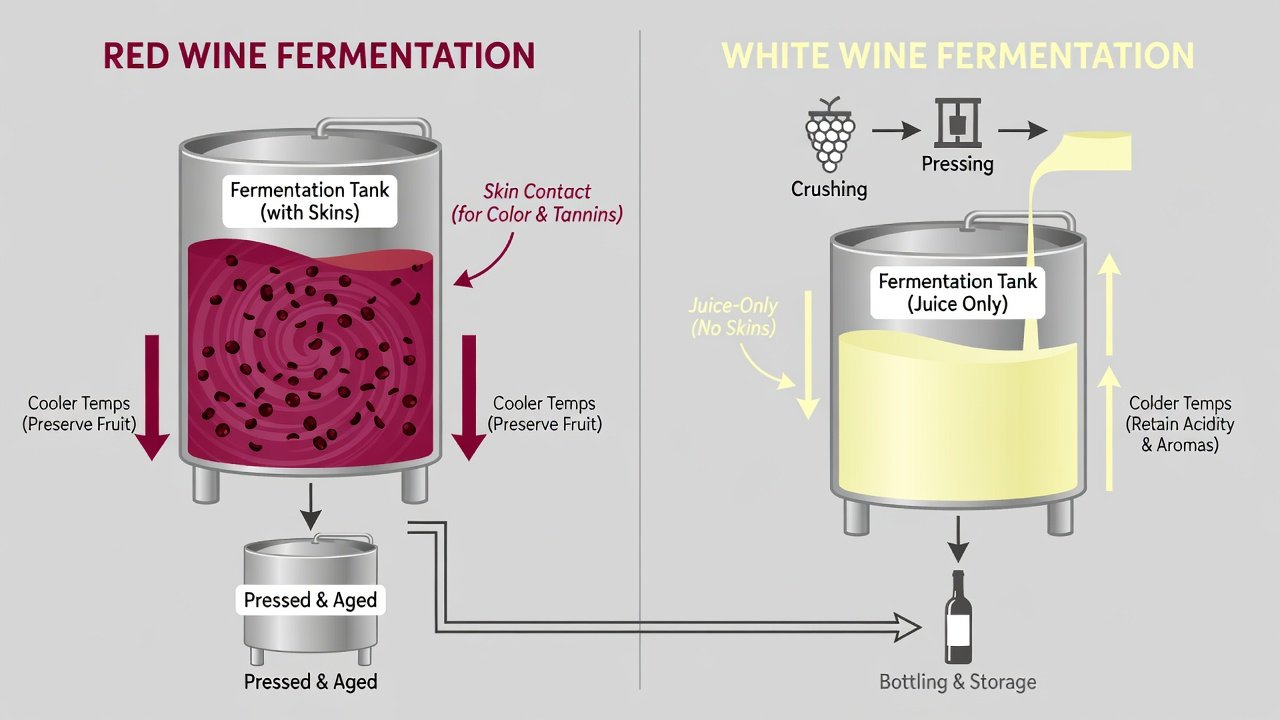
The fundamental distinction between red and white fermentation revolves around skin contact and extraction techniques. Red grapes ferment with their skins intact, allowing pigments, tannins, and phenolics to infuse the must during the primary phase. Techniques such as punch-downs, pump-overs, or délestage enhance this contact, building structure that supports aging.
White grapes are crushed and pressed immediately, fermenting only the clarified juice to avoid any color pickup or bitterness. Rosé production bridges the two by limiting skin contact to a few hours before pressing, creating pale hues with subtle fruit notes. Sparkling wines add another layer, often fermenting in bottle for secondary bubbles.
- Red fermentation: Warmer temperatures, full skin inclusion, nearly always includes malolactic conversion for suppleness.
- White fermentation: Cooler temperatures, juice-only, selective malolactic use depending on style goals.
- Key outcomes: Reds develop grip and depth; whites emphasize purity and refreshment.
- Regional illustration: Italian Barolo reds undergo extended maceration and MLF, contrasting with New Zealand Sauvignon Blancs kept cool and MLF-free for signature grassy vibrancy.
These choices explain stylistic diversity even within the same grape, such as the contrast between structured red Zinfandel and lighter white counterparts like Pinot Grigio.
Practical Tips for Spotting Fermentation Notes in Tasting
Developing the ability to detect fermentation signatures enhances appreciation at every level. Creamy, yogurt-like textures or hazelnut undertones frequently indicate completed malolactic conversion. Bready or autolytic aromas emerge in méthode traditionnelle sparklers from extended lees contact after primary fermentation.
Conduct simple comparative tastings: Pour a non-MLF Vinho Verde alongside a barrel-fermented Chardonnay. Note the former's piercing acidity versus the latter's rounded, custard-like palate. Watch for faults such as nail-polish aromas from ethyl acetate, signaling oxygen exposure during fermentation. Record observations systematically by noting mouthfeel first, then retronasal aromas, to isolate fermentation influences.
Common Fermentation Faults and How to Avoid Them
Stuck fermentations leave residual sugars vulnerable to refermentation in bottle, producing fizzy or off-dry surprises. Hydrogen sulfide formation from stressed yeast produces rotten-egg odors; prevention involves timely nutrient additions like diammonium phosphate. Volatile acidity, manifesting as vinegar notes, arises from Acetobacter exposure in warm, oxygen-rich conditions.
Winemakers mitigate risks through sanitation, yeast health monitoring, and sulfur dioxide adjustments. Consumers can identify potential issues by rejecting bottles with unbalanced sweetness or chemical taints, opting instead for well-reviewed producers known for technical precision.
Step-by-Step Overview of the Fermentation Process
1. Harvest and crush grapes, measuring sugar and acid levels. 2. Inoculate or allow native yeast to begin primary fermentation. 3. Monitor temperature and density daily. 4. Decide on skin contact duration for reds. 5. Initiate or block malolactic fermentation via temperature or bacterial inoculation. 6. Rack wine off lees and stabilize before aging or bottling.
Following these steps ensures predictable results, whether at commercial scale or in small-batch experiments.
Impact of Grape Varieties on Fermentation Choices
Thicker-skinned varieties like Cabernet Sauvignon tolerate warmer, longer fermentations for tannin extraction, while delicate grapes such as Riesling require cooler, gentler handling to preserve floral aromatics. High-sugar grapes from late harvests demand robust yeast strains to reach dryness without stress.
Understanding these interactions helps beginners select wines aligned with personal preferences for body and acidity.
FAQ: Wine Fermentation Questions Answered
How long does fermentation take?
Primary fermentation spans one to three weeks depending on temperature and yeast vigor, while malolactic can extend another one to three months in cooler cellars.
What causes fermentation to stop early?
Common triggers include insufficient nutrients, temperature extremes, or alcohol toxicity exceeding yeast tolerance, all detectable through regular laboratory analysis.
Can home winemakers control fermentation?
Yes, basic kits with temperature-controlled vessels and selected yeasts allow consistent results, though scaling up requires attention to hygiene and measurement tools.
Does fermentation affect wine aging potential?
Complete, stable fermentations contribute to longevity by minimizing residual sugars and microbial risks, enabling graceful development of tertiary characteristics over years.
Further educational resources are available at Wine Folly and Decanter. For academic perspectives on viticulture, explore UC Davis. Mastering fermentation fundamentals empowers more informed selections and deeper enjoyment of wine.
No comments yet. Be the first!