 Uncorked Conversations

Introduction to Wine Closures
Choosing between traditional corks and modern screw caps is one of the first decisions new wine enthusiasts face when exploring bottles in 2026. Both closures serve the essential purpose of sealing wine and protecting it from external contaminants, but they differ significantly in how they affect aging potential, flavor preservation, and the overall drinking experience. This comprehensive guide breaks down everything beginners need to know to make informed purchasing decisions, from the science behind each closure to practical advice on storage and opening techniques.
Understanding Traditional Corks
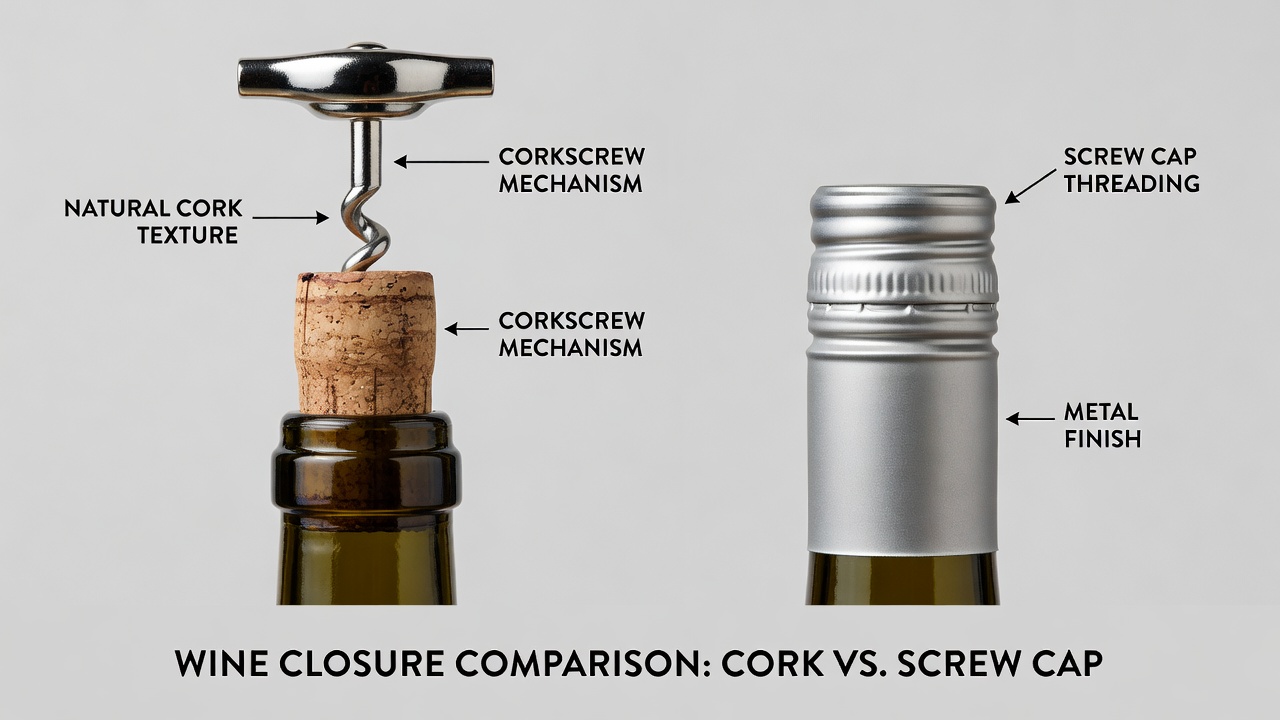
Natural corks come from the bark of cork oak trees, primarily harvested in Portugal and Spain. They have been the standard for centuries due to their natural elasticity and ability to allow minimal oxygen exchange over time. This micro-oxygenation can benefit certain wines during aging by helping develop complex aromas and tannins. Corks are harvested sustainably from living trees without harming the forest ecosystem, making them a renewable resource that supports biodiversity in Mediterranean regions.
Pros of Corks
- Classic aesthetic that enhances the ritual of opening wine and adds a sense of occasion
- Proven track record with age-worthy reds like Cabernet Sauvignon and whites such as Chardonnay
- Biodegradable and sourced from renewable forests that provide habitat for wildlife
- Allow controlled oxygen ingress that can soften tannins and evolve flavors over decades
Cons of Corks
- Risk of cork taint from TCA contamination that can ruin a bottle with musty flavors
- Requires proper horizontal storage to prevent drying out and oxygen exposure
- Can be inconsistent in quality, leading to variable aging results across bottles
- Harvesting and processing add complexity and potential variability
Exploring Modern Screw Caps
Screw caps, also known as Stelvin closures, feature an aluminum cap with a specialized liner that creates an airtight seal. They gained significant popularity in the 2000s, especially in New World regions, due to their reliability and ability to preserve fresh fruit characteristics. Many producers now use advanced liners that permit tiny amounts of oxygen if desired for specific wine styles.
Pros of Screw Caps
- Eliminate cork taint entirely, ensuring every bottle tastes as intended by the winemaker
- Consistent performance and easier opening without any tools or risk of breakage
- Excellent for preserving fresh, fruity aromas in whites and light reds
- Recyclable materials and lower production variability compared to natural cork
Cons of Screw Caps
- Less traditional appearance for some consumers who associate cork with quality
- Zero or minimal oxygen transfer may limit development in long-aging, tannic wines
- Perceived as lower quality by traditionalists despite widespread use in premium bottles
Decanter provides extensive coverage of closure innovations across global markets.
Effects on Aging and Flavor Preservation
Corks permit tiny amounts of oxygen, which helps complex reds develop secondary and tertiary aromas over decades. This slow interaction can transform primary fruit notes into leather, earth, and spice characteristics. Screw caps provide a near-perfect barrier, locking in primary fruit flavors for years without oxidation risk. For aromatic whites like Sauvignon Blanc or Riesling, screw caps often maintain vibrancy and freshness better than corks over medium-term storage. The choice depends on the wine's intended lifespan and style.
Real-World Examples from Popular Wine Regions
Bordeaux and Burgundy traditionally rely on high-quality natural corks for their age-worthy Cabernet Sauvignon and Pinot Noir, where decades of cellaring are common. In contrast, Australia and New Zealand have widely embraced screw caps for Riesling, Chardonnay, and Shiraz, with many producers reporting superior consistency and reduced spoilage rates. California wineries often use both closures depending on the wine style and intended aging period, with screw caps common for everyday Sauvignon Blanc and corks reserved for reserve Cabernet. South African and Chilean producers have also increased screw cap adoption for value-driven bottlings while maintaining cork for flagship wines. Italy's Prosecco and many German Rieslings now frequently feature screw caps to ensure freshness reaches consumers.
Step-by-Step Instructions for Opening Each Type
Opening a Corked Bottle
- Position the bottle on a stable surface and remove the foil capsule completely
- Insert a quality corkscrew worm into the center of the cork, twisting gently until fully embedded
- Use the lever mechanism to extract the cork slowly, avoiding sudden pulls that could break it
- Inspect the cork for mold or off odors before discarding
- Wipe the bottle rim thoroughly with a clean cloth before pouring to remove any debris
Opening a Screw Cap Bottle
- Hold the bottle firmly at a slight angle over the glass
- Twist the cap counterclockwise with steady pressure until it releases
- Remove the cap and inspect the inner liner for any damage
- Pour immediately with no additional tools required
Common mistakes include using dull openers on corks or forcing screw caps, which can damage the bottle neck.
Cost Comparisons and Value Considerations
Screw caps generally offer a more economical sealing option for producers, which can translate to better value for everyday drinking wines. Corks add expense due to harvesting, quality grading, and processing but remain preferred for premium bottles where tradition and long-term aging matter. Beginners should focus on the wine quality inside rather than closure type alone when evaluating value.
Storage Impact and Practical Tips for Beginners
Store corked bottles horizontally in a cool, dark place with consistent humidity around 50-70% to keep the cork moist and prevent shrinkage. Screw cap bottles can stand upright without any issue since no moisture contact is needed. Avoid extreme temperature swings, direct sunlight, and vibrations for both types. Beginners should check for leakage signs before purchase, rotate stock every few months, and keep bottles away from strong odors. Investing in a basic wine fridge or cellar helps maintain ideal conditions regardless of closure.
Common Myths Debunked
- Myth: Screw caps mean cheap wine. Reality: Many high-end producers in Australia and New Zealand now use them successfully for top-tier bottles.
- Myth: Corks always allow perfect aging. Reality: Inconsistent corks can lead to premature oxidation or taint in up to 5% of bottles historically.
- Myth: Screw caps prevent all breathing. Reality: Modern liners can be engineered for controlled oxygen transfer if the winemaker desires it.
- Myth: Cork is always more sustainable. Reality: Both have merits, with cork supporting forests and screw caps offering full recyclability.
- Myth: You can tell quality by the closure alone. Reality: Excellent and poor examples exist with both types across all price points.
Wine Magazine regularly debunks closure misconceptions with expert input.
When to Choose One Over the Other
Choose corks for special occasion reds meant for cellaring five years or more, especially from classic European regions. Opt for screw caps with fresh whites, rosés, or wines you plan to drink within two years for maximum fruit preservation. Consider the region, producer reputation, and your storage capabilities as additional decision factors. Experimenting with both across similar varietals helps develop personal preferences.
Environmental and Consumer Trends in 2026
Sustainability concerns influence closure choices, with cork forests protecting endangered species and screw caps reducing waste from tainted bottles. Consumer surveys show increasing acceptance of screw caps even among traditional markets. Many wineries now offer both options for the same wine to meet diverse preferences.
Wine Spectator tracks these evolving market trends annually.
FAQ
Can screw caps leak?
Properly applied screw caps rarely leak, though damage during transport or improper application can occasionally cause issues.
Are screw caps more sustainable than corks?
Both options have sustainability merits; cork forests support biodiversity while screw caps are fully recyclable and reduce spoilage waste.
Do closures affect wine value?
Closures influence perception more than inherent quality, with both types found across all price ranges and quality levels.
How long can screw cap wines age?
Many screw cap wines age gracefully for 5-10 years or more when the liner is designed for gradual oxygen exposure.
Is there a difference in flavor impact?
Yes, corks can impart subtle evolution while screw caps lock in original fruit profiles more consistently.
Conclusion
Understanding corks versus screw caps empowers beginners to select wines confidently in 2026. Experiment with both types across regions and styles to discover personal preferences. The best choice depends on the wine style, aging plans, storage conditions, and your own priorities for convenience versus tradition. With this knowledge, you can navigate wine aisles and cellars with greater assurance.


No comments yet. Be the first!