 Uncorked Conversations
Introduction to Vertical Tastings of Bordeaux Wines
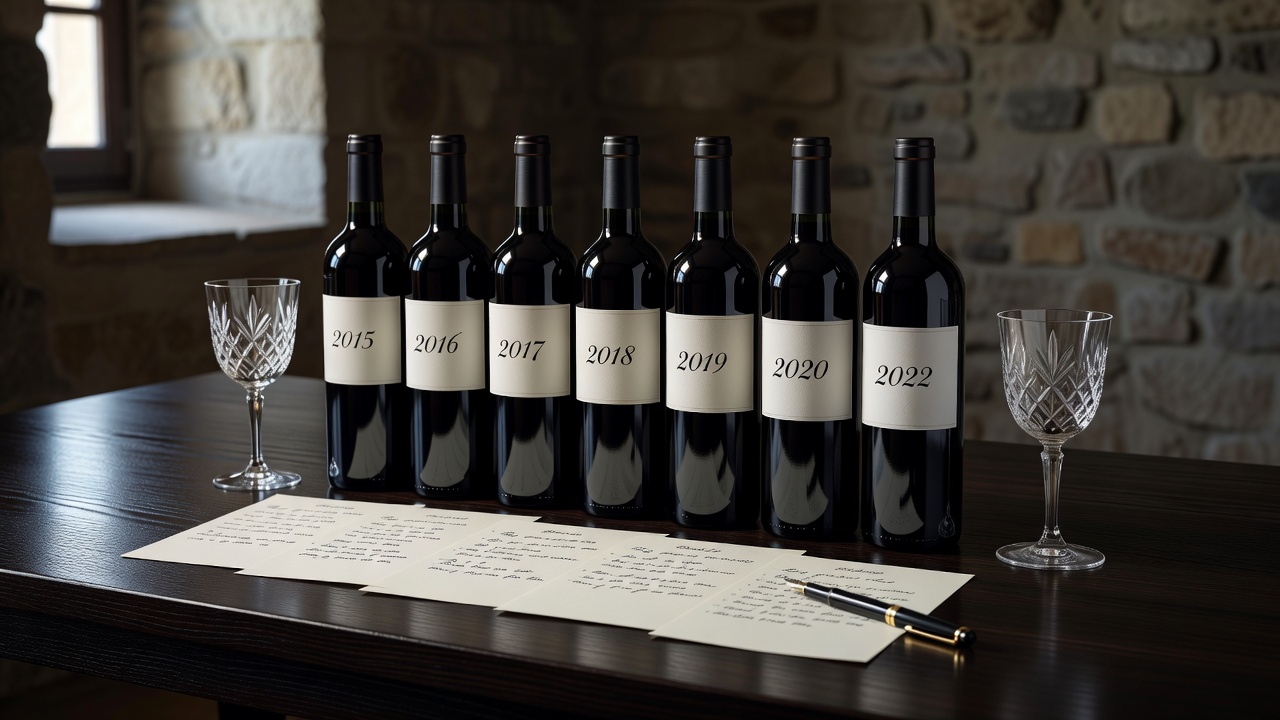
Vertical tastings offer wine enthusiasts a unique opportunity to explore how Bordeaux wines evolve across multiple vintages. In 2026, focusing on recent vintages from 2015 onward allows tasters to observe the progression of flavors, tannins, and aromas in real time. This approach highlights the impact of vintage variation on Left and Right Bank styles while building a reliable system for documenting notes and assigning scores. Unlike horizontal tastings that compare different producers from the same year, a vertical format isolates the effects of weather, harvest timing, and aging on a single château or appellation, revealing how a wine matures and whether its character improves or fades over time.
Whether you are a collector or a curious beginner, organizing a structured vertical session helps reveal patterns that horizontal tastings cannot. The process emphasizes consistency in evaluation, making it easier to compare bottles side by side and build a personal database of tasting impressions that grows more valuable with each session.
Selecting Bottles Across Recent Vintages
Start by choosing 5 to 7 vintages that represent a range of conditions. Ideal selections for 2026 include 2015, 2016, 2018, 2019, 2020, and 2022. These years showcase both classic structure and more approachable fruit profiles. The 2015 vintage brought power and concentration after a warm summer, while 2016 delivered elegance and freshness thanks to cooler nights. 2018 and 2019 offered ripeness and plush textures, and 2020 and 2022 introduced vibrant acidity with surprising depth. Prioritize well-cellared bottles from reputable châteaux such as those in the Médoc, Saint-Émilion, or Pomerol to ensure representative examples.
Consider bottle size and storage history when sourcing. Larger formats age more slowly, while standard 750 ml bottles from reputable merchants provide accessible entry points. Aim for consistent producers across vintages to isolate vintage effects rather than producer differences. For example, selecting the same Saint-Julien château across all six vintages creates a clearer narrative of how that estate responded to each growing season. Cross-reference vintage reports from Bordeaux.com before purchasing to confirm which years performed best in your chosen appellation.
Setting Up Your Tasting Session
Prepare a neutral environment with proper lighting and temperature around 16–18°C. Use identical glasses for each wine and rinse between pours to avoid cross-contamination. Blind tasting is recommended to eliminate bias, so label glasses with codes instead of vintage names until after scoring. Gather the following equipment in advance: a clean spittoon, water pitcher, plain unsalted crackers for palate reset, a digital thermometer, and printed or digital score sheets. Dim lighting or colored glasses can further reduce visual cues that might influence perception.
Allow each wine 30–45 minutes to open after decanting. Serve in flight order from youngest to oldest or oldest to youngest depending on the goal—youngest first often highlights development trends more clearly. Schedule the session for mid-morning when your palate is freshest, and limit the group to no more than eight participants to maintain focus.
Tracking Aroma and Palate Progression
Document aromas in stages: first impression upon pouring, after swirling, and after 10 minutes of breathing. Note primary fruit, secondary notes from oak or fermentation, and tertiary elements that emerge with age such as leather, earth, or graphite. For the 2015 vintage you might record intense blackcurrant and cedar at first, evolving into tobacco and forest floor after breathing. The 2019 flight could show ripe plum and chocolate initially, then reveal violet and graphite notes as it opens. On the palate, record attack, mid-palate texture, acidity, tannin quality, and finish length. Track how these elements shift across vintages—for instance, how 2016’s firm tannins soften compared with the plush 2019s. Use consistent descriptors from a shared lexicon to enable later comparison.
Repeat the process at 30-minute intervals to capture evolution. Many tasters find that the 2020 vintage displays bright red fruit and linear acidity early on, then develops savory herbal notes after an hour in the glass. Keeping a running log prevents impressions from blending together and creates a vivid timeline of each wine’s development.
Assigning Consistent Scores Using Standard Scales
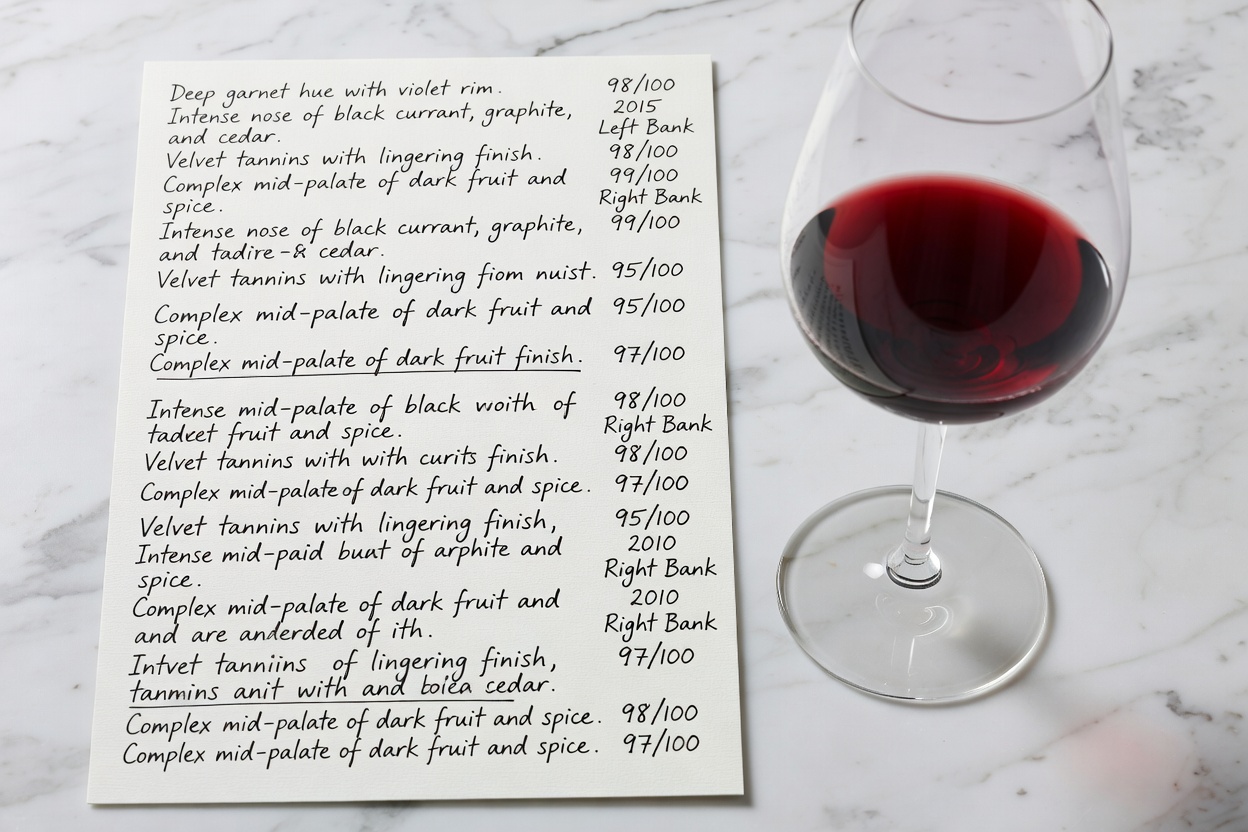
Adopt the 100-point scale used by publications such as Wine Enthusiast for detailed granularity. Alternatively, employ the 20-point system favored by many European critics. Whichever scale you choose, apply it uniformly: award points for appearance, nose, palate, and overall quality. Break the 100-point scale into clear bands—95–100 for exceptional, 90–94 for outstanding, 85–89 for very good—to reduce subjectivity. Score each wine twice—once immediately and once after 30 minutes—to capture evolution. Average the two scores for a final value. This method reduces the influence of momentary impressions and provides more reliable data for future reference.
Before the session, calibrate the group by tasting a common reference wine and discussing scores aloud. This step aligns expectations and minimizes drift between participants. Record both individual and averaged scores so you can later analyze inter-taster consistency.
Sample Tasting Grid Example
Here is a simplified grid structure you can replicate in a notebook or spreadsheet. Using a table format makes patterns immediately visible:
| Vintage | Appearance | Nose Descriptors | Palate Descriptors | Tannin/Acid Balance | Score (100-pt) | Comments |
|---|---|---|---|---|---|---|
| 2015 | Ruby | Cassis, cedar, graphite | Dense black fruit, firm tannins | 18/20 | 94 | Needs 5+ years |
| 2016 | Deep ruby | Dark cherry, tobacco | Silky texture, long finish | 19/20 | 96 | Peak drinking window approaching |
| 2018 | Dark ruby | Plum, mocha, spice | Rich, velvety, ripe tannins | 17/20 | 93 | Approachable now |
| 2019 | Garnet rim | Violet, blackberry, earth | Concentrated, balanced acidity | 18.5/20 | 95 | Excellent aging potential |
| 2020 | Bright ruby | Redcurrant, herbal | Linear, vibrant, medium body | 18/20 | 92 | Drink over next decade |
Expand columns as needed for multiple tasters or additional metrics such as perceived value or food pairing suggestions.
Documenting Results for Long-Term Comparison
Store your grids in a dedicated notebook or cloud spreadsheet so you can revisit them after six months or a year. Add columns for re-tasting dates and updated scores to track how your perception of each vintage changes. This longitudinal record becomes especially useful when deciding which bottles to open for future events or which vintages to cellar longer.
Common Pitfalls to Avoid
Many vertical tastings fail due to inconsistent serving temperatures or fatigued palates. Limit sessions to six wines maximum and include palate cleansers such as plain crackers and water. Another frequent error is rushing the note-taking process—allocate at least five minutes per wine for thorough documentation. Avoid over-reliance on memory. Record everything immediately rather than attempting to recall impressions later. Finally, do not compare scores across different tasting groups without normalizing for individual taster tendencies. Additional pitfalls include using mismatched glassware that alters aroma delivery, failing to account for cork taint in older bottles, and neglecting to note the exact time each wine was poured, which makes evolution tracking inaccurate.
FAQ: Storage Impacts and Multi-Taster Comparisons
How does improper storage affect tasting notes?
Fluctuating temperatures or excessive light exposure can accelerate aging, causing premature oxidation. Wines stored above 20°C often display muted fruit and flattened acidity, altering both aroma intensity and score consistency. Always verify provenance before including a bottle in a vertical lineup. Consistent humidity between 60–70 percent also prevents cork shrinkage that could allow oxygen ingress.
How can results be compared across multiple tasters?
Establish a shared scoring rubric in advance and conduct a calibration round with a single reference wine. Use statistical averaging or median scores to smooth individual biases. Digital tools that aggregate anonymous entries help maintain objectivity when several participants are involved. Publishing anonymized results on platforms such as Decanter allows broader community feedback.
What should I do if one bottle appears corked?
Set the affected wine aside and continue the session with the remaining bottles. Note the fault clearly so it does not skew the overall vintage comparison. If possible, open a backup bottle of the same vintage for a second opinion.
Conclusion
A well-executed vertical tasting transforms individual bottles into a narrative of vintage character and aging potential. By following the frameworks outlined above, you can generate repeatable, insightful data that deepens appreciation for Bordeaux wines in 2026 and beyond. Start small with three vintages, refine your process, and gradually expand your library of impressions.
No comments yet. Be the first!