 Uncorked Conversations
2026 Sensory Drills to Refine Your Wine Tasting Notes
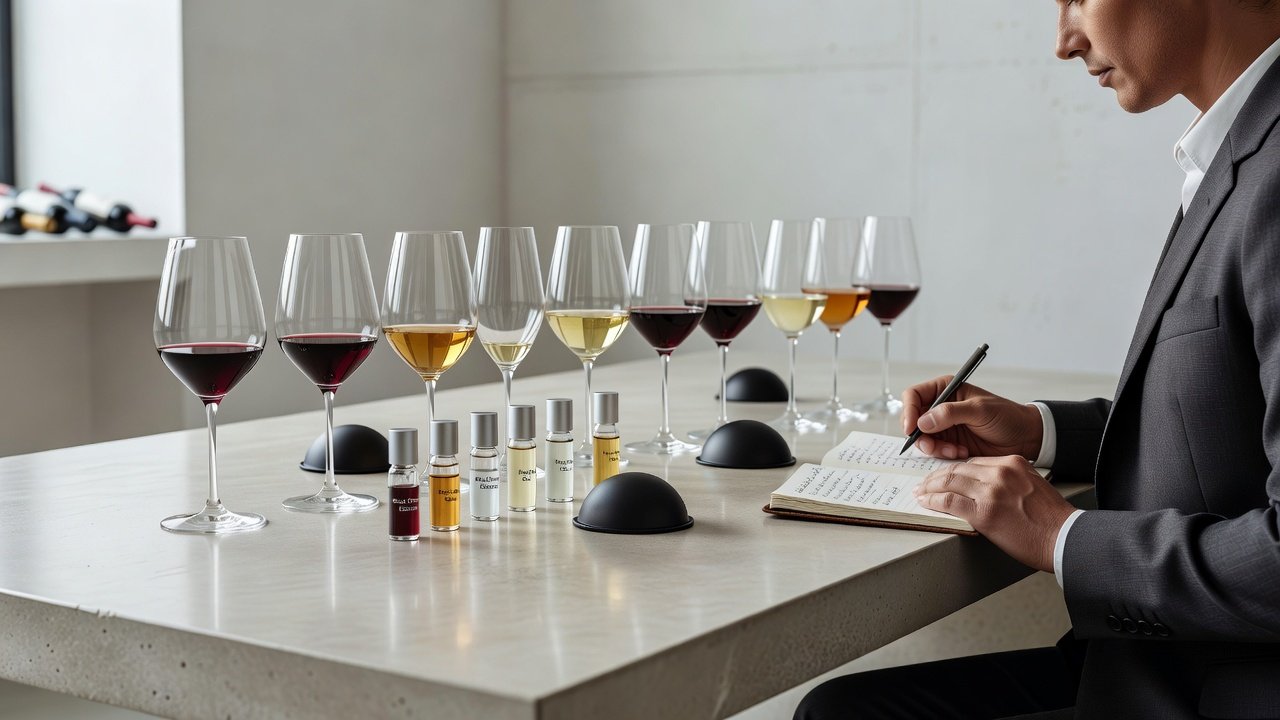
Developing consistent, precise tasting notes requires deliberate practice. In 2026, wine enthusiasts and professionals alike benefit from structured sensory training that sharpens aroma recognition, calibrates the palate, and builds descriptive vocabulary. This guide delivers actionable drills you can implement immediately to elevate your evaluations. Whether you are preparing for advanced certifications or simply want to describe wines with greater accuracy, these exercises create measurable progress over weeks and months by turning random tasting into a repeatable skill set.
Why Sensory Training Matters for Modern Wine Tasting
Accurate tasting notes depend on repeatable sensory skills rather than intuition alone. Regular drills help isolate individual components such as acidity, tannins, and fruit intensity, leading to more reliable scores. In an era where wine lists and competitions emphasize detailed descriptors, the ability to separate primary fruit from oak influence or to quantify tannin grip becomes essential. These drills also reduce scoring variability that often occurs when tasters rely solely on memory or external cues. Over time, practitioners report higher confidence during blind tastings and more consistent point allocations across different sessions.
Daily Aroma Identification Drills
Start each morning with a focused aroma session using an aroma kit or household items. Select 8–10 scents daily and label them blind. Common targets include blackcurrant, violet, vanilla, leather, and citrus zest. Spend five minutes identifying each before checking your answers. Repeat the same set three days in a row to build memory associations. To advance, introduce variations such as diluting scents with water to simulate wine volatility or combining two aromas to mimic complex bouquets found in aged Bordeaux. Track accuracy percentages daily; many beginners improve from 40 percent to over 75 percent within three weeks when they maintain a simple spreadsheet log. Rotate through aroma families systematically—floral, fruit, spice, earth, and oak—to prevent over-familiarity with one category.
Palate Calibration Techniques
Calibrating your palate involves controlled exposure to core wine elements. Prepare solutions at home: dissolve tartaric acid for acidity levels, use alum for tannin sensation, and create simple fruit syrups for sweetness. Taste each solution separately, then combine them in varying ratios to simulate real wines. For example, a high-acid solution paired with modest tannin can replicate the structure of a young Loire Valley Chenin Blanc. Practice identifying thresholds by preparing three increasing concentrations and noting when acidity shifts from refreshing to sharp, or when tannins move from silky to drying. Repeat these sessions twice weekly, always rinsing with neutral water between samples. This builds the precision needed for consistent scoring and helps you detect subtle imbalances in commercial wines.
Blind Tasting Simulations
Conduct weekly blind tastings with three to five wines. Cover labels and serve in identical glasses. Begin with deductive tasting grids that force you to evaluate appearance, nose, palate, and structure systematically. After recording notes, reveal the wines and compare your observations to actual characteristics. To increase difficulty, include decoy bottles or serve wines at slightly different temperatures to test concentration detection. Rotate grape varieties and regions to avoid bias. Include at least one repeat wine from a prior session to measure recall accuracy. Serious students often schedule these sessions with a partner who selects the wines, adding an element of surprise that mirrors real examination conditions.
Isolating Tannins, Acidity, and Fruit Profiles
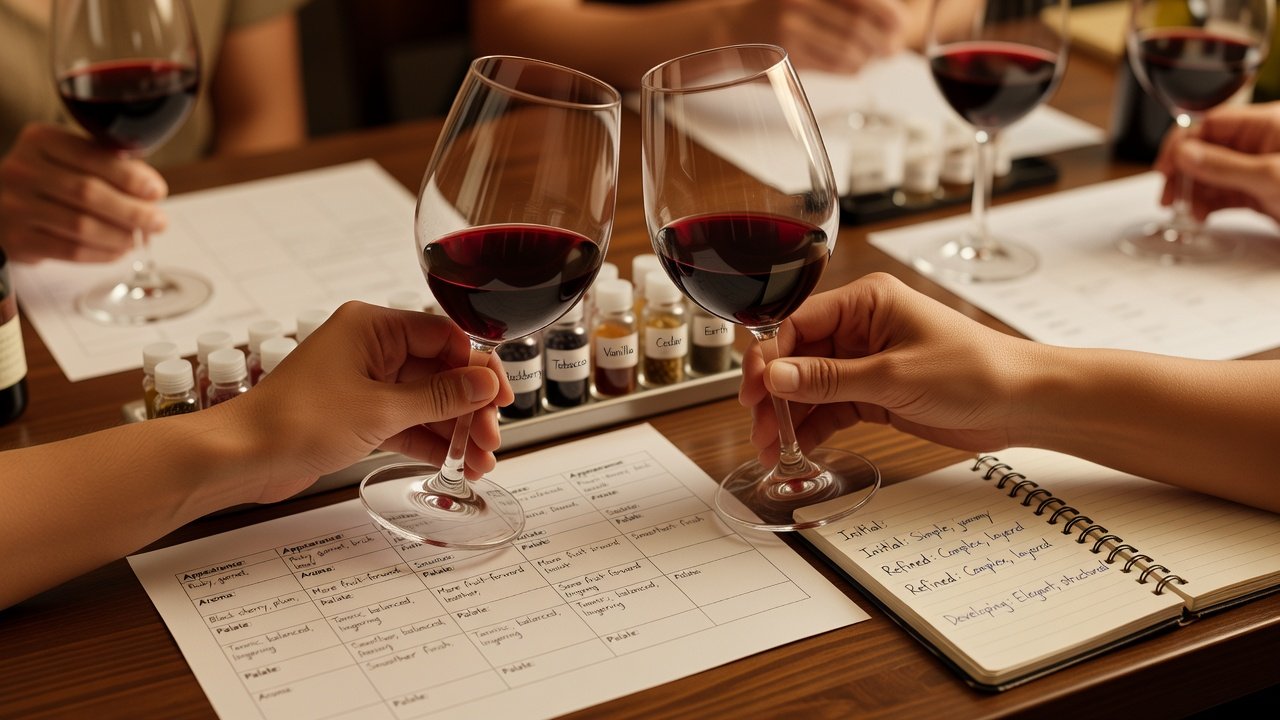
Focus sessions on single attributes. For tannins, compare young Cabernet Sauvignon against aged Nebbiolo. Note texture, drying sensation, and how tannins integrate with fruit. For acidity, line up wines from cool-climate Riesling to warm-climate Chardonnay and rank them by perceived freshness. Fruit profile drills involve separating primary fruit from secondary and tertiary notes. Practice describing the same wine at different temperatures to observe how fruit expression changes. A useful exercise is to taste a Malbec at 16°C versus 18°C and record shifts in blackberry intensity and spice emergence. Over several weeks, these isolated drills compound, allowing you to quickly deconstruct any wine into its structural components without mental overload.
Before-and-After Note Improvements
Beginners often write vague descriptors such as “red fruit and oak.” After consistent drills, notes evolve to “bright Bing cherry with hints of dried thyme, supported by fine-grained tannins and lively acidity that lingers for 45 seconds.” Document three wines monthly to visualize this progression. One real-world example involves a taster who initially scored a 2019 Oregon Pinot Noir at 87 points with generic comments; after six weeks of drills, the same wine received 92 points with layered descriptors including forest floor, red plum, and silky mid-palate texture. Keeping dated journal entries provides motivation and highlights specific vocabulary gains.
Comparison Exercises Between Similar Wines
Side-by-side comparisons sharpen discrimination. Choose two Pinot Noirs from adjacent vineyards or two vintages of the same producer. Taste them alternately, noting subtle differences in aromatic intensity, mid-palate weight, and finish length. This drill directly improves scoring consistency. Extend the exercise by including a third wine that shares one trait, such as similar acidity but different tannin profiles. Such triangular comparisons train the palate to detect incremental changes that judges and sommeliers must identify quickly during professional evaluations.
Printable Checklists and Weekly Progress Trackers
Create a simple daily checklist covering aroma practice, palate calibration, and note writing. Weekly trackers should record accuracy percentages, new descriptors learned, and wines tasted blind. Review these at the end of each week to adjust focus areas. A sample tracker might include columns for date, drill type, accuracy score, top three new words, and overall confidence rating on a 1–10 scale. Print or digital versions both work; the key is consistency rather than format. Many enthusiasts laminate a one-page checklist that travels to tastings for quick reference before each session.
Building Descriptive Vocabulary Over Time
Expand beyond basic terms by maintaining a personal lexicon. After each drill, add three new adjectives tied to specific sensory experiences. Cross-reference with established wheels from organizations such as WSET to ensure industry-standard language. Over months, this vocabulary becomes second nature, allowing rapid translation of sensory input into professional notes without hesitation.
Common Scoring Pitfalls and How to Avoid Them
- Over-reliance on memory instead of current sensory input
- Allowing label knowledge to influence perception
- Ignoring temperature and glassware effects
- Rushing evaluations without structured grids
- Failing to recalibrate after strong or off-flavor samples
- Neglecting to rinse between flights, leading to palate fatigue
Frequently Asked Questions
How long does it take to see improvement?
Most practitioners notice clearer notes within four to six weeks of daily drills when they log results consistently.
Do I need expensive kits?
Basic household items and a few reference wines suffice for meaningful progress; advanced kits become useful only after the first month.
Can these drills help with professional certifications?
Yes, the structured approach aligns closely with programs from organizations such as WSET and the Court of Master Sommeliers. Many candidates incorporate similar exercises into their study routines.
Should I practice alone or with a group?
Both formats offer value; solo work builds personal calibration while group sessions introduce diverse perspectives and immediate feedback.
Conclusion
Consistent sensory drills transform vague impressions into precise, repeatable tasting notes. By dedicating time to aroma work, palate calibration, and blind simulations, you build skills that last well beyond 2026. Start with one daily drill today and track your progress systematically for lasting results that enhance both professional evaluations and personal enjoyment of wine.

No comments yet. Be the first!