 Uncorked Conversations

Introduction to Orange Wines in 2026
Orange wines have moved from niche curiosity to mainstream favorite by 2026. Made by fermenting white grapes with their skins, these amber-hued wines deliver complex flavors that bridge red and white wine territory. This guide helps beginners document tasting notes effectively and assign meaningful scores that reflect both personal enjoyment and objective quality. Understanding the category requires attention to production choices, sensory evaluation techniques, and regional differences that shape each bottle. Readers will find practical templates, detailed real 2026 vintage examples, and a clear scoring rubric designed for consistent results.
Orange wine represents an ancient winemaking tradition revived in modern times. The skin-contact process creates distinctive tannins and oxidative notes absent in conventional white wines. Beginners benefit from structured approaches to tasting that build confidence over repeated practice sessions.
Production Methods That Shape Flavor
Orange wine production begins with white grape varieties such as Ribolla Gialla, Rkatsiteli, or Pinot Gris. Winemakers leave the juice in contact with skins for periods ranging from a few days to several months, extracting color, tannins, and polyphenols. This extended maceration influences aroma profiles ranging from dried apricot and honey to toasted nuts and leather while altering mouthfeel with added structure and grip. Temperature control during fermentation plays a critical role in preserving fruit while allowing oxidative development. Some producers use amphorae or qvevri for gentle micro-oxygenation that softens tannins naturally.
Regional practices create clear stylistic differences. Italian examples often emphasize bright acidity and floral lift from cooler climates. Georgian traditional methods rely on buried qvevri vessels that impart earthy depth and minimal intervention. California producers frequently highlight fruit purity through shorter skin contact and stainless steel aging. The International Organisation of Vine and Wine provides global standards that help contextualize these varied approaches.

Aroma Profiles and Common Oxidative Notes
Oxidation defines much of the orange wine character. Controlled exposure to oxygen during skin contact and aging produces aromas of dried fruits, nuts, tea leaves, and spices. Primary notes might include apricot, peach skin, and citrus zest. Secondary aromas develop during fermentation and include honeycomb, bread crust, and floral tones. Tertiary notes emerge with bottle age and feature leather, tobacco, and forest floor. Beginners should practice identifying these layers separately before combining them into complete descriptions.
Step-by-Step Tasting Note Template
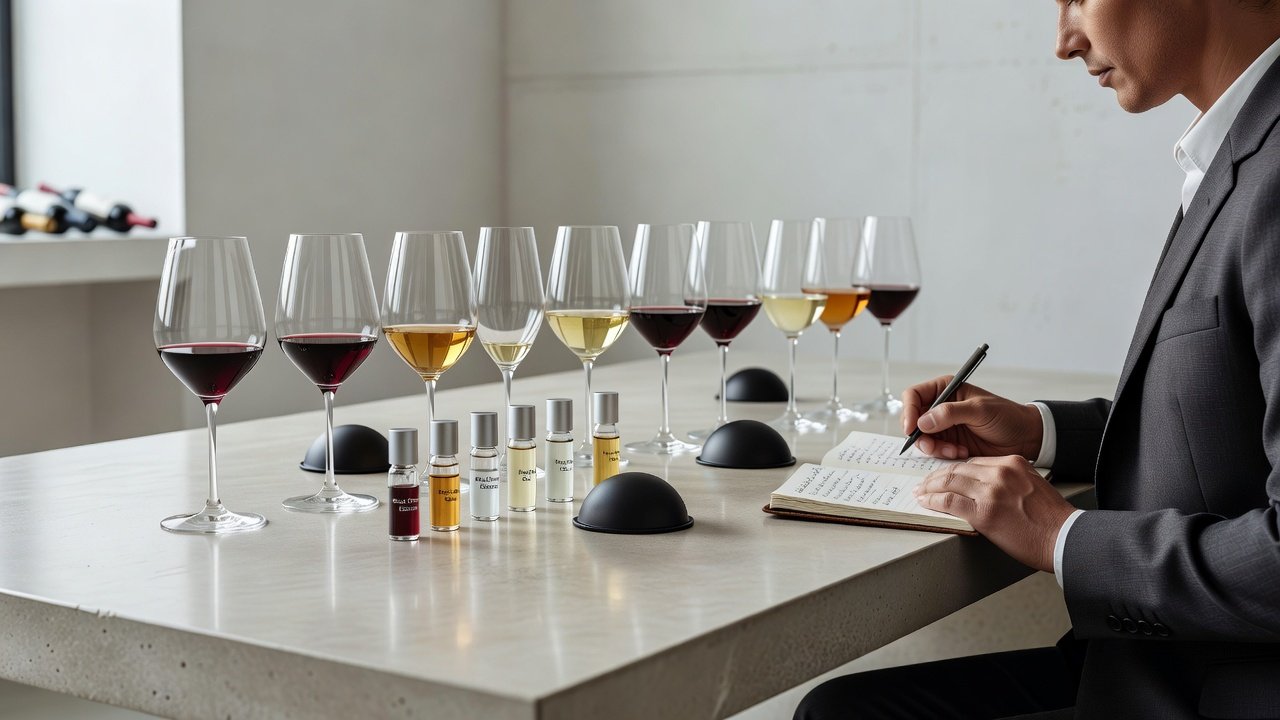
Use this detailed template to record observations consistently across multiple bottles:
- Appearance: Record color intensity from pale gold to deep amber, clarity, and any sediment presence.
- Aroma: Identify primary fruit notes, secondary fermentation aromas, and tertiary oxidative qualities while noting intensity on a scale of low to high.
- Palate: Evaluate sweetness level, acidity, tannin texture, body weight, alcohol warmth, and finish duration in seconds.
- Oxidative notes: Specify nutty, tea-like, or dried fruit qualities and how they integrate with fruit.
- Overall impression: Summarize balance between intensity and harmony.
Common descriptors include dried orange peel, honeycomb, walnut, chestnut, wet stone, and saffron. Repeated use of the template builds vocabulary and sharpens focus on balance versus raw intensity when assigning scores.
Scoring Rubric: Balance Versus Intensity
A practical 100-point system allocates 40 points to balance, 30 points to intensity, 15 points to complexity, 10 points to typicity, and 5 points to overall pleasure. Balance assesses how well acidity, tannins, and fruit integrate without any element dominating. Intensity measures the strength and persistence of aromas and flavors. High-scoring 2026 wines demonstrate integrated tannins that enhance rather than overpower the fruit core. Adjust scores only after multiple tastings to account for bottle variation and serving temperature effects.
Comparisons Across Key Regions
Italy, Georgia, and California offer distinct expressions worth side-by-side comparison. Italian orange wines from Friuli often show higher acidity and brighter citrus notes due to cooler nights. Georgian examples aged in qvevri frequently display deeper color and more pronounced earth tones from longer skin contact. California versions tend toward cleaner fruit expression with subtler oxidative layers when skin contact remains moderate.
Real 2026 Vintage Examples and Sample Reviews
A 2026 Ribolla Gialla from Friuli, Italy, earned 92 points. The review noted intense dried apricot and hazelnut aromas, vibrant lemon acidity, medium tannins with a silky texture, and a 45-second finish. Balance scored highly because fruit and structure complemented each other perfectly. A Georgian Rkatsiteli from Kakheti scored 89 points with leather, baked apple, and wet stone notes alongside firm tannins and medium-plus body. The wine showed excellent typicity for traditional methods yet lacked the final polish in acidity integration. A California Pinot Gris from Sonoma reached 91 points for its citrus zest, subtle baking spice, and honeyed finish. Reviewers praised its approachability for beginners while still offering enough complexity for experienced palates.
These examples illustrate how production decisions translate directly into sensory outcomes. Tasting them together reveals regional signatures and helps refine personal scoring preferences.
Common Mistakes to Avoid
- Overlooking oxidation concerns by storing bottles upright too long after opening, which accelerates unwanted vinegar development.
- Relying solely on sweet fruit descriptors instead of noting tannin texture and mouthfeel weight.
- Ignoring how serving temperature affects perception of oxidative notes and overall balance.
- Failing to compare multiple vintages or producers before forming opinions on style.
- Skipping food pairings that can either highlight or mute specific flavor components.
Food Pairing Suggestions
Orange wines pair successfully with roasted root vegetables, aged hard cheeses, spiced poultry dishes, and grain-based salads. Their natural tannins stand up to richer preparations that would overwhelm conventional white wines. Try pairing with mushroom risotto to emphasize earthy notes or with Middle Eastern mezze platters to showcase dried fruit aromatics. Avoid delicate seafood that may clash with the wine's structure.
FAQ
Does oxidation ruin orange wine? Controlled oxidation during production creates desirable nutty and dried fruit flavors. Excessive post-bottling exposure leads to flat or vinegary notes. Proper storage with minimal headspace prevents most issues.
What foods work best with orange wines? Richer dishes such as roasted vegetables, aged cheeses, and spiced meats complement the tannins effectively. Experiment with both light and hearty options to discover preferences.
How long should 2026 orange wines be aged? Most examples drink beautifully upon release yet can improve for three to five years with cool, dark cellaring. Monitor bottles periodically for development.
Are orange wines suitable for beginners? Yes, when approached with structured templates. Start with lighter styles from California before progressing to traditional Georgian examples.
Conclusion
Documenting orange wine tasting notes builds confidence and deeper appreciation for this evolving category. Apply the templates, rubric, and regional comparisons to your next bottle for consistent, insightful reviews that go beyond standard varietal descriptions. Continue exploration with trusted resources such as Wine-Searcher for vintage availability and Decanter for expert regional insights.

No comments yet. Be the first!