 Uncorked Conversations

Introduction to Sommelier-Level Glassware Care
Proper maintenance of wine glasses and decanters elevates every tasting experience from ordinary to exceptional. Beginners often overlook how even trace residue, lingering odors, or improper storage can mute delicate aromas and flatten flavors in the glass. This comprehensive guide delivers practical sommelier tips drawn from professional restaurant and cellar practices across the globe, helping you achieve crystal-clear results that let each wine express its full character. Whether you are hosting intimate dinners or building a serious home cellar, consistent care routines protect your investment and enhance enjoyment.
Understanding Different Glass Types and Decanter Materials
Wine glasses range from delicate lead-free crystal stems to sturdy everyday varieties made from tempered glass. Decanters are typically crafted from lead-free crystal or borosilicate glass, each reacting differently to heat, detergents, and handling. Crystal demands gentler treatment to preserve its refractive brilliance and thin rims, while tempered glass tolerates more robust cleaning methods. Always inspect manufacturer guidelines before beginning any routine, especially with vintage or hand-blown pieces that may carry unique vulnerabilities. Understanding these material differences prevents costly damage and ensures longevity.
Daily Cleaning Routines for Wine Glasses
After each use, rinse glasses immediately with warm water to prevent wine stains from setting into the surface. Use a mild, fragrance-free dish soap paired with a soft sponge or dedicated glass brush. Hold the bowl gently with one hand while supporting the stem, avoiding any twisting motion that could stress the delicate joint. Rinse thoroughly under running water and air-dry upside down on a rack lined with a lint-free towel. This simple method prevents water spots and keeps glasses service-ready. In professional settings, staff often repeat the rinse step twice to eliminate any soap film that might affect the next pour.
Deep Cleaning Methods for Stubborn Stains
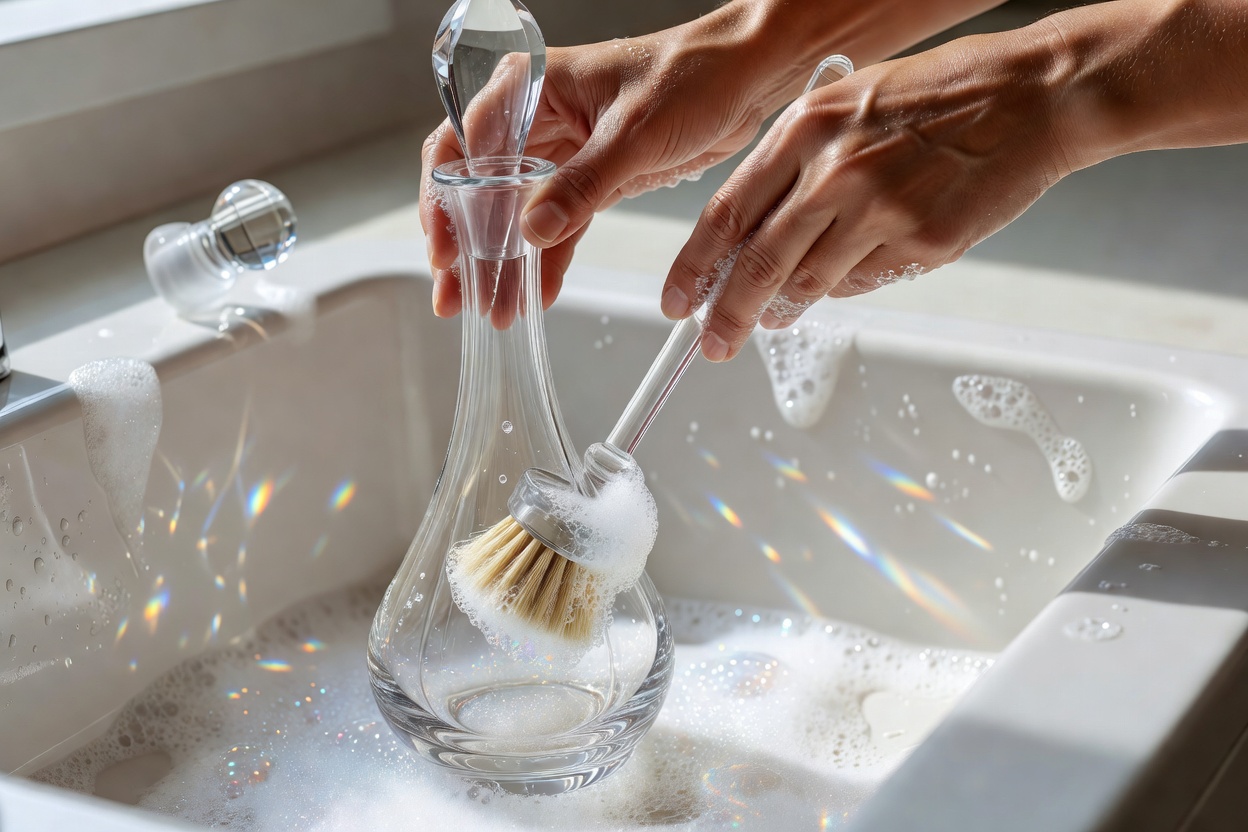
For red wine residue or cloudiness that daily rinsing cannot remove, fill the glass with a solution of warm water and a teaspoon of baking soda or white vinegar. Allow it to soak for fifteen minutes before scrubbing lightly with a microfiber cloth. For decanters with narrow necks, introduce a long-handled bottle brush or stainless-steel decanter beads that agitate the interior without scratching. Multiple rinses with distilled water are essential to eliminate any aftertaste that could interfere with wine aromas. Sommeliers frequently perform this deep clean weekly in busy restaurants to maintain presentation standards.
Recommended Tools and Cleaning Solutions
Invest in a curated set of soft-bristle brushes sized specifically for both standard glasses and narrow decanter necks. Microfiber cloths and lint-free drying mats form the backbone of any professional kit. Choose pH-neutral, unscented dish soaps formulated for glassware. Avoid abrasive powders or ammonia-based cleaners that etch surfaces over repeated use. Many sommeliers maintain separate sponges exclusively for stemware to prevent cross-contamination from greasy kitchenware. Decanter magazine regularly highlights tools favored by leading cellars worldwide.
Hand-Washing vs Dishwasher Use: A Detailed Comparison
- Hand-washing: Provides maximum control and remains the safest option for delicate crystal and antique decanters. It allows targeted attention to rims, bases, and any engraving details.
- Dishwasher: Offers convenience for everyday, dishwasher-safe stemware when using a gentle cycle on the top rack only. Never place lead-crystal or hand-blown pieces inside, as vibrations and high heat can cause irreparable damage.
High-end restaurants almost universally hand-wash service glasses to uphold consistent quality and extend the functional lifespan of each piece. Home users can adopt a hybrid approach, reserving the dishwasher for durable everyday sets while hand-washing special occasion crystal.
Safe Storage Practices Tied to Wine Storage Principles
Store glasses upright in a dust-free cabinet positioned away from direct sunlight and strong kitchen odors. Employ stemware racks that prevent bowls from touching one another. Decanters should stand upright with stoppers removed, allowing continuous airflow. These practices mirror ideal wine storage conditions—stable temperature, controlled humidity, and protection from light—ensuring both your collection and serving equipment remain in peak condition. Wine Folly provides additional guidance on creating optimal environments for both bottles and glassware.
Common Mistakes to Avoid
- Using scented detergents that leave behind perfume notes capable of altering wine perception.
- Stacking glasses inside one another, which leads to chips, cracks, and premature breakage.
- Storing decanters with stoppers inserted, trapping moisture and fostering musty odors.
- Over-soaking crystal in hot water, risking thermal shock and micro-fractures.
- Drying with paper towels that can leave lint or scratches on polished surfaces.
Real-World Examples from Professional Settings
At high-volume wine bars in major cities, staff perform nightly polishing with steam wands and dedicated cloths to remove any invisible film before evening service begins. In Michelin-starred restaurants, sommeliers inspect every glass under bright task lighting for water spots or residue prior to pouring. These small rituals ensure guests experience the wine exactly as the winemaker intended. One Burgundy-focused establishment in California even maintains a dedicated glass library with rotation schedules so each piece receives equal use and rest periods.
Extending the Lifespan of Stemware
Always handle glasses by the stem or base rather than the bowl to minimize fingerprints and pressure points. Rotate usage among multiple sets so no single collection receives excessive wear. Replace pieces showing micro-scratches promptly, as these can harbor bacteria and diminish visual appeal. With consistent care routines, quality crystal can last decades while retaining its original sparkle and resonance. Regular inspection under good lighting helps catch early signs of wear before they become permanent issues.
Professional Sommelier Techniques for Decanting
Before decanting, ensure the vessel is completely odor-free by performing a final rinse with a small amount of the wine itself when appropriate. Hold the decanter at a slight angle while pouring to control flow and minimize splashing. After service, clean immediately to prevent sediment from drying onto interior walls. These techniques, practiced daily in professional cellars, preserve both the decanter and the wine’s integrity.
How to Inspect Glassware Before Service
Hold each glass up to a bright light source and rotate it slowly, checking for spots, streaks, or cloudiness. Smell the interior briefly to detect any off odors. Run a clean finger along the rim to confirm smoothness. This final quality-control step, standard in fine dining, prevents embarrassing moments during tastings and demonstrates respect for both the wine and the guest.
Quick FAQ: Addressing Stains and Odors
How do I remove persistent red wine stains?
Soak overnight in a mixture of warm water and denture-cleaning tablets, then rinse thoroughly with distilled water until no residue remains.
Why do my glasses smell like dish soap?
Incomplete rinsing is the most common culprit. Always finish with a final rinse using hot distilled water and allow complete air drying.
Can I use bleach on decanters?
No. Bleach can etch glass surfaces and leave harmful chemical residues. Stick to vinegar or baking soda solutions instead.
What should I do if my decanter develops a cloudy interior?
Perform a deep clean using decanter beads and a mild acid solution, followed by multiple distilled water rinses. Persistent clouding may indicate mineral buildup requiring professional polishing.
Conclusion
Following these sommelier tips transforms routine maintenance into a meaningful investment in better wine enjoyment. Consistent cleaning protocols, mindful storage habits, and attention to detail keep your glassware performing at its highest level for years. Begin implementing the daily rinse routine today and observe the noticeable improvement at your next tasting session. The Institute of Masters of Wine emphasizes that equipment care directly influences sensory outcomes, underscoring the value of these practices for enthusiasts at every level.


No comments yet. Be the first!