 Uncorked Conversations
Introduction to Professional Wine Service Accessories
Mastering wine service at home or professionally demands precision tools that go far beyond basic openers and glasses. In 2026, sommeliers and dedicated enthusiasts depend on specialized accessories to control serving temperatures accurately, preserve opened bottles effectively, and present wines with elegance. This comprehensive guide examines the must-have accessories that transform ordinary pouring into refined service, delivering consistent results whether you host intimate dinners or larger gatherings. From digital thermometers that ensure optimal chill levels to advanced preservation systems that maintain freshness for days, these tools address the nuances of different wine styles including reds, whites, sparkling varieties, and fortified options.
Home enthusiasts often start with simple kits but quickly discover how targeted accessories elevate the experience. Aspiring sommeliers benefit from understanding how each item integrates into a workflow that mimics professional standards. Throughout this article we will break down individual tools, compare manual and smart options, provide a detailed station setup process, share real event scenarios, outline maintenance routines, and highlight pitfalls to avoid. By the end you will have actionable knowledge to build a functional service station tailored to your collection and existing glassware or decanters.
Core Accessories Every Sommelier Needs
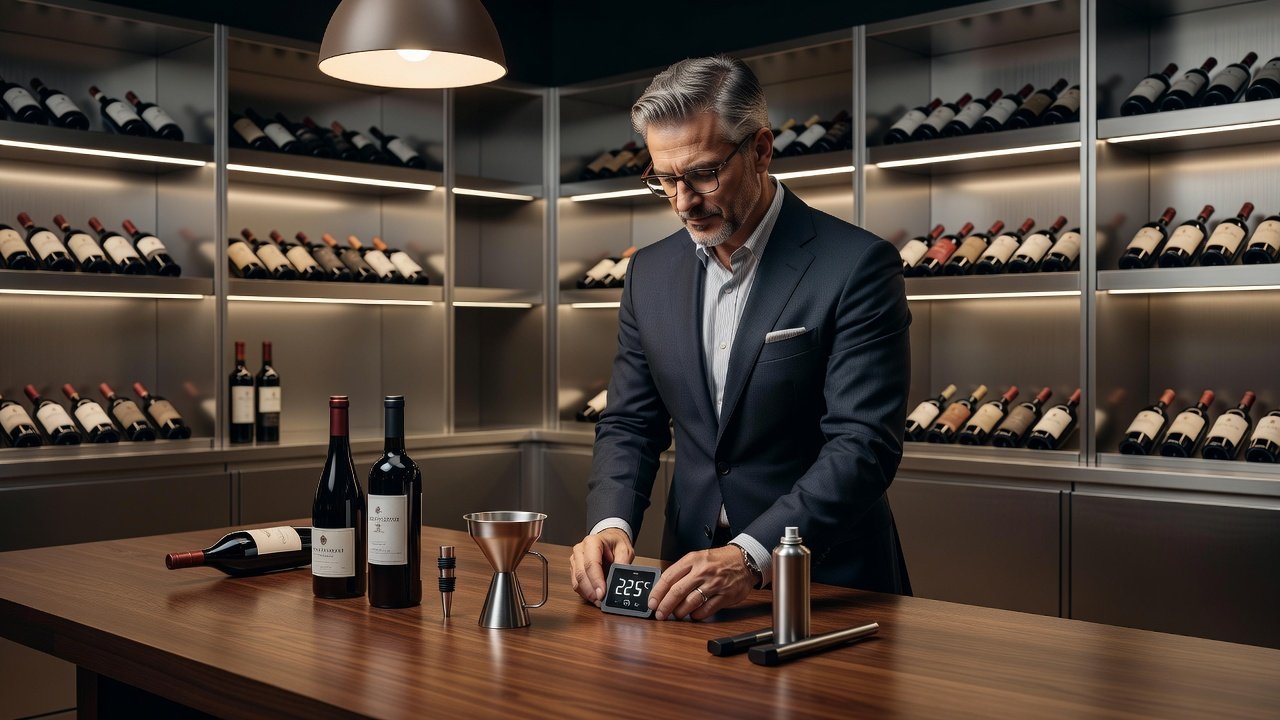
Precision begins with temperature management. A reliable digital wine thermometer allows instant readings across multiple bottle types, helping you serve whites and rosés between 45 and 55 degrees Fahrenheit while keeping light reds around 55 to 60 degrees. Heavy reds benefit from 60 to 65 degrees, and sparkling wines require 40 to 50 degrees for optimal effervescence. Next come decanting funnels equipped with fine mesh filters that capture sediment without disturbing the wine during transfer. These prevent cloudiness in older vintages and ensure smooth pours.
Preservation tools rank equally high in priority. Vacuum pumps paired with reusable stoppers remove oxygen from opened bottles, extending drinkability for several days. Inert gas sprays offer an alternative by creating a protective layer that prevents oxidation. Additional essentials include a double-hinged corkscrew with built-in foil cutter for clean bottle openings, aerators that accelerate breathing for young tannins, and non-slip serving trays that organize multiple glasses during service. A dedicated wine journal or app-compatible notebook helps track which accessories pair best with specific varietals during repeated tastings.
Manual vs Smart Gadgets: Detailed Comparison
Manual accessories emphasize durability and independence from power sources. Analog thermometers, traditional corkscrews, and hand-operated vacuum pumps function reliably in any setting, from outdoor picnics to power outages. They require no calibration beyond occasional cleaning and cost less upfront while offering tactile feedback that many professionals prefer. Smart gadgets, by contrast, incorporate Bluetooth connectivity, app integration, and data logging. A smart thermometer can send temperature alerts to your phone, while electronic preservation units automatically monitor seal integrity and suggest optimal storage durations.
- Manual tools win for portability and zero maintenance beyond basic hygiene.
- Smart devices provide convenience through reminders and historical data useful for tracking wine evolution.
- Many sommeliers adopt a hybrid strategy, keeping manual backups while using smart tools for high-volume events.
The choice ultimately depends on your service frequency and comfort with technology. Beginners often start manual before upgrading as needs grow.
Step-by-Step Setup for a Home Wine Service Station
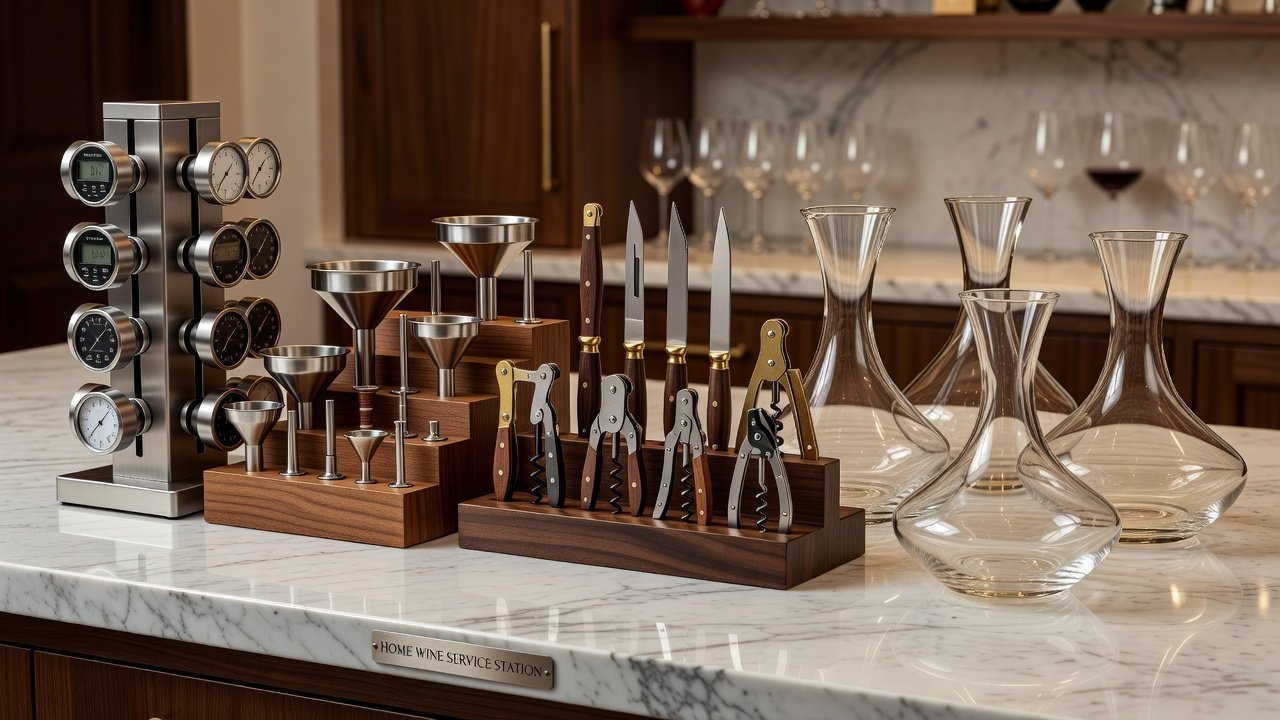
Building an efficient station requires thoughtful layout that minimizes movement during service. Begin by selecting a sturdy countertop or dedicated cart near your wine storage area. Position the thermometer and corkscrew within immediate reach for quick bottle preparation. Place funnels and aerators beside your decanters so transfers happen seamlessly. Preservation tools should sit at the end of the workflow, ready for recorking after pours.
- Clear the surface and line it with a protective mat to prevent scratches from glassware.
- Group items by sequence: opening tools first, temperature checks second, decanting third, and preservation last.
- Test the full flow with an empty bottle to confirm spacing allows comfortable arm movement.
- Incorporate vertical storage racks for extra funnels and stoppers to keep the area uncluttered.
- Add subtle lighting such as a small LED strip to illuminate labels without overheating bottles.
- Include a small waste bin for foil scraps and a towel station for spill management.
Refine the arrangement after your first few services based on personal ergonomics.
Real-World Examples of Usage During Events
Consider a five-course tasting menu where timing matters. A host uses a digital thermometer to verify each wine reaches target temperature exactly five minutes before guest arrival. During a corporate tasting event, preservation units keep three opened bottles fresh across two hours of discussion, allowing latecomers to sample the same vintage without noticeable decline. In another scenario, a backyard dinner party benefits from portable manual tools when electricity is unavailable, with funnels ensuring sediment-free pours from aged Bordeaux directly into stemware. These examples illustrate how accessories adapt to both structured and casual environments while maintaining professional quality.
Maintenance Tips and Common Pitfalls to Avoid
Regular care preserves tool accuracy and longevity. Clean funnels and aerators after every use with warm water and mild detergent, then air-dry completely to avoid mineral deposits. Calibrate digital thermometers monthly against a known reference like ice water. Store corkscrews in protective sheaths and replace vacuum stoppers when seals show wear. Avoid common errors such as forcing mismatched funnels into narrow decanter necks, which risks breakage, or neglecting to wipe thermometer probes between bottles, leading to cross-contamination of flavors. Another frequent mistake involves leaving preservation units attached too tightly, potentially stressing bottle lips over time.
Integrating Accessories with Existing Wine Glasses and Decanters
Compatibility matters when expanding your toolkit. Most standard funnels fit the necks of common decanters, but measure diameters beforehand if you own specialty crystal. Aerators often clip onto glass rims, so confirm they accommodate your stemware width. Preservation stoppers come in universal sizes that work across most bottle formats, though testing on your collection prevents leaks. This integration ensures smooth workflows without replacing beloved pieces.
Conclusion
Investing in quality accessories transforms wine service from routine to exceptional. By selecting the right combination of thermometers, funnels, preservation tools, and supporting items, you create consistent, impressive results at home. Follow the setup steps, compare options carefully, maintain equipment diligently, and avoid typical mistakes to maximize value. With these practices in place, every bottle receives the professional attention it deserves.
FAQ
What budget options work well for beginners?
Starter sets featuring basic digital thermometers, manual vacuum pumps, and simple funnels deliver reliable performance for occasional use without advanced electronics.
How do these accessories integrate with existing wine glasses or decanters?
Universal designs ensure most funnels and aerators pair with standard glassware; always verify neck widths and clip mechanisms for a secure fit.
Are smart gadgets worth upgrading to from manual versions?
Smart tools add convenience for frequent hosts through alerts and tracking, yet manual alternatives remain sufficient and dependable for lighter service demands.
Additional authoritative resources on wine service practices can be found at Wine Institute, Decanter, and Institute of Masters of Wine.

No comments yet. Be the first!