 Uncorked Conversations
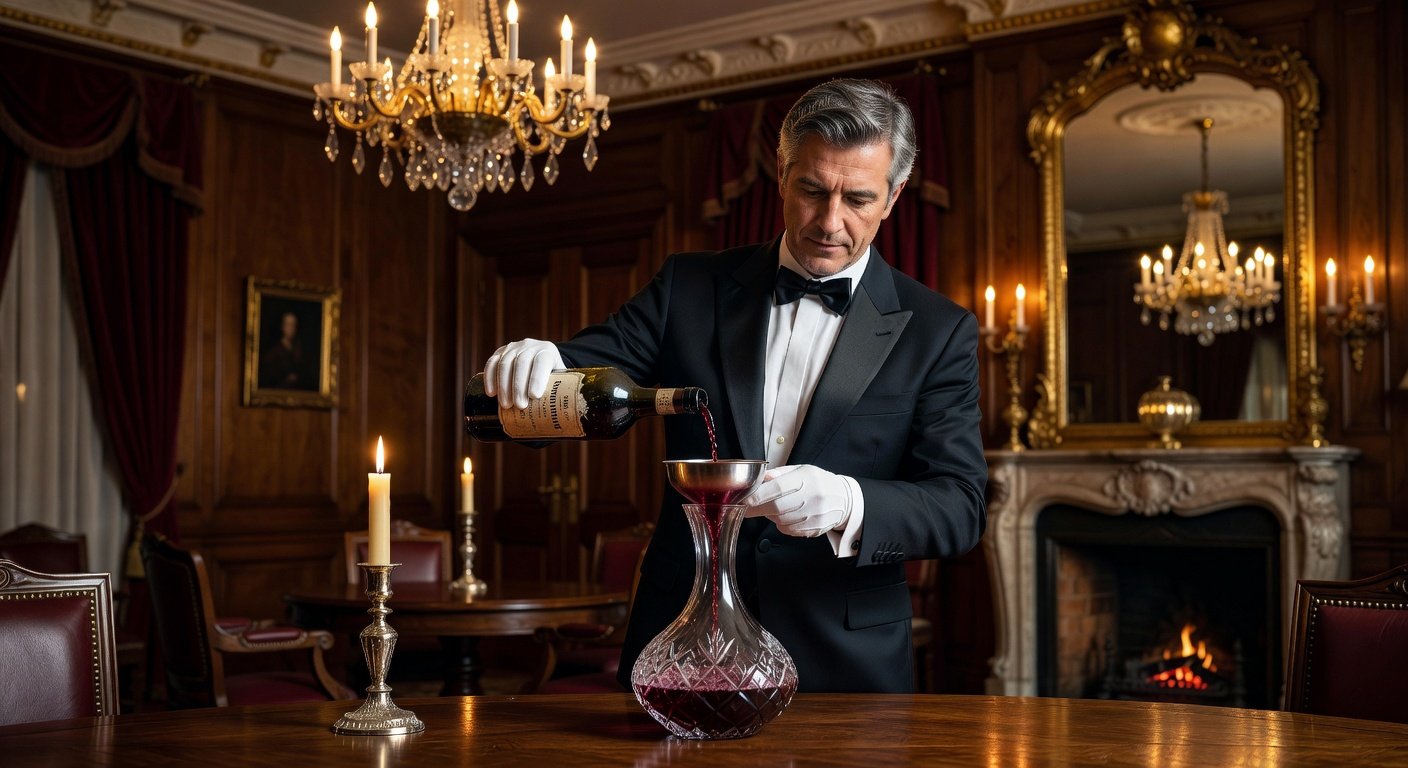
What Is Double Decanting and Why Do Pros Swear By It?
In the world of fine wine service, sommeliers are always seeking ways to elevate the tasting experience. Enter double decanting—a sophisticated technique reserved for the most challenging bottles. Unlike traditional single decanting, which simply pours wine from bottle to decanter to separate sediment, double decanting involves two transfers: first to remove sediment, then back into the bottle for seamless presentation.
This method shines with sediment-heavy wines like aged vintage Ports, mature Bordeaux, or old Barolos, where crystalline deposits (tartaric crystals or larger sediment) can mar the pour. By double decanting, pros preserve delicate aromas, enhance clarity, and serve with flair directly from the original bottle. It's not just practical; it's theatrical, impressing guests at high-end dinners or tastings.
While beginners might stick to single decanting, double decanting demands precision. As noted on Decanter, this technique minimizes oxygen exposure compared to prolonged single decanting, safeguarding volatile esters in older wines.
The Science Behind Double Decanting: Benefits Over Single Methods
Decanting serves three core purposes: sediment removal, aeration, and aroma preservation. Single decanting excels at aeration for young reds but risks over-oxidizing fragile vintages. Double decanting flips the script.
- Sediment Separation: The first pour leaves lees behind, yielding pristine wine.
- Controlled Aeration: Brief exposure during transfers softens tannins without stripping aromas—ideal for 20+ year-old bottles.
- Preserved Aromatics: Less time in glass means tertiary notes like leather, earth, and dried fruit stay vibrant.
- Visual Appeal: Re-bottling allows pouring from the iconic label-facing bottle, elevating service.
Studies and sommelier lore, echoed in resources like Wikipedia's decanting overview, highlight how excessive air contact fades complex bouquets in aged wines. Double decanting limits this to seconds per transfer, outperforming single decants that can take 30+ minutes.
For pros, the edge is in nuance: a 1945 Château Lafite might lose truffle notes in a single decant, but double decanting keeps them singing.
Perfect Wines for Double Decanting: When to Use It
Not every bottle needs this treatment. Reserve double decanting for wines with significant sediment or those needing minimal aeration.
Prime Candidates
- Vintage Ports (20+ years): Tawny crusts demand separation; double decanting reveals nutty, fig aromas without haze.
- Old Bordeaux (Left Bank, e.g., Pauillac): Gravelly sediments from long aging; think 1982 Château Margaux.
- Barolo and Barbaresco (Traditional): Nebbiolo's tarry deposits; perfect for 1990s vintages.
- Madiran or Cahors (Southwest France): Tannic Malbecs with heavy lees.
Skip it for young wines (under 10 years) craving bold aeration or clear whites. Compare: single decant a 2010 Napa Cab for fruit explosion; double decant a 1970 Taylor's Port for elegance.
Expert rule: If sediment covers the bottle's base when tilted, double decant. Stand bottles upright 24-48 hours pre-service to settle particles.
Essential Tools for Flawless Double Decanting
Precision tools make or break the process. Invest in quality for pro results.
- Two Wide-Bottom Decanters: Crystal or glass, 1-1.5L capacity (Riedel or Spiegelau).
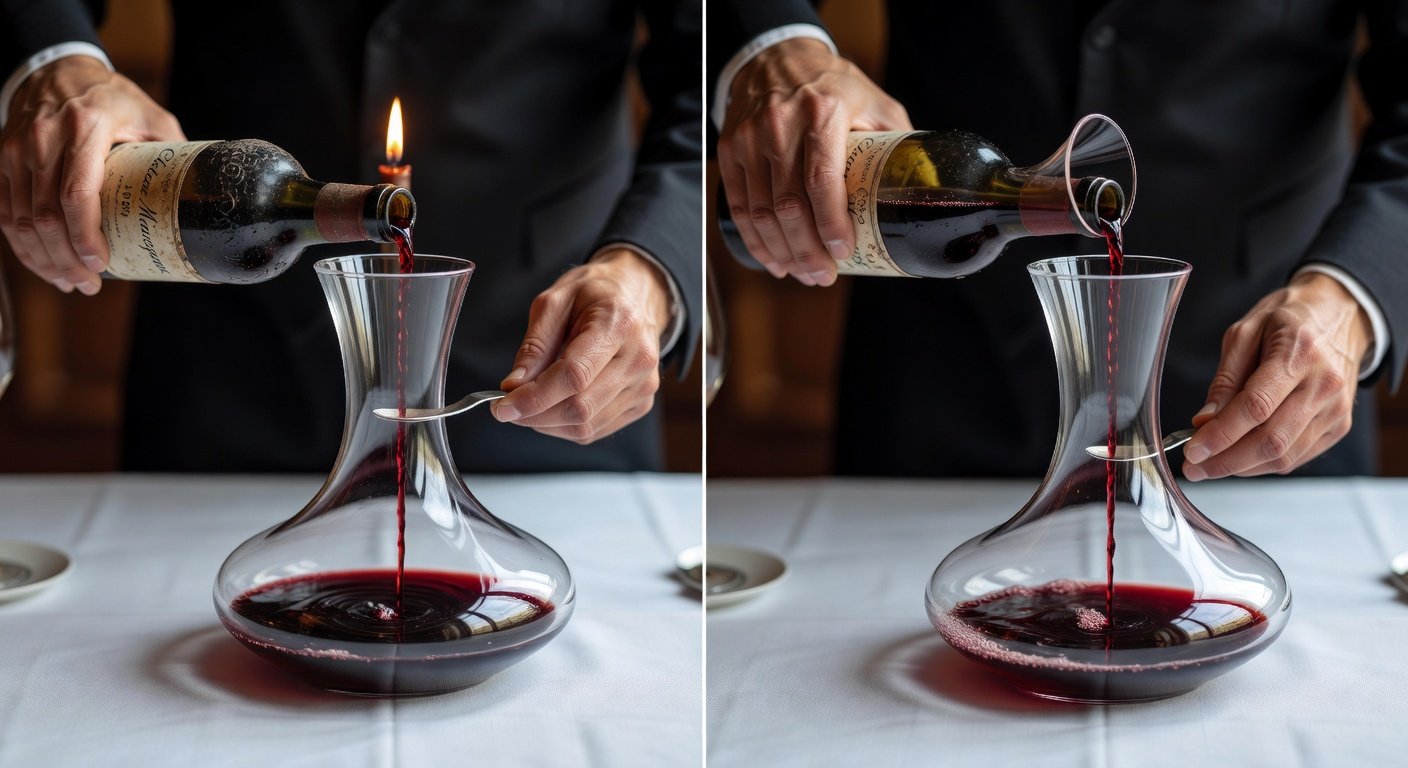
- Butler's Thief or Decanting Candle: Illuminates sediment cutoff.
- Funnel with Mesh Filter: Optional for ultra-clarity.
- Clean Bottle Brush & Sanitizer: For re-bottling hygiene.
- Cloth or Towel: Drip protection.
Pro tip: Chill tools slightly for wines under 18°C. Total cost: $100-300 for a starter kit.
Step-by-Step Guide to Double Decanting Like a Sommelier
Follow these steps meticulously for restaurant-grade execution. Practice on cheaper bottles first.
- Prep (30 mins prior): Stand bottle upright. Remove foil/cork with Ah-So or waiter's knife. Wipe neck.
- First Pour (Sediment Separation): Position candle/thief under neck. Pour slowly into Decanter #1 at 45° angle, watching for sediment tail. Stop when it appears—leave 1-2 oz behind.
- Rinse Bottle: Swirl warm water inside, drain upside-down. Dry thoroughly.
- Second Transfer: Pour from Decanter #1 into original bottle via funnel. Steady hand—no splashing.
- Rest (5-15 mins): Let settle; wine is now service-ready.
- Serve: Pour table-side from bottle, label out.
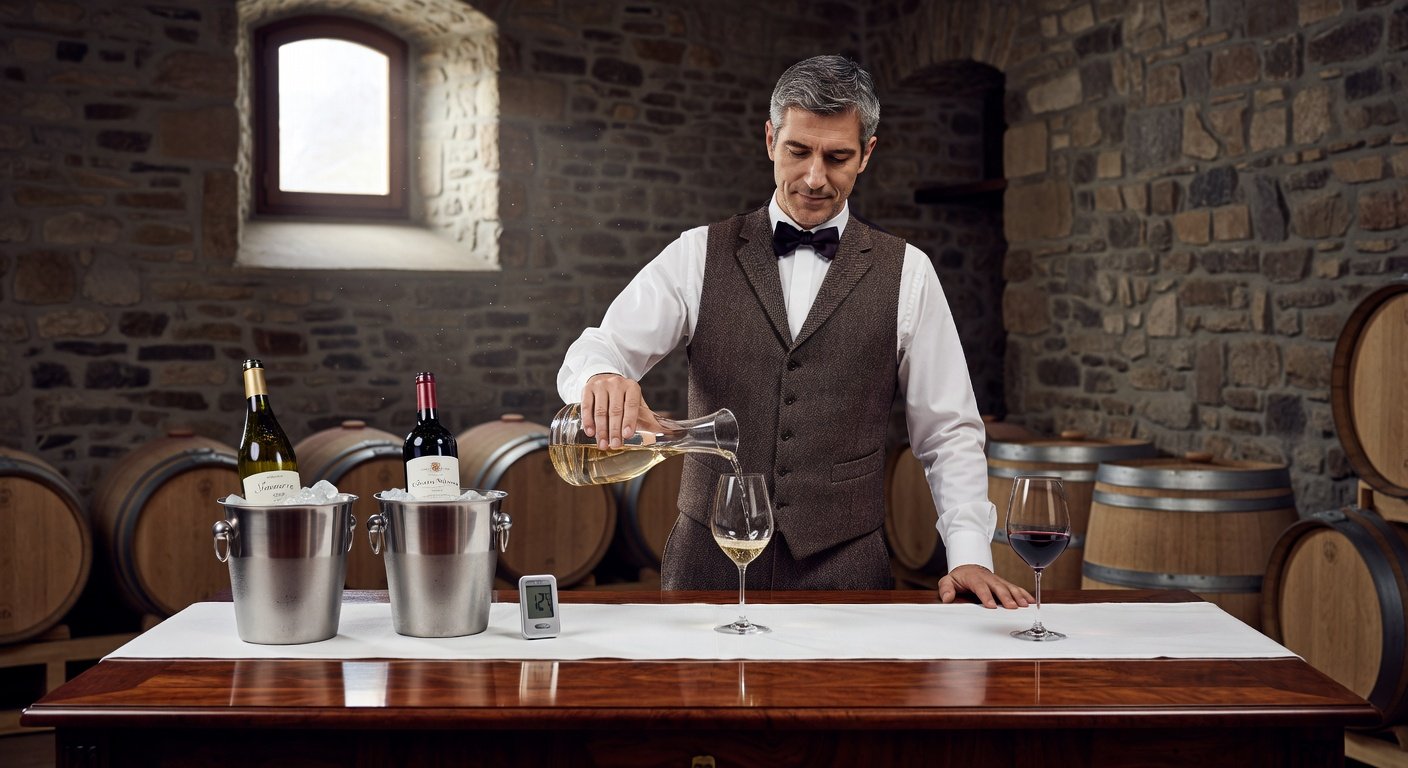
Timing: 10-20 mins total. For Ports, serve at 16-18°C; Bordeaux at 17°C.
Expert Timing and Presentation Tips
Sommeliers time decanting to peak ripeness. For a 40-year-old Port, decant 30 mins pre-pour; older Bordeaux, just 10 mins.
Presentation hacks:
- Narrate: "This 1963 Fonseca has been double decanted to honor its sediment while preserving its ethereal port essence."
- Pair with stemware: Large bowls for swirl.
- Venue adapt: At home, use a tray; in service, mise-en-place near guests.
As pros at Wine Spectator advise, sync with menu—double decant before appetizers for flow.
Common Mistakes to Avoid and Troubleshooting
Even pros slip. Dodge these pitfalls:
- Over-Pouring Sediment: Use light; stop decisively.
- Dirty Tools: Sanitize to avoid off-flavors.
- Excess Air Time: Don't let Decanter #1 sit >5 mins.
- Rushing Re-Bottle: Splashes oxidize edges.
Troubleshoot haze? Micro-filter second pour. Cork fragments? Strain twice.
FAQs: Double Decanting Demystified
Q: Can I double decant white wines?
A: Rarely—only oxidative styles like old Rieslings with crystals.
Q: What's the shelf life post-decant?
A: 2-4 hours max; aromas fade fast.
Q: Single vs. Double—Cost/Benefit?
A: Double for >20yo sediment bombs; single for everything else.
Q: Travel-friendly?
A: Pre-decant at home; use travel decanters.
Elevate Your Service: The Pro Edge
Double decanting isn't just technique—it's artistry. Mastering it positions you as a sommelier savant, turning routine pours into memorable moments. Next time you uncork that dusty vintage, remember: two decants, zero compromises. Experiment, refine, and watch your guests' awe unfold.
No comments yet. Be the first!