 Uncorked Conversations

Introduction to Cork Types in Professional Wine Service
Understanding cork materials is essential for sommeliers and serious enthusiasts who want to optimize wine storage and serving. Different closures—natural cork, synthetic alternatives, and screw caps—each bring distinct impacts on aging potential, oxidation control, and flavor integrity. This guide delivers practical, decision-focused insights tailored for 2026 wine handling practices that pair perfectly with precision glassware and event service. Professionals recognize that the choice of closure can determine whether a wine reaches its full potential or falls short due to premature oxidation or off-flavors. In today’s market, where collectors and restaurants seek reliable performance across diverse vintages, mastering these differences elevates both storage decisions and the final pour experience.
Natural Cork: Traditional Performance and Limitations
Natural cork, harvested from cork oak trees, remains the gold standard for many premium wines. It allows a controlled micro-oxygenation that supports gradual aging in structured reds and complex whites. However, variability in quality can lead to TCA taint or inconsistent seals. Sommeliers inspect natural corks for cracks, dryness, or mold before decanting, especially with aged vintages like 2005 Bordeaux or 2010 Barolo. The natural material’s cellular structure permits tiny amounts of air exchange over decades, fostering tertiary aromas such as leather, tobacco, and dried fruit. Yet this same permeability introduces risks: low-quality corks may shrink or allow excess oxygen, accelerating spoilage. Real-world cellars often maintain humidity at 55-65 percent to keep natural corks supple, preventing leakage during long-term horizontal storage.
Synthetic Closures: Consistency for Modern Winemaking
Synthetic corks provide reliable oxygen barriers without the risk of cork taint. They suit wines meant for earlier consumption, typically within five years. Their uniform compression helps maintain freshness in aromatic varieties such as Sauvignon Blanc and Riesling. Professionals often choose them for high-volume events where consistency matters more than long-term cellaring. Manufactured from food-grade polymers, these closures offer predictable oxygen transmission rates that winemakers can calibrate during production. In 2026 cellars, synthetic options prove valuable for white wines stored in temperature-controlled environments, reducing the chance of flavor degradation from variable natural materials. Sommeliers note that synthetics also simplify inventory management because they resist crumbling during high-turnover service.
Screw Caps: Precision and Preservation
Screw caps deliver near-zero oxygen transmission, preserving vibrant fruit and acidity in whites and light reds. They excel for wines consumed young but can limit development in powerful reds requiring decades of aging. Recent industry shifts show increasing acceptance among top producers for both entry-level and flagship bottles. The aluminum construction creates an airtight seal that virtually eliminates oxidation and TCA risk, making screw caps ideal for aromatic whites meant to showcase primary fruit notes at events. For red wines, however, the lack of micro-oxygenation means certain structured vintages may never develop the same complexity as those under natural cork. Sommeliers adapt by recommending screw-cap bottles for immediate service or short cellaring periods when planning 2026 tastings.
Comparing Aging Potential, Oxidation Risks, and Flavor Preservation
Key differences emerge when comparing closures across storage timelines. Natural cork permits slow oxygen ingress ideal for tertiary development, while synthetics and screw caps minimize oxidation. For example, a 2018 Pinot Noir stored under screw cap retains primary aromas longer than the same wine under natural cork. A 2007 Cabernet Sauvignon under high-quality natural cork may reveal layered earth and spice notes after 19 years, whereas the identical wine under synthetic closure often stays fruit-forward but less evolved. Oxidation risk rises dramatically with poor natural corks, while screw caps protect against it almost entirely. Flavor preservation depends on matching the closure to the wine style: delicate aromatics benefit from low-oxygen options, while age-worthy reds thrive with measured air exchange. These comparisons guide 2026 storage solutions that enhance wine glasses and serving precision by ensuring each bottle opens at peak condition.
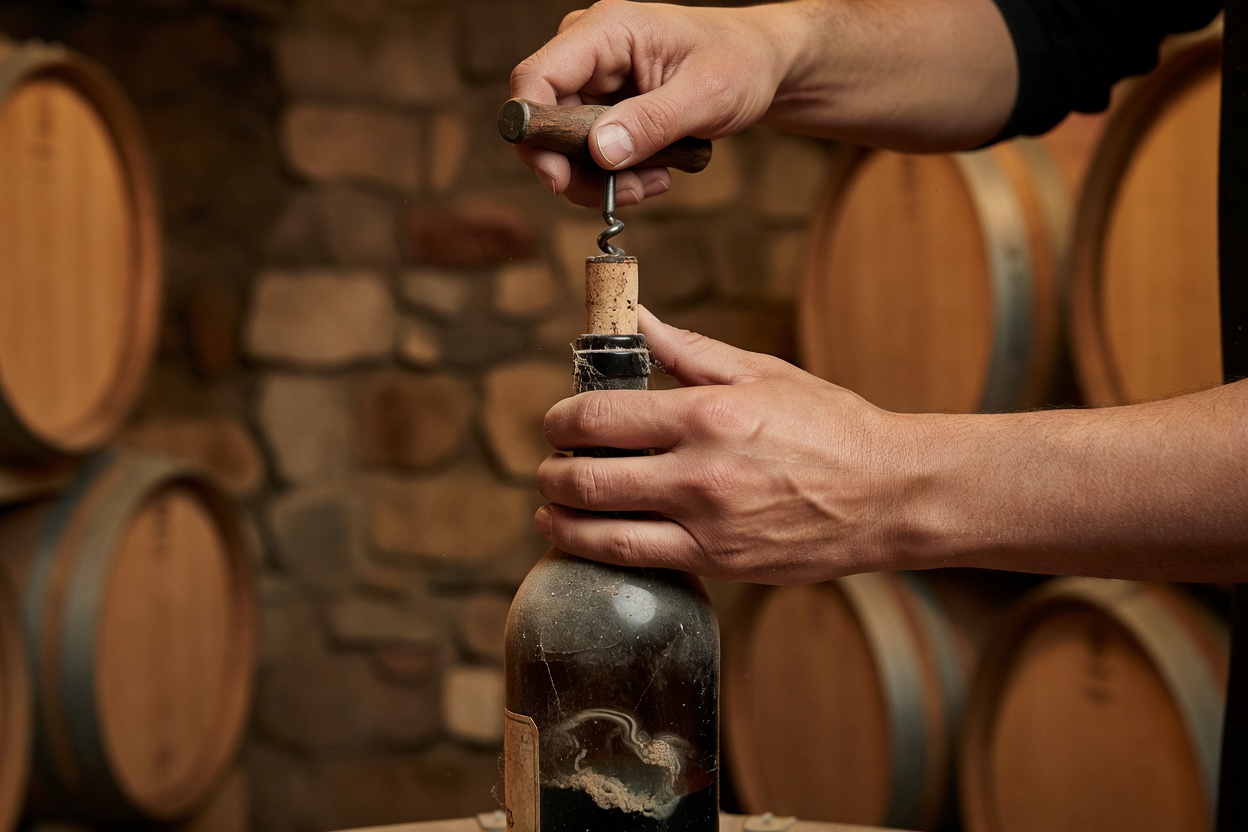
Inspection Techniques Before Decanting
- Check for leakage stains or bulging capsules indicating pressure issues.
- Smell the cork end for musty or off odors before pulling.
- Use a corkscrew with a thin worm to avoid crumbling fragile aged corks.
- Hold the bottle at a 45-degree angle during extraction to minimize sediment disturbance.
- Examine the cork length and compression for signs of prior temperature fluctuations that could affect seal integrity.
Optimal Removal Methods to Avoid Sediment
Proper technique prevents clouding the wine. For natural corks in older bottles, employ a two-pronged cork puller (Ah-So) to ease out fragile closures without breaking. After removal, wipe the bottle neck thoroughly. Decant slowly over a light source to catch any sediment. These steps ensure clean pours that highlight the wine’s clarity in fine glassware. At large events, sommeliers often pre-inspect multiple bottles and prepare backup options with screw caps for seamless service flow. Training staff on gentle twisting motions rather than aggressive pulling reduces breakage rates and preserves the wine’s visual appeal when served tableside.
Real-World Examples from Aged Vintages
Consider a 1998 Barolo stored under natural cork: careful inspection revealed slight compression yet intact integrity, allowing 26 years of graceful evolution with notes of tar and dried cherry emerging beautifully. In contrast, a 2012 Riesling under screw cap showed pristine primary notes upon opening in 2026, demonstrating reliable short-term preservation without any hint of oxidation. Another case involved a 2003 vintage Port sealed with synthetic cork; after two decades the wine retained vibrant fruit but lacked the nuanced development seen in traditionally corked counterparts. These examples illustrate how closure choice directly shapes serving outcomes and inform decisions for current collections.
Practical Steps for Home and Event Use in 2026
- Assess your wine collection’s drinking timeline before selecting storage closures.
- Invest in quality corkscrews and decanters suited to each cork type.
- Store bottles horizontally for natural cork to maintain moisture; upright is acceptable for screw caps.
- At events, prepare backup bottles with different closures to accommodate unexpected oxidation variations.
- Label storage bins clearly with closure type and expected drinking windows to streamline retrieval.
- Monitor cellar humidity and temperature monthly, adjusting for synthetic and screw-cap bottles that tolerate slightly drier conditions.
Common Mistakes to Avoid
Many enthusiasts store screw-cap wines horizontally out of habit, though upright positioning works fine and saves space. Others attempt to reuse synthetic corks, which compromises the seal on remaining wine. Failing to inspect natural corks for TCA before decanting can ruin an entire tasting. Professionals also caution against using aggressive corkscrews on aged bottles, which often leads to cork fragments in the wine and sediment disruption.
FAQs: Common Myths Debunked
Does natural cork always age wine better? No—only high-quality natural corks support long aging; inferior ones can fail quickly.
Are screw caps only for cheap wine? Modern premium producers use them successfully for both whites and reds, as noted by leading publications such as Decanter.
Can synthetic corks be reused? They are designed for single use and should be discarded after opening.
How does closure type affect pairing with specific wine glasses? Low-oxygen closures preserve bright acidity that shines in larger-bowled glasses, while naturally aged wines often benefit from narrower glasses that concentrate evolved aromas.
Conclusion
Mastering cork types empowers sommeliers to make informed choices that enhance storage longevity and serving precision. By applying inspection techniques, tailored removal methods, and closure-specific strategies, professionals and enthusiasts alike can maximize every bottle’s potential in 2026 and beyond. Reference authoritative resources like Wine Institute and International Organisation of Vine and Wine for ongoing industry updates that keep your approach current and effective.

No comments yet. Be the first!