 Uncorked Conversations

Introduction to Wine Opening Tools in 2026
Professional sommeliers rely on efficient tools to open wine bottles quickly while preserving quality. This guide compares traditional manual corkscrews, lever pullers, and electric wine openers, focusing on minimizing cork damage and speeding service without affecting storage or decanting. As trends evolve in 2026, battery life and precision remain key factors in restaurant and home settings. Understanding these differences helps both aspiring home enthusiasts and seasoned professionals select tools that match their service volume and wine styles. Proper selection reduces errors during busy periods and maintains the integrity of delicate vintages.
Choosing the right opener depends on volume of service, budget considerations, and desired consistency. Real-world restaurant examples show how these tools perform under pressure during busy shifts. Many sommeliers rotate between tools based on bottle type and guest expectations, ensuring seamless service from the first pour to the last.
Types of Wine Openers Explained
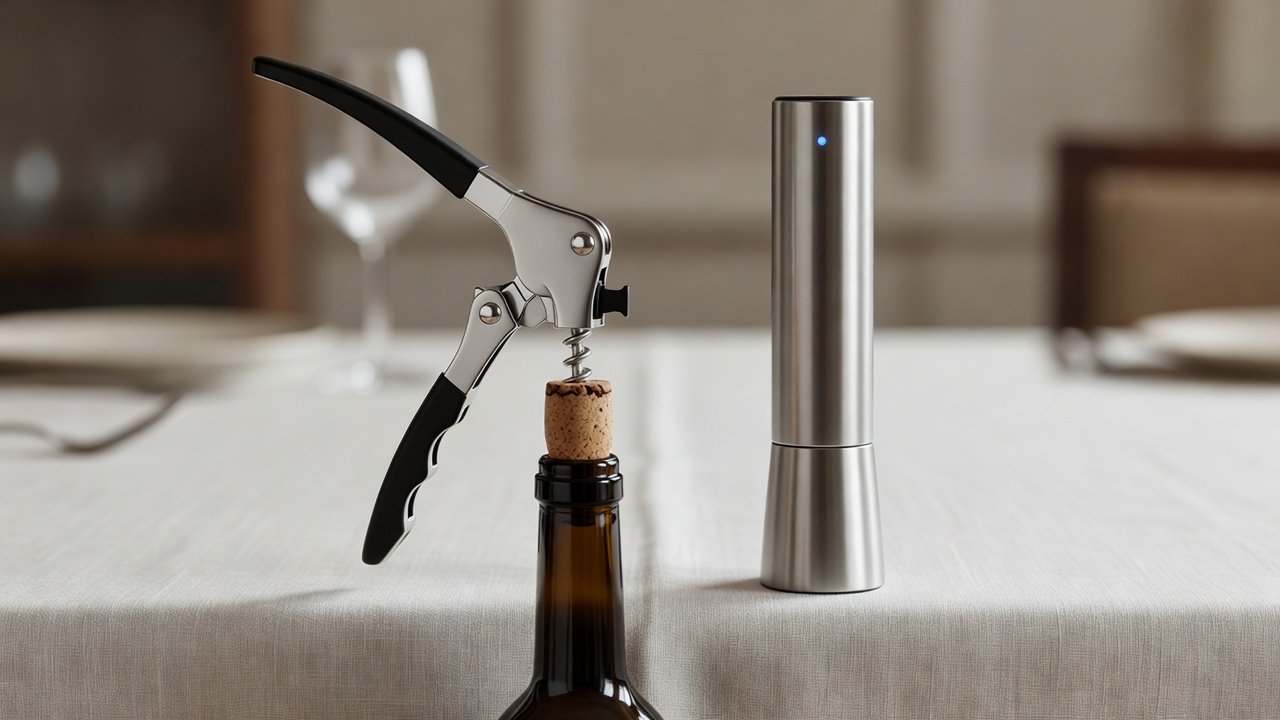
Traditional manual corkscrews include the classic waiter’s friend and winged models. These rely on manual twisting and leverage for extraction. Lever pullers offer mechanical advantage for easier extraction, often favored in professional environments for their speed and reduced physical strain. Electric wine openers use battery power for hands-free operation, aligning with modern efficiency demands in high-volume settings. Each category has evolved with material improvements such as stainless steel spirals and ergonomic grips.
Step-by-Step Usage Guides
For a manual corkscrew: Position the worm at the cork center, twist steadily while applying even pressure, and pull with controlled force once the spiral is fully inserted. Always inspect the cork for dryness or damage beforehand. Lever pullers involve clamping the device securely over the bottle neck, engaging the lever in a smooth downward motion for extraction, and releasing the cork without fragments. Electric models require aligning the device precisely over the bottle, pressing a button to activate the spiral, and monitoring the automatic extraction to avoid over-rotation. Each method supports clean openings that avoid sediment disturbance during decanting processes. Practice on sample bottles helps build muscle memory for consistent results.
Additional techniques include angling the bottle slightly for older corks and using foil cutters integrated into many models to create clean bottle rims. These steps ensure the wine remains free of debris and ready for immediate serving or further decanting.
Durability and Maintenance Comparisons
Manual tools often last years with proper care, while electric openers depend on battery health and motor quality. Restaurant staff report that lever pullers withstand high-volume use better than basic corkscrews because they have fewer moving parts prone to wear. Maintenance involves cleaning spirals after each use, lubricating hinges on lever models, and checking batteries regularly for electric versions. Storing tools in protective cases prevents corrosion and extends lifespan significantly.
Impact on Wine Glasses, Sediment, and Storage
Quality openers prevent cork fragments from falling into glasses or bottles, preserving presentation and taste. Electric models excel at precision extraction, reducing sediment issues in aged wines by minimizing vibration. None of these tools interfere with proper wine storage practices when used correctly, as they do not introduce air or contaminants. Sommeliers often pair openers with decanters to handle sediment-heavy bottles, using gentle pouring techniques afterward.
Cost-Benefit Analysis: Home vs Professional Settings
Traditional options suit occasional home use due to low maintenance and simplicity. Professionals benefit from electric openers for speed during peak service hours, where multiple bottles must be opened rapidly without fatigue. Consider factors like replacement parts and longevity when evaluating overall value for your environment. Home users may appreciate the tactile feedback of manual tools during relaxed tastings, while restaurants prioritize reliability across hundreds of openings per week.
2026 Trends: Battery Life and Precision
Recent advancements emphasize longer battery performance and finer control mechanisms in electric openers. Sommeliers note improved ergonomics that align with best practices for wine serving. These developments support faster table turns without compromising wine integrity. Many models now feature rechargeable batteries lasting through extended shifts and sensors that adjust torque based on cork resistance. For deeper learning on wine service techniques, explore resources at MasterClass. Industry insights are also available through Wine Spectator and Decanter.
Real-World Restaurant Service Examples
In high-end dining, lever pullers handle diverse cork types efficiently during multi-course pairings. Staff at busy urban restaurants often keep both manual backups and electric units on hand to manage unexpected cork issues. Electric openers shine in large venues where dozens of bottles open per hour, allowing servers to focus on guest interaction rather than physical effort. Home enthusiasts often prefer manual tools for intimate gatherings where the ritual of opening adds to the experience. One notable example involves a sommelier using a lever puller on a fragile 20-year-old Bordeaux to avoid crumbling the aged cork, followed by careful sediment handling in the decanter.
Common Mistakes to Avoid
- Applying excessive force with manual tools, which can break fragile corks.
- Neglecting battery checks on electric openers before service begins.
- Skipping foil removal steps, leading to debris in glasses.
- Using the wrong opener type for synthetic versus natural corks.
FAQs on Maintenance and Best Practices
- How often should I clean my opener? After every use to prevent residue buildup and maintain hygiene.
- Do electric openers damage corks? No, when operated as directed they preserve cork structure through controlled rotation.
- Which tool works best for fragile older bottles? Lever pullers provide controlled extraction with minimal twisting.
- Can I use these tools on sparkling wines? Specialized openers are recommended for pressure-managed bottles to ensure safety.
- What is the best storage method? Keep tools in a dry, cool drawer away from direct sunlight and moisture.
- How do I handle a broken cork mid-extraction? Switch to a backup tool and use a two-pronged cork puller for remnants.
- Are there eco-friendly options? Look for models with replaceable parts to reduce waste over time.
Additional tips include testing batteries before events and rotating tools to distribute wear evenly.
Conclusion
Selecting between traditional and electric wine openers enhances service efficiency and guest satisfaction. Apply these sommelier tips to match tools with your needs for optimal results in 2026 and beyond. Regular practice and proper care ensure reliable performance across all wine types and settings.

No comments yet. Be the first!