 Uncorked Conversations
Introduction: Why Wine Myths Persist and How to Move Past Them
Wine enthusiasts often encounter conflicting advice about decanting and storage, leading to practices that can diminish a bottle's potential. As a professional sommelier with years in fine dining service, I've seen guests and even staff cling to outdated beliefs that stem from half-remembered magazine articles or passed-down family traditions. These misconceptions can result in wines that taste flat, overly tannic, or prematurely aged. This article busts five prevalent myths using evidence from chemistry, sensory science, and real-world examples from restaurant floors around the world. By understanding the facts, you can enhance every bottle you open at home and develop a more confident approach to serving and preserving wine.
Myth 1: Decanting Is Only Necessary for Red Wines
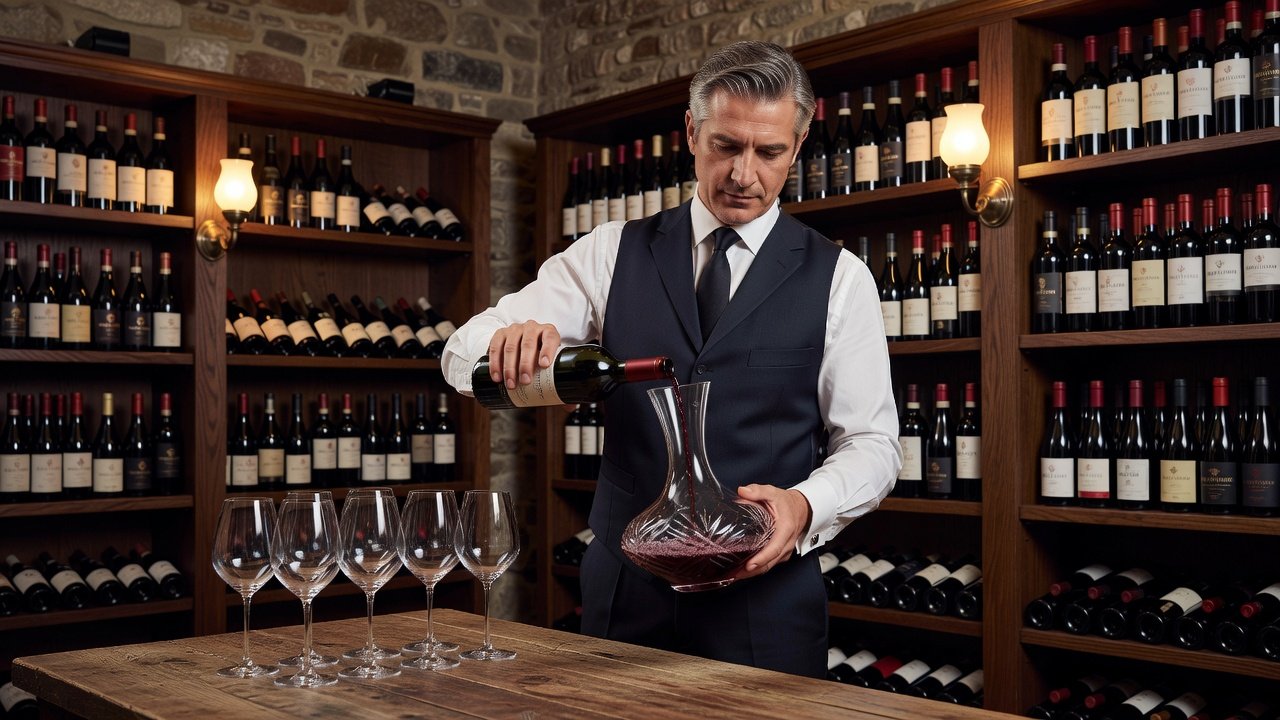
Many believe decanting benefits reds exclusively because of tannins and sediment. In reality, certain whites, especially aged or full-bodied varieties like Chardonnay or Riesling with residual sugar, benefit from aeration to release complex aromas. Sommeliers decant select whites during service to soften oak notes and integrate flavors, revealing layers of fruit, spice, and minerality that remain hidden in a freshly opened bottle. The science involves oxidation, which gently mellows sharp acids while allowing volatile compounds to volatilize and reach the nose more effectively.
Correction Steps:
- Assess the wine's age and structure—older whites with developed aromas gain most from 20-40 minutes of air exposure.
- Use a decanter with a wide base to increase surface area, but avoid over-aerating delicate varieties.
- Compare pours side-by-side: Taste the wine straight from the bottle first, then after decanting, noting lifted fruit and reduced sharpness.
- For young tannic reds like Cabernet Sauvignon, extend decanting to 60-90 minutes while monitoring for softening of astringency.
At a recent tasting event in a high-end restaurant, decanting a 2015 white Burgundy elevated its hazelnut and citrus profile dramatically versus the straight-from-bottle pour, surprising even experienced diners who had assumed decanting was red-only territory.
Myth 2: Ideal Wine Storage Humidity Must Be Exactly 70%
The assumption that 70% humidity is a universal magic number stems from old cellar guidelines but ignores regional variations and modern climate control technology. Scientific principles show humidity between 50-80% prevents cork drying without encouraging mold, depending on bottle orientation and seal type. High humidity can warp labels and promote bacterial growth, while very low levels cause corks to shrink and allow oxygen ingress.
Real-World Comparison:
- Incorrect: Storing at 90% humidity in a damp basement leads to label damage and potential TCA taint that ruins entire collections over time.
- Correct: Maintain 55-65% with a reliable hygrometer; adjust for screw-cap bottles which tolerate lower levels without risk of drying.
- Professional cellars at Michelin-starred restaurants monitor via digital systems rather than rigid percentages, allowing slight seasonal adjustments based on external weather patterns.
Understanding these nuances helps home collectors avoid costly mistakes that could affect hundreds of bottles.
Myth 3: Glass Shape Makes No Difference to the Wine Experience
Some claim any glass suffices, overlooking how bowl shape and rim diameter direct aromas to the nose and control how the wine hits the palate. ISO tasting glasses versus Burgundy balloons illustrate this clearly during service, where the wider bowl allows more oxygen contact and concentrates delicate floral notes toward the top of the glass.
Step-by-Step Correction:
- Match glass to varietal: Narrow flutes for sparkling wines to preserve bubbles, wider bowls for bold reds to enhance bouquet.
- Observe evaporation rates in different shapes—taller glasses slow oxidation for aromatic whites.
- Conduct blind tastings to confirm enhanced bouquet in proper glassware, noting how rim width influences perceived acidity and finish length.
- Invest in versatile sets that cover most styles rather than dozens of specialized glasses.
Decanter magazine experts regularly demonstrate these effects in their tasting panels, showing measurable differences in aroma intensity scores.
Myth 4: All Wines Improve Indefinitely with Age
Not every bottle is meant for long-term cellaring. Most wines peak within 3-5 years; over-aging leads to oxidation and loss of vibrancy, turning once-vibrant fruit into flat, sherry-like notes. The chemical process involves gradual breakdown of acids, tannins, and esters, which follows predictable curves based on grape variety, vintage conditions, and storage stability.
Practical Examples:
- Light whites and rosés: Consume within 1-2 years to capture fresh acidity and primary fruit aromas.
- Structured reds like Cabernet or Nebbiolo: Optimal at 5-10 years for many vintages, but monitor for signs of decline such as browning at the rim.
- Fortified wines like Port can last decades, yet most everyday table wines lose appeal after their prime window.
Sommeliers track vintage charts and open bottles at peak windows during pairings to showcase the wine at its absolute best.
Myth 5: Wine Storage Temperature Fluctuations Have Minimal Impact
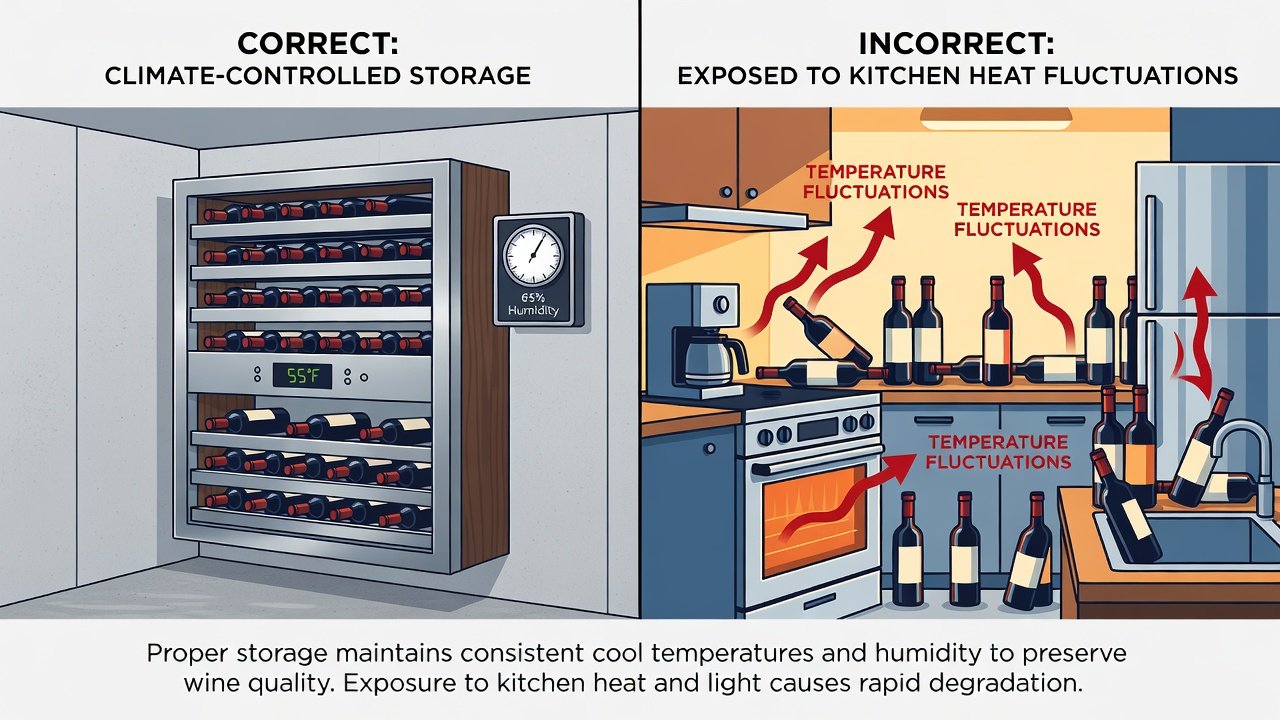
Temperature swings cause expansion and contraction that push corks or degrade wine faster than steady warmth. Ideal is a consistent 55°F (13°C), but the real enemy is rapid change rather than a slightly higher constant temperature. Heat accelerates chemical reactions that break down desirable compounds, while cold can slow desirable aging to a crawl.
Comparisons of Practices:
- Incorrect: Kitchen countertop storage exposes bottles to daily swings of 20°F or more, leading to premature aging and off-flavors.
- Correct: Dedicated wine fridge or insulated closet maintains stability, protecting the delicate balance of acids and phenolics.
- Long-term studies show that even brief exposures to 80°F can shorten a wine's lifespan by years.
Wine Institute resources detail how consistent conditions preserve acidity and fruit across multiple vintages.
The Science Behind Decanting and Storage: Deeper Insights
Decanting works through controlled oxidation and sediment separation, while storage success hinges on minimizing oxygen exposure, light, and vibration. Sommeliers apply these principles daily when preparing large-format bottles or vertical tastings. For instance, double-decanting techniques—pouring back and forth between decanter and bottle—can accelerate aeration for last-minute service without harming structure.
Real-World Sommelier Service Examples
In one busy service shift, a sommelier decanted a young Barolo for 45 minutes before pairing it with braised short ribs, resulting in silky tannins that complemented the dish perfectly. Another example involved rescuing a slightly oxidized white by careful decanting and chilling, turning a potential disappointment into a highlight of the evening. These moments underscore why professional training emphasizes observation over rigid rules.
Common Mistakes to Avoid
Over-decanting delicate wines, ignoring bottle orientation for natural corks, and storing near appliances that emit heat or vibration are frequent errors. Always taste periodically during decanting sessions and keep detailed notes on how each wine responds to air and different storage conditions.
Practical Home Setup Guide
Start with a basic hygrometer and thermometer for your storage area. Experiment with decanting one white and one red this week using the steps above. Track your observations in a tasting journal for personalized insights that build over time. Consider investing in a small wine refrigerator if space allows, as it provides the stability most home environments lack.
FAQ
How long should I decant a young tannic red?
Typically 1-2 hours for optimal softening, though taste periodically to avoid over-aeration that could strip fruit character.
Can I store wine in a standard refrigerator?
Only short-term; the dry air and vibrations harm long-term aging—use for chilling before service only and never for extended periods.
Does screw-cap wine need decanting?
Less often, but aeration still helps complex examples develop fully and integrate any subtle reduction notes.
What if my storage space is above 70°F?
Focus on stability over perfection; even 65°F constant outperforms fluctuating cooler temps that stress the wine repeatedly.
Should I always stand bottles upright before opening?
For sediment-heavy wines, yes—stand them for 24 hours prior to decanting to let particles settle at the bottom.
Conclusion
Busting these myths empowers better enjoyment of every bottle. Apply sommelier principles consistently and your wine collection will reward you with superior aromas, balance, and longevity. The key lies in observation, experimentation, and respect for the science that governs how wine evolves both in the glass and in the cellar.
No comments yet. Be the first!