 Uncorked Conversations
Understanding Old World and New World Wines
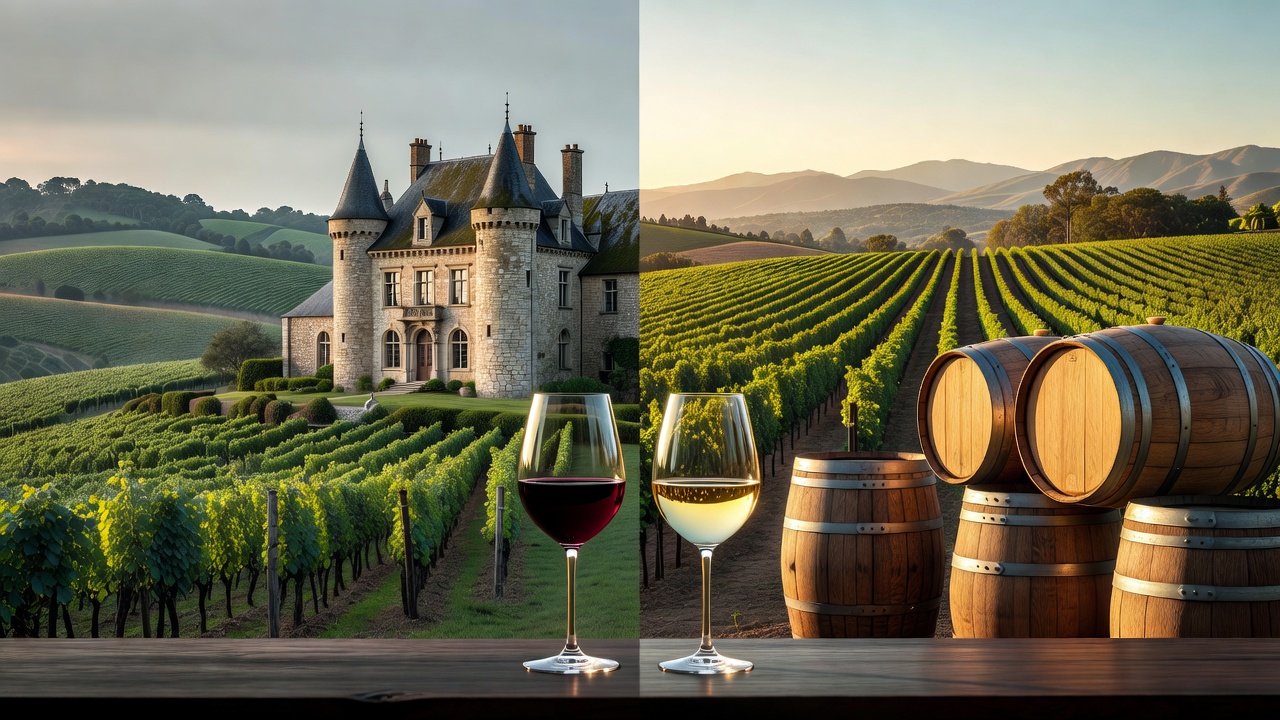
Wine enthusiasts often encounter the terms Old World and New World when exploring bottles at a store or restaurant. These classifications help beginners understand regional styles and flavor profiles rooted in centuries of tradition versus innovative approaches. Old World wines originate primarily from Europe, emphasizing terroir and restraint, while New World wines come from regions like the Americas, Australia, and South Africa, focusing on ripe fruit and bolder expressions. This guide breaks down the distinctions to give you practical clarity for everyday wine decisions.
Historically, winemaking began in the Old World thousands of years ago, with techniques refined in places like France and Italy. The New World emerged later as European settlers brought vines to new continents in the 16th century onward. This contrast shapes everything from acidity levels to labeling practices, making it essential for beginners to grasp these foundations before their next purchase or tasting session.
Historical Context and Evolution of Winemaking Traditions
The Old World tradition dates back to ancient civilizations in the Mediterranean, where Romans and Greeks developed early viticulture methods that evolved into strict regulations by the 19th century. Appellation systems in France, such as the AOC, protect regional identities and limit yields to preserve quality. In contrast, New World regions developed without these constraints, allowing experimentation with grape varieties and techniques starting in the 1700s in places like Chile and Argentina. By the late 20th century, globalization introduced New World innovations back to Europe, blending styles in some modern productions. Understanding this timeline helps beginners appreciate why a French Pinot Noir tastes different from one made in Oregon.
Key Differences in Acidity, Alcohol, and Oak Influence
Acidity tends to be higher in Old World wines due to cooler climates, creating a crisp, refreshing mouthfeel that pairs well with food. New World wines often exhibit lower acidity but higher alcohol levels from warmer regions, resulting in fuller-bodied options that can reach 14-15% ABV in hot vintages. Oak influence varies too: Old World producers use oak sparingly for subtle structure, often favoring neutral or older barrels, whereas New World winemakers may employ new oak barrels for pronounced vanilla and spice notes that dominate the profile. These elements affect aging potential and food pairings. For instance, high-acid Old World reds like those from Burgundy can cut through rich dishes, while fruit-forward New World styles complement grilled meats or spicy cuisines.
Labeling Practices and Regulatory Differences Explained
Old World labels often highlight the region or appellation, such as Bordeaux or Chianti, rather than the grape variety. This reflects a focus on place over the fruit, with laws dictating what can be grown where. In contrast, New World labels typically name the grape first, like California Cabernet Sauvignon, making them more approachable for beginners unfamiliar with geography. Regulations in the European Union enforce detailed geographic indications, while countries like the United States use AVA designations that are less restrictive. Understanding these conventions simplifies shopping. Always check the back label for details on vintage, producer, and alcohol percentage to build confidence in selections, and consider using apps or store staff for translations of foreign terms.
Regional Examples: France, Italy, California, and Australia
France exemplifies the Old World with its diverse appellations. Bordeaux produces structured blends dominated by Cabernet Sauvignon and Merlot, known for earthy undertones and longevity. Italy offers similar traditions through Chianti Classico from Tuscany, where Sangiovese grapes yield cherry and herbal notes under strict DOCG rules. California represents the New World through its sunny vineyards yielding ripe, jammy Zinfandel and bold Cabernet Sauvignon with intense black fruit flavors. Australia adds another layer with Shiraz from Barossa Valley, showcasing peppery spice and full body from ancient vines. These examples illustrate how climate and tradition diverge. Beginners can start with affordable French entry-level bottles or vibrant California options to experience the spectrum firsthand, perhaps comparing a Loire Valley Sauvignon Blanc with one from New Zealand.
Tasting Notes for Popular Grapes Across Styles
Chardonnay from Old World regions like Burgundy offers mineral-driven profiles with green apple and citrus, evolving into nutty notes with age, as seen in Chablis. New World Chardonnay from California tends toward tropical fruit, butter, and toast from oak aging, often with higher ripeness. For reds, Pinot Noir in the Old World shows delicate red berries and earth, while New World versions deliver darker cherry and spice, sometimes with more color intensity. Cabernet Sauvignon in Bordeaux leans herbal and tannic, contrasting with the plush, cassis-driven California style. Experimenting with these grapes across styles builds a personal palate reference, and keeping a simple tasting journal can track your evolving preferences over multiple sessions.
Simple Decision Flowchart for Wine Selection
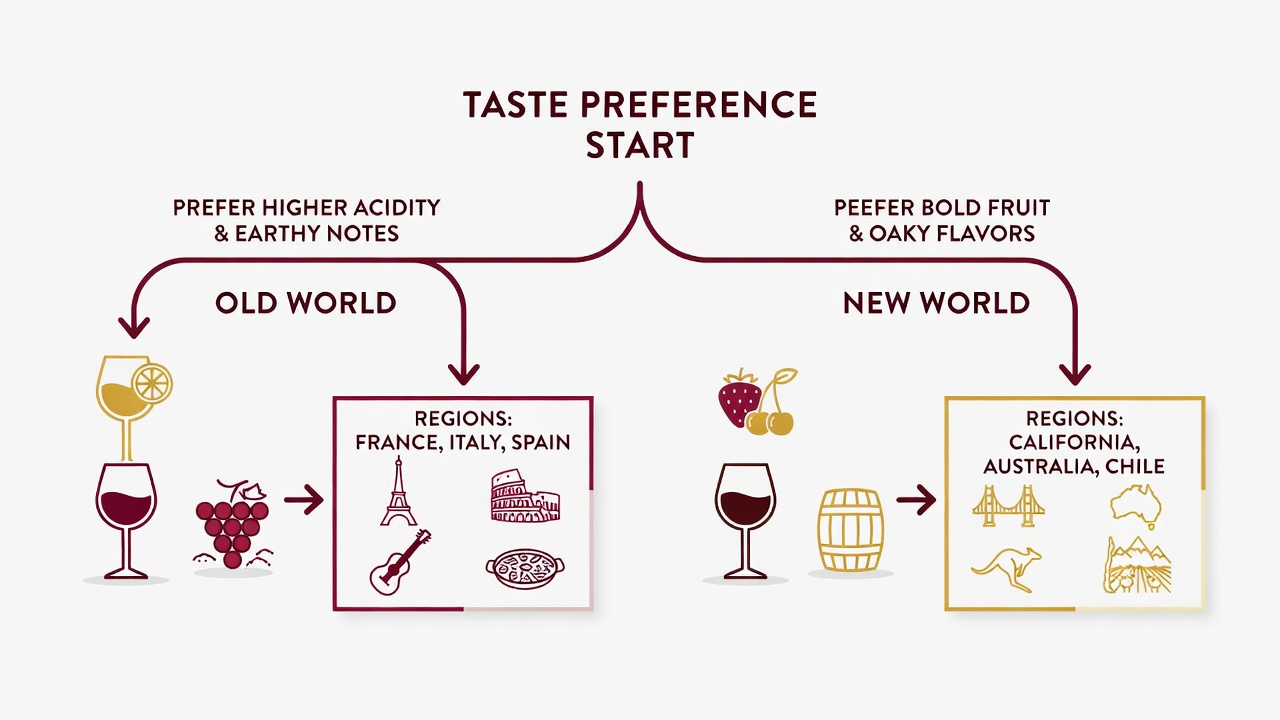
Use this step-by-step guide to choose based on preferences:
- Prefer crisp acidity and food-friendly wines? Opt for Old World styles from France or Italy.
- Crave bold fruit and higher alcohol? Select New World wines from California or Australia.
- Enjoy subtle oak and earthy notes? Explore traditional European producers.
- Like vanilla and ripe flavors? Choose New World with modern winemaking.
- Unsure about labels? Start with grape-named bottles from the New World for ease.
- Want to age wines for years? Lean toward high-acid Old World examples with strong tannins.
- Hosting a casual gathering? New World reds often appeal to broader palates with their approachability.
This flowchart helps apply knowledge during tastings or store visits, ensuring selections match your taste profile and occasion.
Actionable Tips for Your Next Wine Purchase or Tasting
Visit local wine shops and ask staff for Old World versus New World recommendations within your budget range. Attend beginner tastings to compare side-by-side flights of the same grape from different hemispheres. Keep notes on what you enjoy to refine future choices, and pair wines with meals to observe how acidity interacts with food. Resources like Wine Magazine offer further reading on regions and producers. Consider joining a wine club that ships mixed Old and New World selections to expand your exposure gradually. Avoid rushing purchases; instead, read reviews from multiple sources and visit wineries when possible for direct education on terroir.
Common Mistakes Beginners Make and How to Avoid Them
One frequent error is assuming all Old World wines are light and all New World are heavy, ignoring exceptions like powerful Spanish Rioja or elegant Oregon Pinot Noir. Another is overlooking vintage variation, which affects both styles significantly. Beginners sometimes ignore serving temperatures, chilling reds too much or serving whites too warm. To avoid these, focus on specific regions first rather than broad categories, and practice blind tasting with friends. Always verify alcohol levels on labels, as they indicate body and intensity more reliably than origin alone.
Frequently Asked Questions
What defines Old World wines?
They stem from European traditions emphasizing terroir, lower alcohol, and higher acidity with minimal intervention and strict regulations.
Are New World wines always sweeter?
No, many are dry but feature riper fruit due to climate; sweetness depends on winemaking choices and residual sugar levels.
Which style ages better?
Old World wines often have superior aging potential from balanced acidity and tannins, though some New World examples can age well too.
How do I start tasting?
Begin with popular grapes like Chardonnay and Cabernet from both worlds to note differences in a controlled setting.
Can regions overlap in style?
Yes, climate change and technology allow some New World producers to mimic Old World restraint, and vice versa.
What about price differences?
Old World entry-level bottles can be comparable in cost to New World ones, though prestige cuvées vary widely by producer reputation.
Conclusion
Mastering Old World versus New World distinctions empowers beginners to navigate wine lists and shelves with ease. Apply these comparisons at your next tasting session for memorable discoveries and better matches to your palate. For deeper dives, consult Decanter on global wine trends and regional spotlights.
No comments yet. Be the first!