 Uncorked Conversations
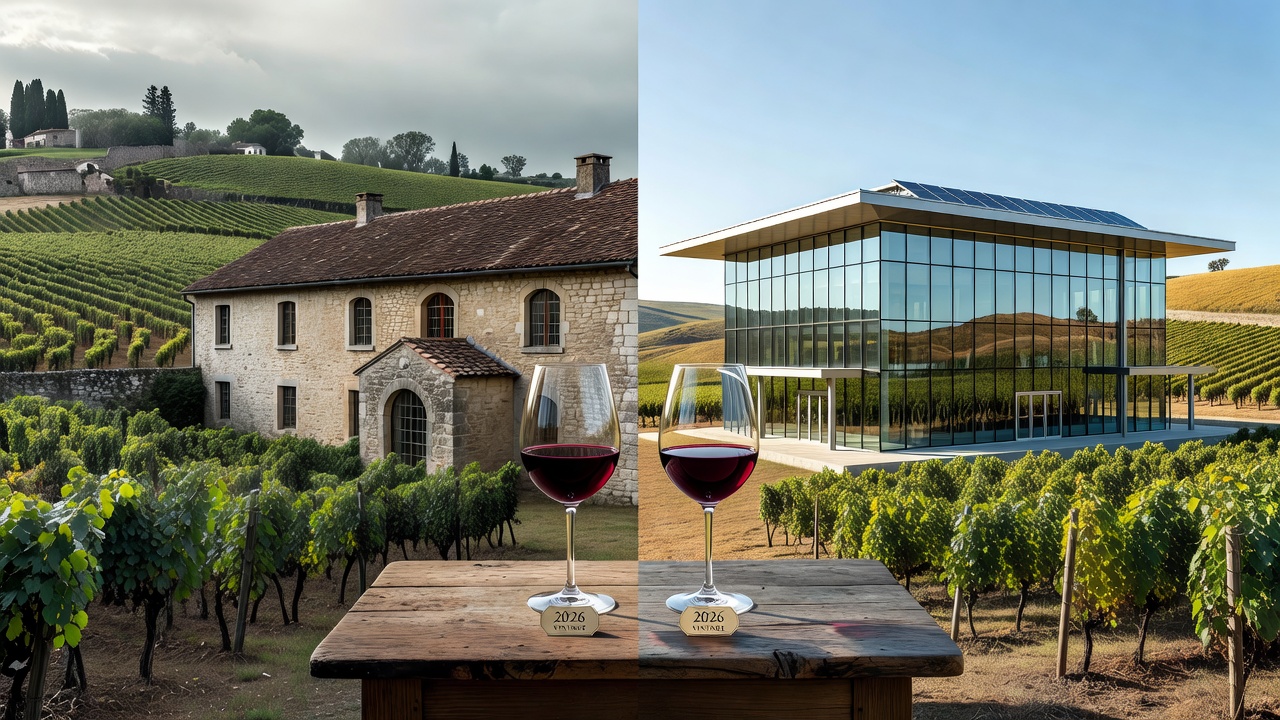
Introduction to Old World vs New World Wines in 2026
The 2026 vintage provides an excellent opportunity to compare the distinct philosophies of Old World and New World winemaking. European regions continue to prioritize centuries-old traditions, strict appellation rules, and the expression of terroir, resulting in wines that often require patience to reach their peak. Meanwhile, producers in California, Australia, Chile, and South Africa embrace technological advances, warmer climates, and fruit-driven approaches that deliver immediate appeal. This in-depth comparison examines aroma profiles, structural components such as acidity and tannins, aging potential, and the ways professional critics assign scores, giving readers practical tools to interpret tasting notes and make informed selections.
Historical Context and Winemaking Philosophies
Old World wine production traces its roots to ancient civilizations in France, Italy, Spain, and Germany, where regulations like France’s Appellation d’Origine Contrôlée system protect regional identity. These rules limit yields and dictate allowed varieties, fostering elegance and subtlety. New World regions, by contrast, developed later with fewer restrictions, allowing experimentation with grape varieties, oak treatments, and fermentation techniques. The result is a spectrum ranging from restrained, mineral-driven European bottles to bold, expressive wines from the Americas and Southern Hemisphere.
Key Differences in Aroma Profiles and Structure
Old World wines frequently display earthy, herbal, and mineral aromas influenced by cooler growing seasons and varied soils. Descriptors such as wet stone, forest floor, and dried flowers are common. New World wines tend toward ripe fruit, vanilla, chocolate, and spice notes derived from abundant sunshine and generous oak aging. Mouthfeel also diverges: Old World examples often feel linear and tense, while New World wines present plush textures and rounder palates.
Acidity and Tannin Contrasts
Acidity serves as the backbone of many Old World wines, delivering vibrant freshness that supports long aging. Tannins in Bordeaux or Barolo can feel grippy in youth yet resolve into velvety textures after a decade or more. New World Cabernet or Shiraz typically shows riper, softer tannins that integrate earlier, paired with moderate acidity that makes the wines approachable upon release. These differences directly influence food pairings and cellar decisions.
Terroir Influences on Flavor Descriptors
Terroir encompasses soil composition, topography, and microclimate. Burgundy’s limestone soils contribute signature notes of chalk and red fruit to Pinot Noir, while Tuscany’s galestro and alberese soils lend savory depth to Sangiovese. In contrast, Napa Valley’s volcanic and alluvial soils combined with intense sunlight produce concentrated black fruit and cocoa characters in Cabernet Sauvignon. Chilean vineyards in the Colchagua Valley often yield herbal and eucalyptus nuances from proximity to the Andes. Recognizing these signatures helps enthusiasts decode critic descriptors accurately.
Impact of the 2026 Vintage Conditions
The 2026 growing season featured variable weather across hemispheres. European regions experienced a balanced summer with sufficient rainfall for phenolic ripeness, yielding wines with bright acidity and refined tannins. New World areas benefited from consistent warmth and occasional cooling breezes, resulting in plush fruit and moderate alcohol levels. These conditions shaped the specific profiles evaluated below.
Critic Scoring Systems Explained
Most publications employ the 100-point scale, where 90+ denotes outstanding quality. Old World wines frequently receive high marks for balance, complexity, and aging potential, even when fruit is less overt. New World wines score well for intensity, texture, and immediate drinkability. Critics also consider vintage variation, regional typicity, and value relative to market positioning when finalizing scores.
Side-by-Side Evaluations of 2026 Vintages
Five representative bottles illustrate the stylistic range.
- Château Margaux 2026 (Bordeaux, France): Aromas of cassis, graphite, violet, and subtle tobacco. Medium-plus acidity, firm yet fine-grained tannins, and a persistent mineral finish. Score: 96 points. Ideal aging window of 15–25 years.
- Opus One 2026 (Napa Valley, USA): Layers of ripe plum, mocha, cedar, and sweet spice. Lower acidity, plush tannins, and a creamy texture. Score: 95 points. Approachable now yet capable of 10–12 years further development.
- Penfolds Grange 2026 (Australia): Concentrated blackberry, licorice, eucalyptus, and toasted oak. Balanced acidity with powerful yet integrated tannins. Score: 97 points. Exceptional cellaring potential beyond 20 years.
- Viña Almaviva 2026 (Chile): Dark cherry, tobacco leaf, leather, and graphite. Silky tannins and lively acidity create a harmonious profile. Score: 94 points. Versatile for current enjoyment or short-term aging.
- Cloudy Bay Pinot Noir 2026 (New Zealand): Red cherry, rose petal, and forest floor notes with bright acidity and fine tannins. Score: 93 points. Best consumed within 8–10 years.
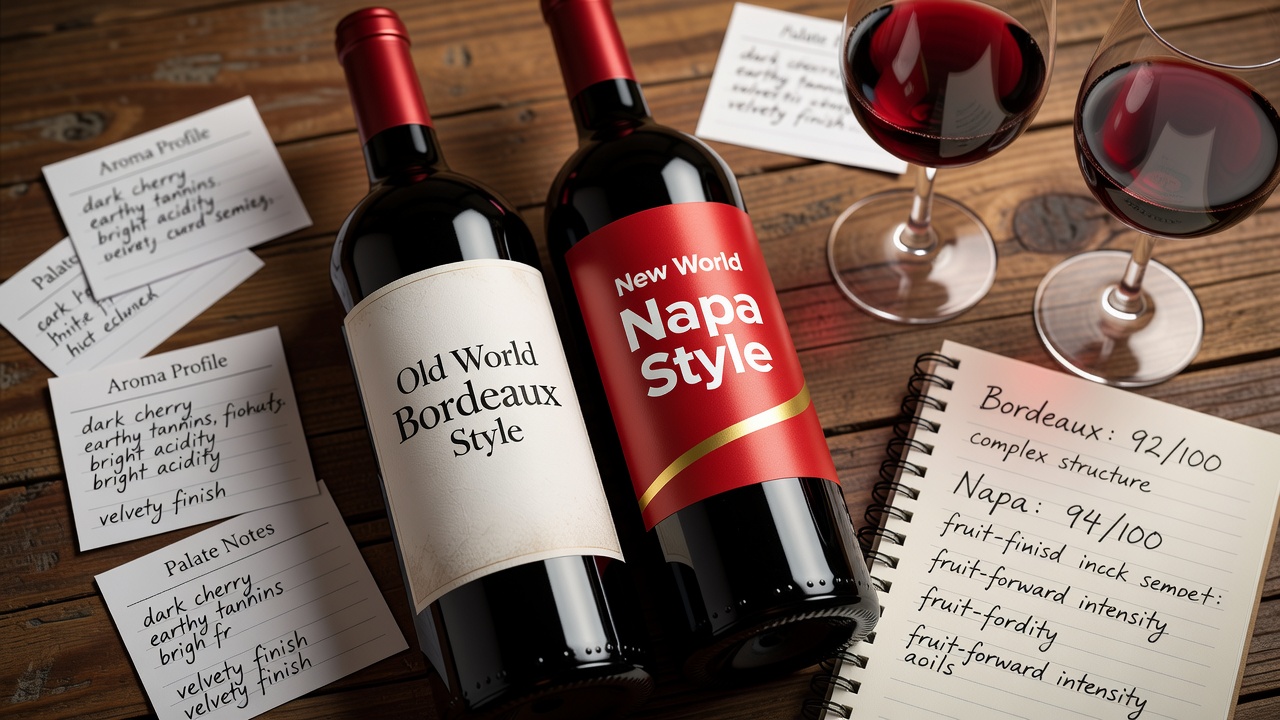
Practical Steps for Conducting a Home Tasting Session
- Choose 4–6 wines that represent both Old and New World styles, ideally from the same vintage and similar price tiers to ensure fair comparison.
- Acquire proper glassware, a neutral tablecloth, tasting mats, and palate cleansers such as plain crackers and still water.
- Serve wines at appropriate temperatures: 55–60°F for reds and 45–50°F for whites to highlight aromas accurately.
- Begin with visual inspection for color intensity and clarity, then swirl gently to release volatile compounds.
- Conduct a systematic nose assessment, noting primary fruit, secondary oak, and tertiary earthy or floral elements.
- Take small sips and evaluate attack, mid-palate texture, acidity, tannin quality, and finish length.
- Compare each wine side-by-side, noting how structure and flavor evolve over several minutes.
- Record detailed notes using a standardized template covering appearance, nose, palate, and overall impression.
- Discuss findings with tasting partners to refine sensory vocabulary and reduce individual bias.
- Repeat the session after several months to observe how bottles evolve with additional bottle age.
Common Mistakes to Avoid in Wine Evaluation
Many beginners overlook serving temperature, which can mute aromas or exaggerate tannins. Using incorrect glass shapes also distorts perception. Another frequent error is rushing the evaluation; allow wines time to open in the glass. Ignoring vintage context or regional typicity leads to unfair comparisons. Finally, relying solely on scores without personal tasting prevents palate development.
FAQ on Interpreting Wine Scores and Notes
How reliable are critic scores? Scores offer helpful benchmarks but remain subjective; cross-reference multiple sources and trust personal preferences.
What does “terroir-driven” mean in tasting notes? It indicates flavors primarily derived from vineyard site characteristics rather than winemaking additions.
Can New World wines age as long as Old World examples? Premium New World wines with balanced acidity and tannins can age gracefully for 10–20 years or more.
How should beginners start building tasting vocabulary? Begin with broad categories like fruit, oak, and earth, then progress to specific descriptors through repeated practice.
Where can readers find official international wine standards? Consult the International Organisation of Vine and Wine for authoritative guidelines on production and labeling.
What resources support understanding of regional quality? The Wine Institute provides extensive producer information and educational materials.
Do scores differ significantly between publications? Yes, slight variations exist due to different tasting panels and criteria, so reading multiple reviews is advisable.
Conclusion
Understanding the contrasts between Old World and New World wines from the 2026 vintage deepens appreciation for both traditions. By applying structured evaluation techniques and studying detailed tasting notes, enthusiasts can confidently navigate the diverse landscape of global winemaking and select bottles that match their preferences and occasions.

No comments yet. Be the first!