 Uncorked Conversations
Introduction to Mindful Wine Tasting
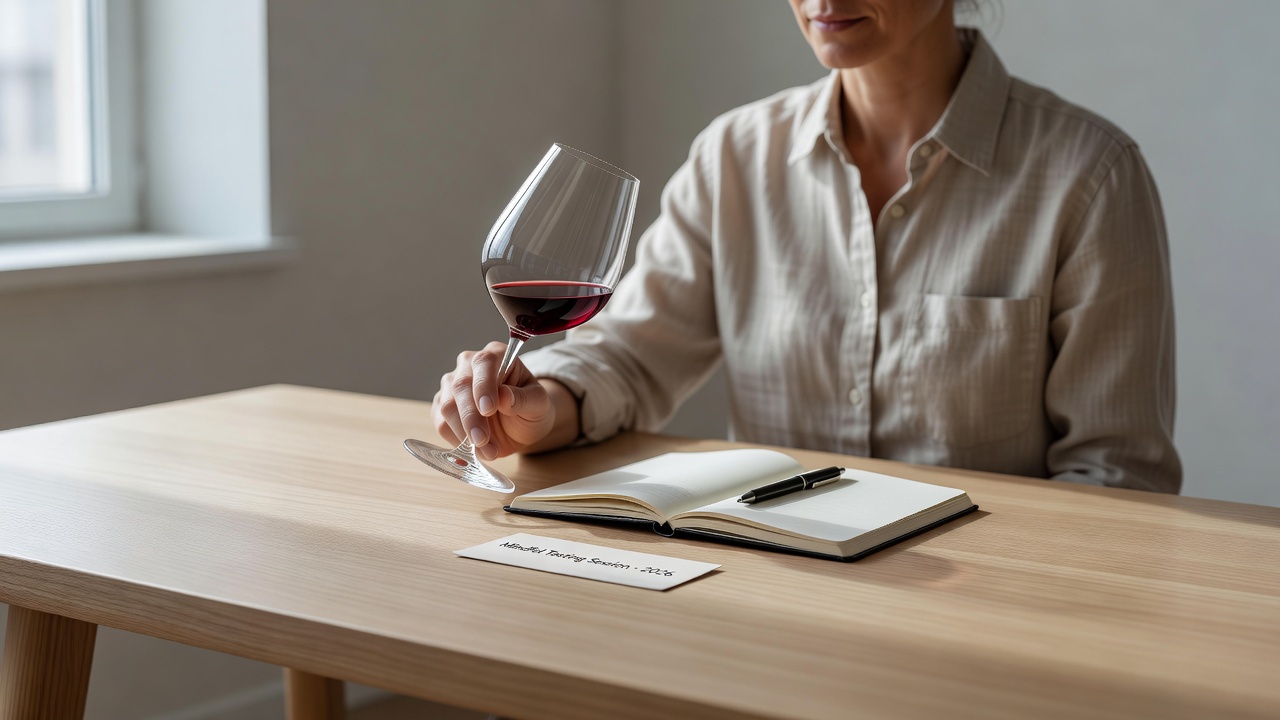
In 2026, wine enthusiasts are moving beyond rote tasting notes toward a more intentional practice. Mindful wine tasting integrates breath awareness, focused attention, and reflective journaling to create richer sensory experiences and more accurate scores. This approach benefits beginners seeking foundational skills and seasoned tasters wanting greater depth. The practice draws from mindfulness principles adapted specifically for sensory evaluation, helping participants slow down and notice nuances in aroma, texture, and finish that rushed sessions often overlook. Whether you are just starting with your first bottle or refining an extensive cellar, these methods foster a deeper connection to each wine’s story and character.
Traditional tasting follows a linear checklist of sight, smell, taste, and finish. Mindful tasting adds layers of presence that reveal subtleties often missed in rushed evaluations. Over the past decade sensory researchers have demonstrated that divided attention reduces flavor recall, while deliberate focus enhances both enjoyment and descriptive accuracy. In today’s fast-paced world, carving out time for mindful tasting also serves as a form of relaxation and mental reset.
Traditional vs. Mindful Tasting: Key Comparisons
Traditional methods emphasize speed and standardized descriptors. Mindful practices slow the process, encouraging curiosity about how each sensation evolves. Studies from sensory science show that focused attention can increase flavor discrimination by up to 30 percent. The result is notes that feel personal yet precise, and scores that reflect genuine engagement rather than memory of past bottles. Traditional scoring often rewards familiarity with common descriptors, whereas mindful scoring values originality and temporal awareness. For example, a conventional taster might note “blackcurrant and cedar” and stop, while a mindful taster tracks how the blackcurrant evolves into dried fig after thirty seconds and how the cedar note integrates with underlying earthiness.
Step-by-Step Mindful Tasting Ritual
- Prepare your space: Choose a quiet area free from strong odors or distractions. Use a neutral glass and pour a small amount. Dim lighting or soft background music can further reduce external stimuli.
- Center yourself: Sit comfortably and take three slow breaths before lifting the glass. This brief pause signals to your brain that the session is intentional rather than hurried.
- Observe visually: Note color, clarity, and viscosity without judgment. Observe how light refracts through the wine and how legs form on the glass, treating each detail as new information.
- Engage the nose mindfully: Swirl gently, then inhale in short bursts followed by a long draw, observing how aromas shift. Close your eyes during this step to heighten olfactory focus.
- Taste with presence: Take a small sip, let it coat the palate, and notice primary, secondary, and tertiary flavors separately. Hold the wine for ten to fifteen seconds before swallowing or spitting to register the full arc of sensation.
- Reflect and record: Pause before scoring to capture evolving impressions. Use a timer if helpful to mark impressions at set intervals.
Breathing and Focus Techniques
Breathwork anchors attention. The 4-7-8 method—inhale for four seconds, hold for seven, exhale for eight—calms the nervous system and sharpens olfactory receptors. Mayo Clinic resources highlight how rhythmic breathing improves sensory processing. Another technique is box breathing: inhale, hold, exhale, and hold again for equal counts. Apply these between sips to reset the palate and maintain clarity across multiple wines. Progressive muscle relaxation can also be layered in: tense and release your shoulders or jaw between glasses to release physical tension that interferes with taste perception. Practitioners report that combining these techniques leads to more consistent scoring across repeated tastings of the same wine.
Examples of Transformed Tasting Notes
Traditional note: “Red fruit, oak, medium acidity, 88 points.”
Mindful note: “Initial burst of tart cherry opens into dried rose petals after 30 seconds on the palate. Oak integrates as toasted hazelnut rather than dominant vanilla. Acidity feels lively yet balanced, creating a lingering mineral finish. Mindfulness score: 9/10 for sustained attention.”
Another example involves a crisp Sauvignon Blanc. Traditional: “Citrus, grass, high acidity, 87 points.” Mindful: “Fresh lime zest appears first, followed by wet river stone and a faint basil note that lingers after the acidity softens. The finish carries a subtle honeydew quality that emerges only on the second sip. Mindfulness score: 8/10; attention drifted briefly during the second minute.” A third illustration with a full-bodied Syrah shows how mindfulness captures spice evolution from cracked pepper to star anise over sixty seconds. These expanded notes become valuable references for future comparisons and help identify personal preferences with greater precision.
Quantifying Mindfulness in Scores
Assign a secondary mindfulness metric alongside the classic 100-point scale. Rate focus level (1–10), emotional connection (1–10), and sensory detail richness (1–10). Average these for a composite mindfulness score. Many enthusiasts now publish both the wine score and mindfulness score, adding transparency and encouraging deeper practice. Track these metrics over weeks or months to observe improvement in attention span and descriptive vocabulary. Some tasters create radar charts that visually display the balance between technical score and mindfulness components, revealing whether high scores correlate with strong presence or simply with familiar flavors.
Practical Journaling Templates
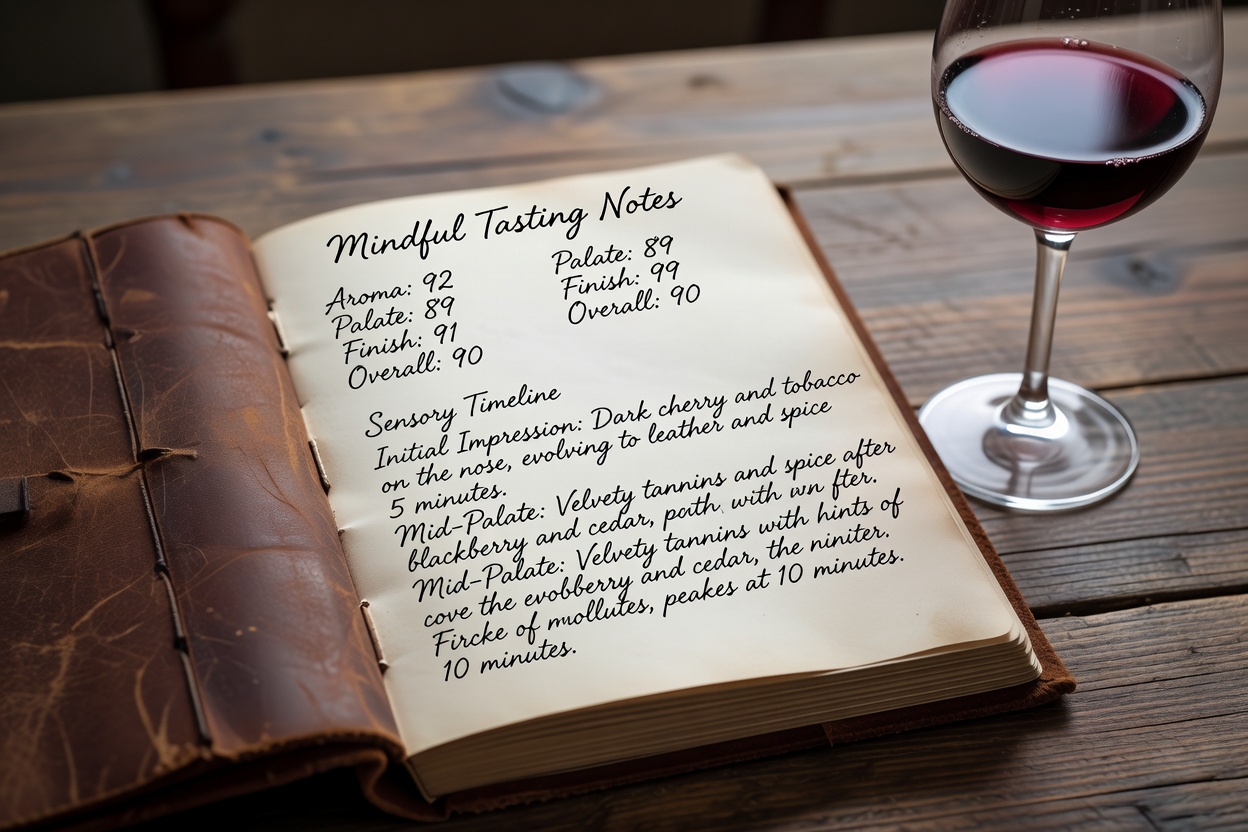
Effective journaling captures both sensory data and mental state. Use the following expanded template: Pre-taste intention (“What am I hoping to notice today?”); Sensory timeline (impressions at 0, 30, and 60 seconds); Distraction log (note any wandering thoughts and gently return focus); Integration question (“How does this wine reflect the moment I tasted it?”). A sample entry might read: “Intention: detect minerality. 0 seconds: sharp grapefruit. 30 seconds: wet stone emerges. 60 seconds: faint salinity. Distraction: phone notification at minute two. Integration: reminded me of coastal hikes last summer.” Revisit entries monthly to spot patterns in both wine preferences and personal focus levels.
Integrating Practices with Digital Tools
Apps like Vivino and CellarTracker now support custom fields for mindfulness scores. Pair them with simple voice memos to capture real-time reflections without breaking presence. WSET offers online modules that align structured tasting with contemplative techniques, making digital integration seamless for learners. Consider pairing a dedicated mindfulness app such as Insight Timer with your wine journal for guided breath exercises before each session. Exporting combined data into spreadsheets allows long-term analysis of how mindfulness correlates with scoring accuracy and enjoyment ratings.
Building a Sustainable Habit
Start with one mindful tasting per week rather than attempting daily practice. Gradually increase frequency as the ritual becomes automatic. Join or form small tasting groups that agree to five minutes of silent focus before discussion begins. Over time you will notice improved memory of individual bottles and greater confidence when describing wines to others.
Frequently Asked Questions
How long does a mindful tasting session take?
Expect 15–25 minutes per wine when first learning. Speed improves with practice while depth remains.
Can I apply this at social tastings?
Yes. Use brief breath resets between pours and jot quick notes afterward to maintain group flow.
Does mindfulness change objective scores?
It refines them. Many tasters report scores rising 2–4 points once distractions are removed and attention is sustained.
What if my mind wanders repeatedly?
Gently label the thought as “planning” or “judging” and return to the wine without self-criticism. Consistent practice reduces the frequency of wandering.
Conclusion
Mindful wine tasting elevates both pleasure and precision. By combining structured rituals, breath techniques, and reflective scoring, enthusiasts in 2026 create tasting experiences that are memorable, reproducible, and deeply personal. Start with one focused session this week and observe how your notes and scores evolve.
No comments yet. Be the first!